Thursday, August 31, 2017

Voices of the Past

by Suzanne Morgan Williams

I'm finishing up a manuscript and I'm in part of the process that's unique to writing historical novels. Those of you who aren't writers may easily imagine that writing a historical involves research into the time and place. You know the author has to check out certain objects in the book - for example being sure, if the characters ride bicycles in the 1870's, that bicycles had been invented by then. There is research to be done on everything from recipes and roadways .

But authors also  have to create a voice for their work that rings true to the period without seeming stilted or hard to read. I've always thought of this in terms of cadence and certain old fashioned tag words -  "The fighting commenced at daylight." Of course there are words specific to the setting. "Water raged through the arroyo." But what I find really interesting are the words and phrases you can't use in a historical novel. 

My current manuscript is a love story and I found that many words describing romance and excitement are modern. Consider "A current ran up my arm," "His touch was electric," "It was as though I'd flipped a switch and the lights came on." See what I mean? You can't write about electricity in a book that takes place when people didn't know what it was. 

But even more interesting to me is that some words didn't exist at the time of my manuscript. One of my careful beta readers pointed this out. Did you know that "goosebumps" came into usage in the 1800s? This word doesn't work in a book set in the 1600s. "In a pickle," however does. There are choices of setting too. I have a manuscript that's set in the Arctic and one of my descriptions was of the cracks in sea ice as it breaks apart in the thaw. I said "like veins of a dying leaf."  Later, I realized there are no trees in the Arctic - that's part of the definition of that biome. My protagonist wouldn't compare anything to leaves. I changed the simile to bones.   I'm often a little annoyed as I discover these problems but then I enjoy the hunt of research and replacement. I get a kick out of creating authentic voices of the time.

Thursday, August 24, 2017

4 Tools to Help You Teach History by Mary Louise Sanchez


If you love historical fiction and share this love with others, you are a teacher, whether you are in the classroom, school or public library!
Hopefully you've read how you can find good historical fiction books by our very own blogger, Chris Eboch, on this site. Her recent post, Back to School: Historical Fiction Resources for the Classroom, is a good resource.

One of the best ways to teach history is for the teacher to keep learning. Make it easy on yourself and read the best books! Study the lists of award trade books from various years put out by the National Council for the Social Studies (NCSS) in cooperation by the Children's Book Council (CBC).

By now, your room is set up and you're teaching your students basic classroom management skills. Before you start teaching with those great historical fiction stories, there are a couple more items you might consider getting or making to help you set the stage for teaching history.

1. Globes and Maps


About 50% of what is learned is through sight. Children learn so much by seeing where in the world they are going to visit—even in a story. In my school, maps were already hanging on classroom walls, but the teachers went to the school library to check out globes. If your school doesn't have any, or they are out of date, mention this to your principal. The Social Studies curriculum committees in your district should periodically update globes and maps. Ask for a time line of when these necessary and updated items are purchased.

Historical maps are a bonus! You can access some at:

Library of Congress

Perry-CastaƱeda Library Map Collection at the University of Texas at Austin


2. Primary Sources

Students are expected to analyze these documents. There are many websites at your fingertips that will give you access to many primary sources so that your students can peer over a historian's shoulder.

The Library of Congress provides help on using primary sources and even lesson plans .


3. Timeline


Again, this is a visual that can help students learn relationships in time and chronology. While the laminator is still smoking hot in your schools, make a long timeline which can be laminated and be prominently posted in your classroom for learning experiences. I made one with dot matrix paper that was used in old printers in the 1980s. Your school may still have some of this paper in storage or ask the art teacher if he/she took it!

You could also use regular paper and write on it in the landscape view, then lay it out on the reverse side to tape together. This should make it easy to laminate a continuous timeline. Another option would be to purchase craft paper in rolls, in the width you prefer.


I divided my timeline into century increments. Each century was one one half of a landscape page of paper. As the years progressed on the timeline, I even labeled decades on a page. I started my timeline with Pre-historic dates and events, which could be helpful if you are teaching in a religious school. Make the dates readable from afar and use color to highlight periods of history ie. Pre-Historic Era; Roman Empire; Renaissance; Colonial Period; WWII, etc. Don't forget to add the present decade.

Also have students cut out pictures of historical events, important people, and important events from various disciplines and paste them next to the correct time period on the timeline.

On the timeline, I always showed when in history our story took place in relation to the time period we were living in. This simple  concept helps students make connections.

Students can also make their own timelines about themselves or for their curricular study of history.

Timelines are invaluable tools to help connect individual events to larger movements in history and to see how they overlap.

4. Laser Pointer

I was able to sit in my chair as I pointed out the time period settings of various books to students.
Then by pointing to the present day time period for a comparison, students could visually see time fly by the centuries and decades. This gives students needed background knowledge. You can even use the pointer as pre-assessment and assessment tool. You might ask students to guess when a story takes place or even identify how many centuries ago something happened.

I believe these little strategies can help set the stage for teaching history and will engage your students. Be sure to also provide information about the context of the historical events your are teaching. If you are introducing Number the Stars, you could point to the WWII era on your timeline and note how your students' great grandfathers may have fought in this war, This would certainly pique their interest.

I hope you can implement some of these tips to help make history come alive for your students. What helpful tools can you share?


Thursday, August 17, 2017

Are You Ready For Some Football History?

In the fall a young man’s (actually, any man’s or boy’s plus a lot of woman’s and girl’s) fancy turns to football. Another season of enjoying this all-American game is underway. How much more exciting it is to know the history behind the origin of the game and the records set by the legends who have played it? The Everything Kids' Football Book by Greg Jacobs, a teacher and coach, is a great introduction to the history of football for readers of all ages. You will learn about the origin of the game, the rules, and the skills required to play. You will gain insight into the different levels of the sport, from high school, through college, on to the NFL, and even into fantasy football.


Legends: The Best Players, Games, and Teams in  Football, by Howard Bryant, will take you into the history and glamour of that most popular of football games—the Super Bowl. This book is current through Super Bowl XLIX between the Seattle Seahawks and the New England Patriots, played on February 1, 2015. Bryant doesn’t cover all the Super Bowls—some of them were not that exciting. He concentrates on what he calls the “classics,” writing about selected special games from kickoff to final whistle.


Sports Illustrated is a prolific publisher of football books. Football Then to WOW! is one of the best introductory volumes available. An interesting section in this book covers the changes in the rules since the game was first conceived in 1869. Did you know that touchdowns used to count 4 points, while field goals earned 5? Interesting facts are explained and illustrated, such as the evolution of the shape and size of the football itself.  The book is divided into four primary sections: the Basics, the Players, the Strategy, and the Fan Experience. Of course, true to the name of the entity that produced the book, the illustrations are outstanding.

Another wonderful offering from Sports Illustrated Kids Big Books is the Big Book of Who Football. This book was updated on August 25, 2015, so it is fairly current for its topic, which is who have been the stars of the game over history.  Here you will learn about the Champions, the Personalities, the Record Breakers, the Super Scorers, and the Yardage Kings. For example, “who has the most rushing yards by a rookie quarterback?” or “who has the most touchdowns on interception returns?” The facts with which one can impress friends and neighbors are almost endless.


To fill in the gap between what the preceding books and the latest season had to offer, try Football Superstars 2016, by K. C. Kelly. This volume presents a fascinating list of the best players from the most recently completed season. A short biography of each of the players explains how he progressed from high school through college football and on into the ranks of the professionals. A table presents interesting facts about the individual, including the successes he has had on the gridiron.

You won’t find the study of the history of football in the curriculum of any school that I know of. However, I’ll bet you there will be more interest in this subject than in what we have been told over the years are the most important lessons for our understanding of the impact of history. We all need to relax from time to time and let the overwhelming lessons of the fearful facts from our historical past take a rest. What better way to do that than by learning about the history of America’s favorite game?


Thursday, August 10, 2017

Sara K Joiner: Following the Corps of Discovery

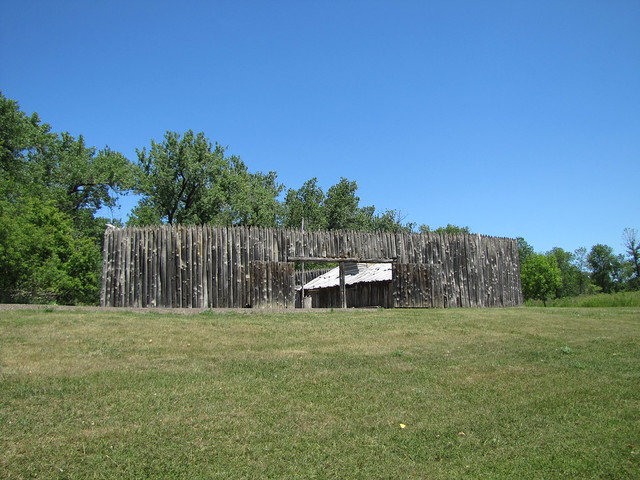
Recreation of Fort Mandan, where Lewis and Clark
wintered in 1804-05 and where Sacajawea joined
the expedition.
photo by Sara K Joiner
I recently returned from vacation where we traveled along some of the route that Meriwether Lewis and William Clark traversed during their 1804-06 expedition. Considering how difficult it is to get to places like Fort Mandan or Pompey's Pillar even with motorized vehicles and paved roads, Lewis and Clark's journey is almost impossible to believe.

Walking in the Corps' footsteps truly impressed upon me the remarkable nature of all those who made that trek. What an amazing feat they accomplished!
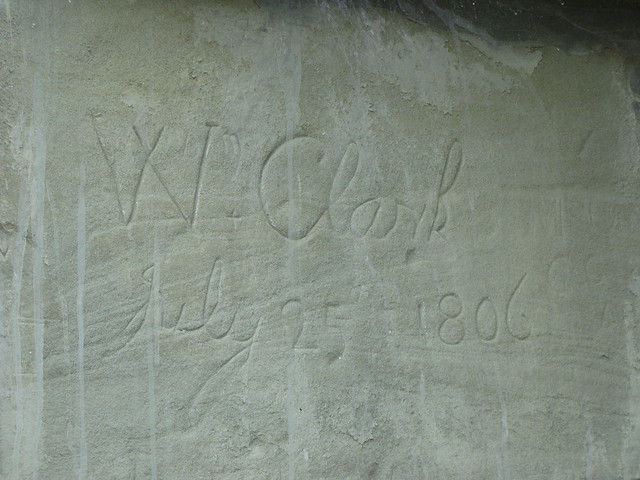
William Clark's carved signature
at Pompey's Pillar - the only
physical evidence remaining
of the Corps of Discovery.
photo by Sara K Joiner

To journey along with the Corps of Discovery without leaving the comforts of home, try some of these books.

Sacajawea: The Story of Bird Woman and the Lewis and Clark Expedition by Joseph Bruchac tells the story from Sacajawea's and Clark's point of view as they relate the tale to Sacajawea's son years later.

Virginia Driving Hawk Sneve's Bad River Boys: A Meeting of the Lakota Sioux with Lewis and Clark imagines a meeting between the Corps and the Native nation.

My Name Is York by Elizabeth Van Steenwyk focuses on York, a slave owned by Clark, and tells the story of the expedition through his eyes.

Laurie Myers' Lewis and Clark and Me: A Dog's Tale imagines what Lewis' dog Seaman saw on the journey and all the new experiences he had.

Sara K Joiner is the author of After the Ashes and a public librarian.

Thursday, August 3, 2017

"The Storm in the Barn" : A Review by Michele Hathaway


Learning about the Dust Bowl is like watching the passengers of the Titanic drown. One. By. One. When human error and nature collide, the tragedy overwhelms me.


But I'm reading down the Scott O'Dell Awards list and The Storm in the Barn by Matt Phelan was the 2010 winner. I had to read it. To my relief and delight, it is not your typical dust bowl story.


"Part tall tale rich in lore, part thriller, and part gripping historical fiction, this is an artful one-of-a-kind creation..." Jacket Flap


The Storm in the Barn is a graphic novel set in the dust bowl, but it is about much more than that. It is about a boy who feels helpless and fearful. It is about dealing with bullies, disappointing a father, and being unable to save a sick sister.


Phelan refocuses these fears on a mysterious and malevolent presence in The Barn that 11-year-old Jack Clark must overcome. By incorporating fantasy into the story, Phelan empowers Jack to save his world, the way Jack in the stories  he hears saves the day. At its core, The Storm in the Barn is a hero's journey: boy against boy, boy against nature, boy against monster, boy against himself.


http://maxpixel.freegreatpicture.com/Wood-Farm-Barn-Rustic-
Weathered-Old-Barn-Wood-2030879

The Storm in the Barn is a graphic novel for everyone, but especially for middle grade. In the hands of a visual learner or reluctant reader it is likely to unlock doors. The art features a limited color palette with grays, yellows, and, of course, dusty browns. The exceptions are brief moments of red and blue, used in profoundly symbolic strokes.


The book incorporates  a strong literary element as well. Jack's sick sister, who is slowly dying from the dust in her lungs, reads the Wizard of Oz books, and every day Jack listens to tall tales about another boy named Jack. In the author's note, Phelan writes:


Public Domain,
https://commons.wikimedia.org/w/index.php?curid=854090


"I wanted to bring in elements of American folklore, like the Jack tales that were still being told and the Oz books that had been enthralling kids for thirty-odd years at that point. In the next two years, The Wizard of Oz would become a movie and Superman would leap from the pages of comic books, but in 1937 there were mostly just stories a boy in Kansas would think about as he looked at a land apparently as cursed as any in the fairy tales."


The Storm in the Barn  is a study in art, literature, and even earth and atmospheric science--and of course, history! The story has also been made into a play. You can find The Storm in the Barn at your local library under the call number J 741.5973 Phelan.


Michele Hathaway is a writer and freelance editor. She has an M. A. in Social Anthropology and has worked in libraries in California, New Mexico, and Pennsylvania. She writes stories set in culturally diverse, historical and contemporary periods.

Subscribe to get posts automatically and never miss a post. You can use the Subscribe or Follow by E-Mail buttons to the right, or add http://madaboutmghistory.blogspot.com/to Feedly or another reader. 


Tuesday, July 18, 2017

Noah’s Flood and the Archaeological Discoveries. by Elizabeth. W, C. Junner


It has been an unusually wet year in QuƩbec. So wet it got me thinking Noah's Flood would be an appropriate theme for this blog.
In their book, Noah’s Flood, William Ryan and Walter Pitman illustrate ‘the new scientific discoveries about the event that changed history’ with fascinating accounts of Henry C. Rawlinson and George Smith and their tremendous contribution to historical data.
Henry Creswicke Rawlinson, aged 17, volunteered as a cadet to the East India Company in1827. On the four month voyage by clipper ship from England to India, young Rawlinson enjoyed much stimulating discourse with the Governor of Bombay. The Governor aroused a passion for Persia’s history, religion and ancient languages in Henry. From his new friend Henry also obtained a detailed account of the studies on ancient Hindu history and religious texts written in archaic Sanskrit made by the English High Court judge, Sir William Jones, while he was serving in Calcutta.
The oldest of these texts, the Rig-Veda, depicted the history of Manu, an Aryan. Manu was warned a deluge would cover the earth and that therefore he should prepare a ship which would carry him, his family, and livestock to safety on a high mountain. During his intensive studies Sir William noted a link in some common words and in syntax between Sanskrit, Latin, Greek, Welsh, early German, and Persian.
Rawlinson was struck by the similarity between the age-old Hindu text and the Biblical account in Genesis of a great flood and of one man building a huge ship three storeys high in which he housed two of every species. But what really excited Henry was the judge’s discovery of the link in all those ancient tongues – did they have a common wellspring? What treasures from the earliest history of man might lie buried beneath the desert sands?
 Fresh from studying the classics, Henry easily became fluent in Persian, Arabic, and Hindustani. He took a post with the First Grenadier Guards Regiment which was stationed in Bombay and in March, 1835, as an officer with the company, he was sent to Kermanshah, Persia, to act as military advisor to the Shah’s brother.While in Kermanshah he visited Persepolis and strolled amidst the tombs of the ancient kings. Seized by the thought one of them could be that of King Darius l, the Great, Rawlinson hired a Kurdish boy as a guide to help him find it. 
The lad led him to the great Behistun Rock, the first time anyone from the western world had even heard about the rock’s existence, let alone seen the great vertical slab. Here, in ancient cuneiform script, was the proclamation of Darius the Great. One can only imagine the electric thrill which shot through young Henry as he viewed the writing in the massive rock.
Desperate to examine and copy the script into his notebook, and then to interpret it, Henry had himself lowered down the sheer face by a daring means of ropes and ladders. Though an experienced climber, he nearly lost his life at one point. However, over the course of two years he interpreted enough of the inscriptions on the rock to send his findings to the Royal Asiatic Society in London where he was acclaimed as the first person to crack the cuneiform code.


In that same autumn of 1835, Charles Darwin finished five weeks of observing the Galapagos Finches. His observations on these, and his assertion that man and animal shared a common ancestry electrified  Victorian society; he shocked the  religious Victorians and delighted the scientists.  Rawlinson’s discovery of the Behistun Rock and Darwin’s theories were both major talking points. Which was truth, the  Biblical story or evolution from amoeba?
In 1840, the levees along the banks of the Tigris collapsed under torrential rain. The resultant flood buried the streets of Baghdad under a layer of mud several feet thick, and houses and walls crumbled under the rushing waters. Around this time a young English adventurer, Austen Henry Layard, visited Kermanshah, saw the Behistun Rock, the as-yet undeciphered Babylonian and Elamite scripts, and Rawlinson’s translations.
Fired by the desire to recover ruins of antiquity himself, Layard returned to Mosul a year or so later and with thirty Bedouin labourers uncovered the city of Nimrud, the second ruling capital of Assyria. They unearthed huge sculptured slabs and frescoes, but perhaps the most breathtaking find for Layard were two immense winged bulls with human heads – the guardians of the city gates. However, his poor awestruck workers fled in terror at sight of the monstrous beasts, as did the crowd of onlookers!

Great were the ancient treasures Layard unearthed and shipped back to England. When he had finished his dig at Nimrud, he returned to Mosul, still filled with the desire to seek the ancient cities buried in the sand. In particular, he wanted to investigate Kuyunjik but he needed caution, since the site was an Islamic shrine and cemetery.
Nineveh
He was rewarded. At the north gate the diggers uncovered a pair of winged creatures that dwarfed even the gigantic bulls of Nimrud.  After coming on the limestone slabs of a great palace, with Rawlinson’s help translating, Layard learned he had discovered the fabled Nineveh of Sennacherib. They
found the royal library of King Assurbanipal, the floor of which was littered with clay tablets, many broken but a good number still intact. Rawlinson could not decipher the script, so he turned the task over to his protĆ©gĆ©, the gifted linguist George Smith, who determined the writing was  Akkadian, a Semitic tongue.
The fragments George Smith assembled with painstaking care revealed a heathen hand had, two and a half thousand years earlier, recounted the story of Noah almost exactly as given in Genesis  Obsessed by the scriptures since he could read, this was treasure beyond George's wildest dreams. The history of modern man!

Thursday, July 6, 2017

Taking the Present Out of the Past

By Suzanne Morgan Williams

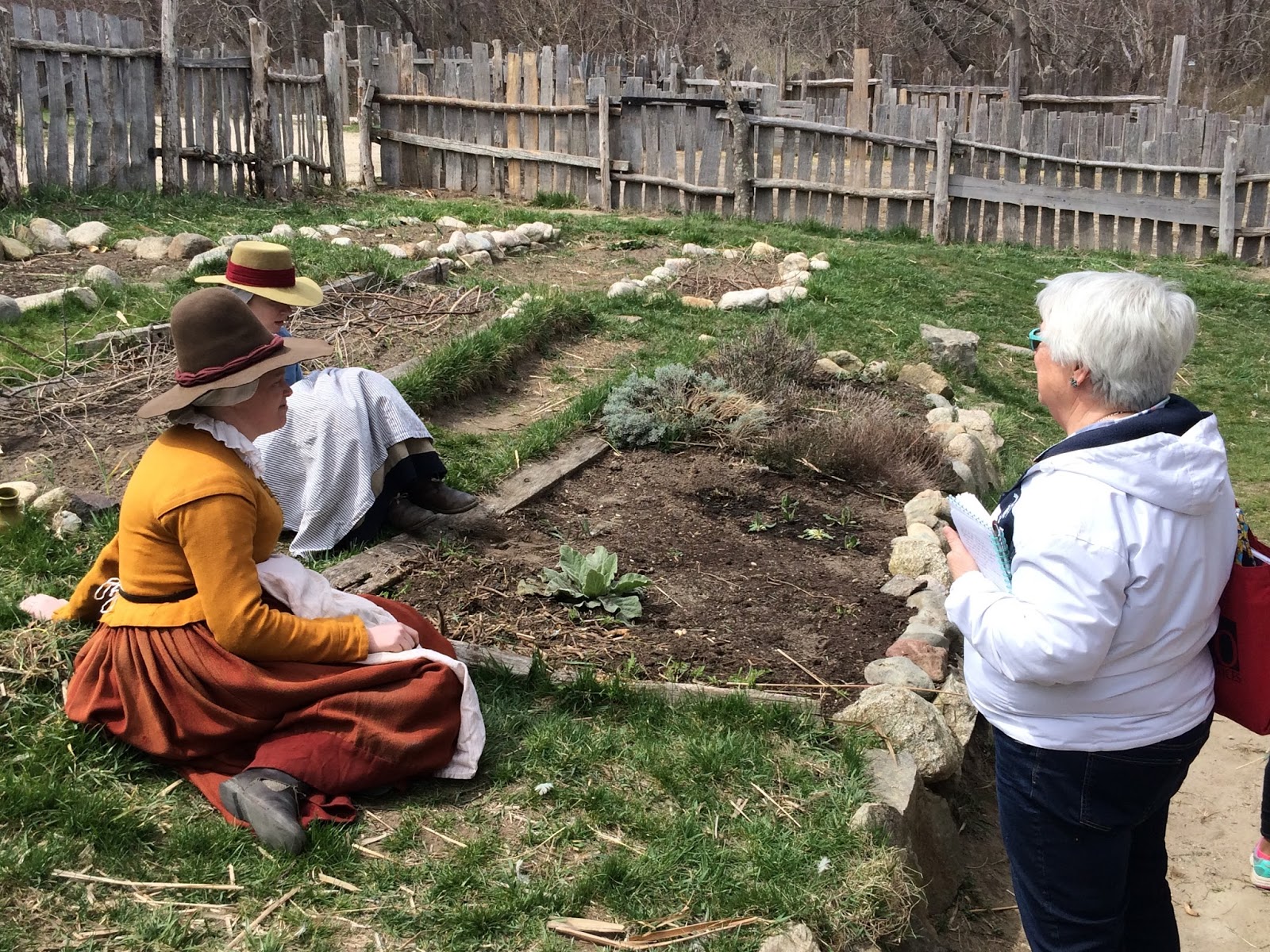
This spring, thanks to a grant from Nevada Arts Council and the National Endowment for the Arts, I had the opportunity to interview a number of historians and cultural experts for my work-in-progress. It’s historical novel set in the 1600s in Massachusetts. Creating that world, where people’s knowledge and belief systems are so different from our own, feels a bit like writing fantasy or sci-fi. I’m building a lot of the world from the ground up. Yes, I can identify the trees, animals, and the weather. I’m pretty sure anger was still ugly and that people wanted to be loved. But how did they feel about themselves? Did they expect the same things we do? I’m convinced their views on heaven, hell, and this earth in between were very, very different.

I asked one historian what pitfalls I might face in developing my teen girl protagonist. He almost slapped his palm to his face and said, “Just don’t make her a spunky red-headed girl.” Then he talked to me about “presentism.” His premise was that people in the past, and particularly in the early colonial era, really didn’t want the same things that we do; that their main concerns were far removed from ours. (Although I’ll postulate that their emotional reactions were undoubtedly similar.) I’ve had a similar discussion with a writer friend who is active in educating other writers and illustrators about different perspectives in our diverse world. As a Muslim woman, she objects to Muslim girl characters being given motives by non-Muslim writers that she believes are not true to their cultural and religious background. We have to be careful – not everyone is just like us.

Of course, when an author creates a fictional character, we are in charge of their wants and fears, their motives and reactions. But for me, in writing a historical novel that children will use to augment their take on history, I need to keep the milieu of that time and place authentic. I don’t know if I’ve ever been quite as challenged by that as I am now. I’m trying to create characters living 450 years ago – before we knew about infectious diseases, electricity, or believed in equal rights. It was the time when religion was so closely tied to politics and class that dividing the three, in our modern way, is almost impossible and not very useful. The afterlife was not just a promise but also a threat. Writings from that era seem distressingly black and white. But I’m sure life itself was as messy and nuanced as it is today. How to capture that?


The easy part of excising “presentism” from my writing, is finding metaphors that can’t work – “An electric current ran up my arm,” for example. Electricity had yet to be “discovered.” The harder part is making the characters relatable to today’s readers while staying true to the history and without making them seem stilted or ignorant. They were people of their times as are we. If I can get that message across, that they had their own struggles and found ways to deal with them, then I’ve succeeded. Wish me luck.