Showing posts with label historical fantasy. Show all posts

Thursday, February 1, 2018

Edge of the Seat and the Ever After by Eden Unger Bowditch


The history of children’s literature is something of a jumble. John Locke claimed that children should learn by playful and fun reading material. John Newberry was one of the first to produce works for specifically for children. And so it began…though sensibilities have certainly changed. Or perhaps…changed back?


There are myriad familiar (and less familiar) stories that have been passed down through the ages from storytellers to children, who then grow up to be storytellers themselves. There are familiar versions (edited from perhaps somewhat disturbing earlier versions) of fables and fairytales that we know from Disney films and from other gently (or severely) altered publications from the 1930s through the 1950s. Traditional versions of stories, like “The Little Mermaid”, are very different than their Disney reinventions. Disney does not have the ill-fated mermaid as losing the love of the prince and falling overboard to die and become at one with the sea foam. Along with other forms of censor, Grimms’ Fairytales and Hans Christian Anderson stories were re-envisioned to provide ‘happily ever after’ endings and offer clear divisions between good and evil. Stories, in which the protagonist may have behaved badly, perhaps chopping off a head or two, would still present the ambiguously good hero as righteous. And then, fearful of the delicate sensibilities of the young, grown-ups began to change these beloved old tales to fit into nice packaging and send the reader to a happy place. Even John Newberry, namesake of the Newberry Award, seemed to be called into question since he wrote, in the letter from “Jack the Giant-killer” that “Little Master Tommy” would be “whipt” if found to be lacking in appropriate skills and demeanor. Goodness! We could not let our children know that there was any such thing! The little mermaid got the guy and no child would ever have to hear about chopped off noses or cloven boys who were raised by witches. It was believed, for those interim years, that scary stories had to be abolished. From the people who brought the fig leaf to Michaelangelo’s nudes, we got clean and happy, all day, every day.


But then, psychology gave us a surprise. Children LIKE scary and WANT to hear stories of danger and yuck. Children who learn to navigate the treacherous fantasy and can better cope with the real. And why stick to the straight and narrow? These stories were handed down and altered over the centuries. Why not take it further? We now have stories like The Three Little Wolves and the Big Bad Pig by Eugene Trivizas and Wicked by Gregory Maguire, both revisiting the ideas we have always held about good and evil and who is right or wrong. We now understand that it is a fine thing for kids to read Italo Calvino’s Italian Folktales or tales of the Grimms closer to the originals, which can often be fairly disturbing.


Middle Grade books still straddle ideas about adolescence and issues that are considered to be challenging to childhood innocence. But, perhaps, we know how smart and capable young people are. We know that every story isn’t tied up with a bow. We have learned that being on the edge of your seat is sometimes an important place to be when reading a book. There are such fine authors here at PMGM and I, personally, have been on the edge of my seat more than once as I perused the pages of their novels. And it is, indeed, a fine place to be.

-Eden Unger Bowditch


Thursday, August 3, 2017

"The Storm in the Barn" : A Review by Michele Hathaway


Learning about the Dust Bowl is like watching the passengers of the Titanic drown. One. By. One. When human error and nature collide, the tragedy overwhelms me.


But I'm reading down the Scott O'Dell Awards list and The Storm in the Barn by Matt Phelan was the 2010 winner. I had to read it. To my relief and delight, it is not your typical dust bowl story.


"Part tall tale rich in lore, part thriller, and part gripping historical fiction, this is an artful one-of-a-kind creation..." Jacket Flap


The Storm in the Barn is a graphic novel set in the dust bowl, but it is about much more than that. It is about a boy who feels helpless and fearful. It is about dealing with bullies, disappointing a father, and being unable to save a sick sister.


Phelan refocuses these fears on a mysterious and malevolent presence in The Barn that 11-year-old Jack Clark must overcome. By incorporating fantasy into the story, Phelan empowers Jack to save his world, the way Jack in the stories  he hears saves the day. At its core, The Storm in the Barn is a hero's journey: boy against boy, boy against nature, boy against monster, boy against himself.


http://maxpixel.freegreatpicture.com/Wood-Farm-Barn-Rustic-
Weathered-Old-Barn-Wood-2030879

The Storm in the Barn is a graphic novel for everyone, but especially for middle grade. In the hands of a visual learner or reluctant reader it is likely to unlock doors. The art features a limited color palette with grays, yellows, and, of course, dusty browns. The exceptions are brief moments of red and blue, used in profoundly symbolic strokes.


The book incorporates  a strong literary element as well. Jack's sick sister, who is slowly dying from the dust in her lungs, reads the Wizard of Oz books, and every day Jack listens to tall tales about another boy named Jack. In the author's note, Phelan writes:


Public Domain,
https://commons.wikimedia.org/w/index.php?curid=854090


"I wanted to bring in elements of American folklore, like the Jack tales that were still being told and the Oz books that had been enthralling kids for thirty-odd years at that point. In the next two years, The Wizard of Oz would become a movie and Superman would leap from the pages of comic books, but in 1937 there were mostly just stories a boy in Kansas would think about as he looked at a land apparently as cursed as any in the fairy tales."


The Storm in the Barn  is a study in art, literature, and even earth and atmospheric science--and of course, history! The story has also been made into a play. You can find The Storm in the Barn at your local library under the call number J 741.5973 Phelan.


Michele Hathaway is a writer and freelance editor. She has an M. A. in Social Anthropology and has worked in libraries in California, New Mexico, and Pennsylvania. She writes stories set in culturally diverse, historical and contemporary periods.

Subscribe to get posts automatically and never miss a post. You can use the Subscribe or Follow by E-Mail buttons to the right, or add http://madaboutmghistory.blogspot.com/to Feedly or another reader. 


Friday, February 3, 2017

Chris Eboch on Fantastic History: Bringing Legends to Life with Historical Fantasy

At a glance, historical fiction and fantasy appear to be opposites. Historical fiction requires intensive research to accurately portray a specific past time. In fantasy, the author may create the setting from pure imagination. Yet some writers combine the two genres into historical fantasy.

Historical fantasy can be a way to introduce history to young people who would not normally read historical fiction. Clare B. Dunkle says of her historical fantasy novels, “I think the fantasy elements were what sold the books. They certainly were the elements that made me want to write them.” However, “A number of reviewers also mentioned the setting favorably.”

The historical accuracy varies. How to Train Your Dragon, by Cressida Cowell, claims an old Norse setting but is only loosely based on historical Vikings. Megan Whalen Turner’s Attolia series reminds the reader of ancient Greece, but includes anachronisms such as guns. Catherine Fisher’s Oracle Prophecies trilogy combines ancient Greece and ancient Egypt. These books are more “inspired by history” than based in historical fact. Still, they could be enough to interest a young reader in a past time period. They could also be paired with more realistic historical fiction or nonfiction for an interesting discussion of what is real and what is imagined.

Other books are set in a clear historical time and place. Donna Jo Napoli’s Beast puts Beauty and the Beast in ancient Persia. Walter Mosley’s 47 is set on an American slave plantation, with a character from a distant world.

A Favorite: Britain

Many traditional fantasy books draw upon medieval England for setting and mythology. This era remains popular, but some authors take extra care to portray an accurate past. Of her novel, Janet Lee Carey says, “Dragon’s Keep started out as a novelized fairytale about a princess with a dragon’s claw. The story begins in A.D. 1145 and takes place on a fictitious island that was once an English prison colony.” Her story is solidly grounded in English history.

Clare B. Dunkle set By These Ten Bones in about 1550 in the Scottish Highlands and used fantasy elements from the beliefs of the medieval Highlanders. She says, “Folklore-based fantasy has always been a favorite of mine. I made a study of the folklore of Britain when I was in school, so it was a natural choice when I decided to write.”

More recent historical England is another popular fantasy setting. Libba Bray’s A Great and Terrible Beauty and its sequels, set in Victorian England, use an accurate setting where only a few people access the fantasy world.

In contrast, fantasy elements are an accepted part of everyday life in the Sorcery & Cecilia series by Patricia Wrede and Caroline Stevermer. Reka Simonsen, then Senior Editor at Henry Holt and Company, once said, “I’m not sure if the [English] setting fascinates so much because YA readers today have grown up with Harry Potter, or because Victorian London is the birthplace of the most famous classic horror and ghost stories, of if there’s some other reason entirely.”

Farther Afield

Other books push the boundaries into more unusual times and places. Tracy Barrett’s novel King of Ithaka is based on Odysseus’ son Telemachus. She once said, “I’m trying to keep all the day-to-day details of late Bronze-Age Greece accurate and the centaurs, nymphs, sea-creatures, and other creatures that are in the story are interwoven with these realistic details.”

My novel The Genie’s Gift is set during the Ottoman Empire and draws on the mythology of One Thousand and One Nights (The Arabian Nights). While the magic and monsters are fantasy, the clothing, food, and other details help capture a setting that is not well-known to most US students.

American history has its fans as well. Carla Jablonski’s Silent Echoes involves characters in New York City in 1882 and the present. Jablonski was inspired by research about a historical figure. “If she claimed these things today, they’d assume she was crazy. That got me thinking about context; about how values, attitudes, even sanity and reality are determined by the historical time period. The fantasy element allowed me to contrast how the same behavior would be perceived and experienced differently in different times.”

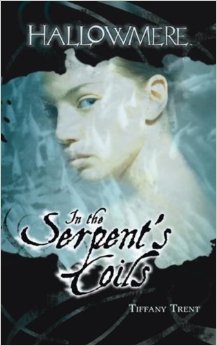
Tiffany Trent’s In the Serpent’s Coils involves a magic school in post-Civil War Virginia. “Often, fantasy books feature some sort of conflict that culminates in an epic battle,” Trent says. “But what if the epic battle has already happened? I wanted to give the sense that my character Corrine, at 15, had lived through a tremendous amount, before she even got involved with dark and mysterious Fey.”

The Painful Truth

Many of these fantasy authors appreciate the gritty realistic details that come from history. Carey says, “The fantastical elements require solid ground. The reader needs to feel as if she’s in a real place. The filth and stench of the middle ages helped me ground the story in reality. Medieval times offered so many strange and often gory details simply as it was. I found the time fascinating from fleas and famine to bizarre medicinal cures—did you know that goose droppings liberally applied can cure baldness?”

Dunkle comments, “Anchoring By These Ten Bones within a historical setting gave the book its strength. The Highlanders had a fascinating superstitious lore. They wouldn’t have been surprised to find a werewolf in their midst, and they would have known exactly which brutal course of action to employ.”

For young readers who are baffled by the concept of cassette tapes or a phone with a cord, all history seems fantastical. Barrett notes, “To most people the Bronze Age is as fantastical a setting as Venus!”

Authentic History, Fresh Fantasy

Though some writers use history only as inspiration, many are committed to historical accuracy. Jablonski says, “The research helped inspire events that took place in the book and I think the more realistic the setting, the more absolutely rooted in the truth, the more your reader will go with you in the fantasy.”

“I also write nonfiction,” Trent says, “so I’m a stickler for being as accurate as I can, no matter what I’m writing. In the Hallowmere books, I used as much factual detail as I could, even down to finding out the days of the week corresponding to the 1865 calendar so I knew whether I was scheduling events at the proper time.”

Dunkle comments, “For By These Ten Bones, I probably did more research than I would have done for straight historical fiction because I needed to know not just the historical details of life in a Highland township but their superstitions, pagan practices, and religious beliefs as well.”


Historical fantasy can be a way to introduce the legends and beliefs of a specific time period. That can make for some fascinating classroom discussions. 

Subscribe to get posts automatically and never miss a post. You can use the Subscribe buttons to the right, or add http://madaboutmghistory.blogspot.com/ to Feedly or another reader.

The Genie’s Gift is a lighthearted action novel set in the fifteenth-century Middle East, drawing on the mythology of The Arabian Nights. Shy and timid Anise determines to find the Genie Shakayak and claim the Gift of Sweet Speech. But the way is barred by a series of challenges, both ordinary and magical. How will Anise get past a vicious she-ghoul, a sorceress who turns people to stone, and mysterious sea monsters, when she can’t even speak in front of strangers?

Chris Eboch’s novels for ages nine and up include The Eyes of Pharaoh, a mystery in ancient Egypt; The Well of Sacrifice, a Mayan adventure; The Genie’s Gift, a middle eastern fantasy; and the Haunted series, about kids who travel with a ghost hunter TV show, which starts with The Ghost on the Stairs. Her writing craft books include You Can Write for Children: How to Write Great Stories, Articles, and Books for Kids and Teenagers, and Advanced Plotting

Learn more at www.chriseboch.com or her Amazon page, or check out her writing tips at her Write Like a Pro! blog.

Thursday, December 8, 2016

#Diversity and How the Past Inspires Us Today, with Chris Eboch

The Power of Diversity

Recent months have seen an increase in bullying and racism in schools. Children, of course, reflect what they see in the world around them. We can mourn what’s happening, and we can fight it in a variety of ways, through civic action, leading by example, discussing issues with our own children and students, instituting anti-bullying policies at local schools, and so forth.

Writers, teachers, and librarians also have a special tool in books.

Books of all types, from contemporary realistic stories to science fiction and fantasy, can present diverse characters and inspire kind and generous behavior. Historical fiction also has a place in showing kids the wonderful diversity of our world, and in encouraging them to practice everyday heroism.

My novel The Well of Sacrifice brings the world of the pre-Columbian Maya to life, challenging the idea that only white Europeans developed advanced civilizations. Young Eveningstar makes friends with a foreigner, learns to question authority gone bad, and stands up for her beliefs against great threats. In addition, the book touches on environmental issues that remain relevant today.

The Genie’s Gift, inspired by the mythology of The Arabian Nights, introduces the culture of the Ottoman Empire. The heroine, Anise, wants to change her future but suffers from extreme shyness. While young readers may not face her specific challenges – ghouls, monsters, and a solo journey across a vast desert – they may see themselves in her social anxiety and desire to break away from the path the patriarchy has set for her.

My upcoming historical mystery, The Eyes of Pharaoh, shows kids today the differences – and similarities – of young people 5000 years ago. I hope readers will not only learn about a remarkable culture, but also be touched by the friendships shown, and understand that the same humanity exists in all of us. My current my work in progress, The Guardians of Truth, is also set in ancient Egypt. In this young adult adventure with paranormal elements, fierce brown and black girls in ancient Egypt fight against injustice. (Read a sample here.)

Many people have been feeling anxious and depressed in a time where our society seems to be breaking apart. Teachers, librarians, parents, and writers can make a difference in the future by supporting and inspiring young people today. That isn’t always easy, but presenting great books and reading and discussing them together can be a step in the right direction.


Chris Eboch is the author of over 40 books for children, including nonfiction and fiction, early reader through teen. Chris Eboch’s novels for ages nine and up include The Eyes of Pharaoh, a mystery in ancient Egypt; The Well of Sacrifice, a Mayan adventure; The Genie’s Gift, a middle eastern fantasy; and the Haunted series, about kids who travel with a ghost hunter TV show, which starts with The Ghost on the Stairs. Her writing craft books include You Can Write for Children: How to Write Great Stories, Articles, and Books for Kids and Teenagers, and Advanced Plotting.

Learn more at www.chriseboch.com or her Amazon page, or check out her writing tips at her Write Like a Pro! blog.

Friday, November 13, 2015

Chris Eboch on Fantastic History: Bringing Legends to Life, Part 2

Yesterday I began this post on Fantastic History. See part one here.

For authors who write historical fantasy, how much historical detail is enough? It varies by author and book, but quite often authors want their historical details to be accurate.

Authentic History, Fresh Fantasy

Though some writers use history only as inspiration, many are committed to historical accuracy. Carla Jablonski says, “The research helped inspire events that took place in [Silent Echoes] and I think the more realistic the setting, the more absolutely rooted in the truth, the more your reader will go with you in the fantasy.”

“I also write nonfiction,” says Tiffany Trent, author of In the Serpent’s Coils, “so I’m a stickler for being as accurate as I can, no matter what I’m writing. In the Hallowmere books, I used as much factual detail as I could, even down to finding out the days of the week corresponding to the 1865 calendar so I knew whether I was scheduling events at the proper time. I do admit to a few liberties when absolutely necessary, but on the whole, I don’t feel excused from historical fact just because I’m writing fantasy.”

Clare B. Dunkle says, “Because the Hollow Kingdom trilogy takes place mostly within the confines of the fantasy part of that world, I didn’t have to do too much research. For By These Ten Bones, however, I probably did more research than I would have done for straight historical fiction because I needed to know not just the historical details of life in a Highland township but their superstitions, pagan practices, and religious beliefs as well.”

The Messy Details

For Dunkle, “The historical setting of By These Ten Bones began to feel constricting after a time because I couldn’t just go with any flight of fancy my mind might dream up. I felt compelled to ‘get it right.’ This led me to obsess over crazy details, such as how the medieval Scottish chickens looked. I also had to piece together the mental and spiritual perspective of the medieval Highlander, which meant that I was working with characters who didn’t think the way I do. This can be uncomfortable for an author, but I dislike books that dress modern characters up in medieval costumes and call them ‘historical.’”

Of Dragon’s Keep, Janet Lee Carey says, “It’s all made up of course but tying into the Arthurian legend in the prologue and setting the story a little more than six hundred years later had its responsibilities.” She cites “the frustration of making the dates in the story fit snugly into English history. I had to do extensive research into England’s civil war between Empress Matilda and King Stephen, but it was worth it.”

Jablonski found challenging, “Making sure the fantasy element is believable, making the transitions between worlds seamless and grounded in credible reasoning – I paid a lot of attention to that.”

A Fictional History

Historical fantasy has a sister genre in speculative fiction that uses an alternate history. The Amethyst Road has a setting much like the Pacific Northwest, but in a world where gypsies are common and persecuted. Author Louise Spiegler says, “This is an archetypical story – the story of the heroine’s journey through trials. One reason I didn’t tell this as a straight contemporary story was to tap into these archetypes, and to create a world that is rich with allusion and poetry.”

Once you accept the basic premise of that world, it follows all the rules of ours. No one uses magic; there are no dragons or fairies. Spiegler says, “The research made my created group feel much more real to me, and certainly made the experience of racism come across more powerfully, and yet the speculative fiction form allowed me to integrate these invented people into this more archetypal story I was telling.”

Traveling Back in Time

Time travel books have long been popular in children’s literature. Often, the time-travel itself is the only fantasy element, while both the present world and the past are strictly realistic. In Susan Cooper’s King of Shadows, a young actor winds up in Shakespeare’s time. In Kimberly Little’s The Last Snake Runner, a Native American boy travels back to the Acoma Pueblo of 1598. These books take place mainly in the past, as seen through the eyes of a contemporary character.

A few books weave contemporary and past stories together with multiple trips through time. In On Etruscan Time, by Tracy Barrett, a boy on an archaeology dig visits an Etruscan village 2000 years ago. He and his friend from the past move between each other’s world several times.

In Louise Spiegler’s novel, The Jewel and the Key, the main character travels back and forth between the early days of the American invasion of Iraq, and World War I. Spiegler says, “My subject demanded time travel. I felt a strong resonance between the two time periods, between the two wars – the questionable reasons for our involvement, the strong voices raised against it, the antagonism towards dissent, the curtailment of civil liberties.

“In this case, the advantage over straight historical fiction is the introduction of a perspective that characters who are embedded in their own time period can’t have. My World War I characters can’t know – as my 21st century characters do, for example – that World War I won’t be the war to end all wars.”

Bringing History to Life

Editor Reka Simonsen says, “I think history is fascinating to most people, really; it’s just the dry textbook approach that turns so many of us away from it. But when a talented author revisits a long-ago time or place and brings the people there to life, the results can be captivating.”

A realistic setting grounds the fantasy, while fantasy elements breathe fresh life into old times. For young readers, historical fantasy could be the entryway into a love of history.


Chris Eboch’s novels for ages nine and up include The Eyes of Pharaoh, a mystery in ancient Egypt; The Well of Sacrifice, a Mayan adventure; and the Haunted series, about kids who travel with a ghost hunter TV show, which starts with The Ghost on the Stairs. Her writing craft books include You Can Write for Children: How to Write Great Stories, Articles, and Books for Kids and Teenagers, and Advanced Plotting.

Learn more at www.chriseboch.com or her Amazon page, or check out her writing tips at her Write Like a Pro! blog.

Thursday, November 12, 2015

Chris Eboch on Fantastic History: Bringing Legends to Life

This post, which will be split between today and tomorrow, is adapted from an article originally published in Children’s Writer newsletter. Some of the books mentioned are middle grade and some are targeted at young adult.

At a glance, historical fiction and fantasy appear to be opposites. Historical fiction requires intensive research to accurately portray a specific past time. In fantasy, the author may create the setting from pure imagination. Yet some writers combine the two genres into historical fantasy. This can be a bridge to get children who like fantasy, but don’t think they like historical fiction, interested in learning about the past.

The historical accuracy varies, however. How to Train Your Dragon, by Cressida Cowell, claims an old Norse setting but is only loosely based on historical Vikings. Megan Whalen Turner’s Attolia series reminds the reader of ancient Greece, but includes anachronisms such as guns. Catherine Fisher’s Oracle Prophecies trilogy combines ancient Greece and ancient Egypt. These books are more “inspired by history” than based in historical fact. They could still be used as part of a unit on fact versus fiction, history versus author imagination.

Medieval Inspiration

Of course, many traditional fantasy books draw upon medieval England for setting and mythology. This era remains popular, but some authors take extra care to portray an accurate past. Janet Lee Carey’s Dragon’s Keep is solidly grounded in English history. Carey says of her novel, “Dragon’s Keep started out as a novelized fairytale about a princess with a dragon’s claw. The story begins in A.D. 1145 and takes place on a fictitious island that was once an English prison colony.”

Clare B. Dunkle set By These Ten Bones in about 1550 in the Scottish Highlands and used fantasy elements from the beliefs of the medieval Highlanders. She says, “Folklore-based fantasy has always been a favorite of mine. I made a study of the folklore of Britain when I was in school, so it was a natural choice when I decided to write.”

More recent historical England is another popular fantasy setting. Dunkle’s Hollow Kingdom trilogy, set in England from 1815 to 1854, uses the magical beings of British folklore. Libba Bray’s A Great and Terrible Beauty and its sequels, set in Victorian England, use an accurate setting where only a few people access the fantasy world.

Reka Simonsen, now executive Editor at Atheneum, says “I’m not sure if the [English] setting fascinates so much because YA readers today have grown up with Harry Potter, or because Victorian London is the birthplace of the most famous classic horror and ghost stories, of if there’s some other reason entirely.” For whatever reason, you’ll find a lot of books with English historical setting.

A Broader World

Other books push the boundaries into more unusual times and places. Tracy Barrett’s novel King of Ithaka is based on Odysseus’ son Telemachos. “I’m trying to keep all the day-to-day details of late Bronze-Age Greece accurate and the centaurs, nymphs, sea-creatures, and other creatures that are in the story are interwoven with these realistic details,” she says. Barrett also has a YA novel about Ariadne and Theseus, called Dark of the Moon.

My own novel The Genie’s Gift is a lighthearted action novel set in the fifteenth-century Middle East. I drew heavily on One Thousand and One Nights, often known as The Arabian Nights, for the mythology in The Genie’s Gift. The stories in One Thousand and One Nights came from Indian, Persian, Arabic, and other sources. They were collected over hundreds of years, beginning in the eighth century.

As in The Arabian Nights, The Genie’s Gift is a series of interlocking stories that make up a whole. I started with many traditional stories and adapted them to suit my needs. Legends refer to a sorceress who changed a man into marble from waist down. Gnomes were said to dwell in the mountains and play tricks on people. A mechanical/magical horse of ivory and ebony could fly, controlled by pegs under its mane. Simurgh, a magic bird, offered advice and healed people by rubbing her feathers over wounds.

Coming to America

Teachers of American history will also find many books that support real history with fantasy stories. Walter Mosley’s 47 is set on an American slave plantation, with a character from a distant world. Eden Unger Bowditch’s The Atomic Weight of Secrets or The Arrival of the Mysterious Men in Black is set in 1903.

Carla Jablonski’s Silent Echoes involves characters in New York City in 1882 and the present. Jablonski was inspired by research about a historical figure. “If she claimed these things today, they’d assume she was crazy. That got me thinking about context; about how values, attitudes, even sanity and reality are determined by the historical time period. The fantasy element allowed me to contrast how the same behavior would be perceived and experienced differently in different times.”

Tiffany Trent’s In the Serpent’s Coils involves a magic school in post-Civil War Virginia. “Often, fantasy books feature some sort of conflict that culminates in an epic battle,” Trent says. “But what if the epic battle has already happened? I wanted to give the sense that my character Corrine, at 15, had lived through a tremendous amount, before she even got involved with dark and mysterious Fey.”

The Painful Truth

Many of these fantasy authors appreciate the gritty realistic details that come from history. Carey says, “The fantastical elements require solid ground. The reader needs to feel as if she’s in a real place. The filth and stench of the middle ages helped me ground the story in reality. Medieval times offered so many strange and often gory details simply as it was. I found the time fascinating from fleas and famine to bizarre medicinal cures – did you know that goose droppings liberally applied can cure baldness?”

Dunkle comments, “Anchoring By These Ten Bones within a historical setting gave the book its strength. The Highlanders had a fascinating superstitious lore. They wouldn’t have been surprised to find a werewolf in their midst, and they would have known exactly which brutal course of action to employ.”

Then there’s the fact that to modern readers, history may seem fantastical. As Tracy Barrett says, “To most people the Bronze Age is as fantastical a setting as Venus!”

Dunkle says, “I think the fantasy elements were what sold the books. They certainly were the elements that made me want to write them.” However, “A number of reviewers also mentioned the setting favorably. But I was surprised when an amateur reviewer on the Web called the book historical fiction rather than fantasy. Her review stated, ‘This is how it would have been if the legends of werewolves were actually true.’”

Stop by tomorrow for part two on Fantastic History.

Chris Eboch’s novels for ages nine and up include The Eyes of Pharaoh, a mystery in ancient Egypt; The Well of Sacrifice, a Mayan adventure; and the Haunted series, about kids who travel with a ghost hunter TV show, which starts with The Ghost on the Stairs. Her writing craft books include You Can Write for Children: How to Write Great Stories, Articles, and Books for Kids and Teenagers, and Advanced Plotting.

Learn more at www.chriseboch.com or her Amazon page, or check out her writing tips at her Write Like a Pro! blog.