Showing posts with label 1900s. Show all posts

Thursday, June 21, 2018

Don’t Let the Stories Die - Jodi Lea Stewart on keeping #History Alive

Cross the Bridge into History
Unique Challenges

Historic novel writing presents many unique challenges. Foremost, the writer didn't personally live during that time era, or perhaps he/she lives in New York but loves writing about the Old West.  Slick documentaries and photos often don’t go far enough to immerse the writer or the reader in the “feel” of that particular slot of time.

Stories from people who are long gone still live on to a degree via the written word through journals, newspaper articles, Bible notes, diaries, even plays. If you are fortunate enough to find someone whose ancestors lived during a particular historic time, say during the Ellis Island emigrant burst, all the better because you’re going to get stories no one else has heard, and most likely, tidbits from a different perspective.

I call those stories, especially the ones obtained first person, the REAL STORIES because they come from the mouths of those who lived them.

Blackberry Road, my latest novel, is a snapshot of a hot summer in 1934 Oklahoma. A girl called Biddy narrates a whopping tale of murder and spookiness that begins in May when school is out and ends when the blackberries are turning brown on the vine – about mid- to late-summer. Biddy’s family jumps right out at you like a real family, and why is that?

Because they are, and I didn’t let their stories die.

Turning 'Real' into Fiction

Collecting family stories, recipes, lore, and copying old handwritten Bible notes over the years created the realistic backdrop for Blackberry Road. Fictional Biddy has twelve brothers and sisters. My mother had eleven. Both Biddys, the fictional and the real, were from sharecropping families living in Oklahoma in the 1930s. 

Dirt poor, but rock solid, those families had to eat, live, and survive everything from snake bites to drought (or flood) to miserable housing conditions.

In my particular case, I was fortunate to mingle and mix with a real sharecropping family because they were my own relatives. You can be sure the stories at our reunions or get-togethers flew around like greased spitballs; and there I was, in the thick of it, laughing and asking questions, my pen flying over the notebook I kept with me at all times.

Most members of the real Blackberry Road family have now passed on, but their lives and experiences will live on forever simply because I didn’t let the stories die. My job as a writer was to make fiction seem like reality and reality seem like fiction. 

You can do the same thing.

No Family Stories to Collect? No Problem!

Don’t despair if you don’t have actual family stories to gather. Story opportunities full of "nuggets" pop up everywhere. All you have to do is cross the bridge, so to speak, and be ready to take notes. 

A chance to record stories “from the horse’s mouth” is as close as that elderly lady you see every day on the bus. Befriend her and see life as it was through her eyes. Maybe it’s a friend’s uncle who served in the military and lived through stories that seem too fictional to be true but are true just the same. 

A person volunteering for a church street choir used to be homeless many years ago – what was that like, and how did he or she escape homelessness? The Vietnamese family down the street who barely made it to the USA in 1971 – how did they do it, and what happened when they got here? 

Your friend tells you she has a grandfather who was a butler in the deep South in the early 1950s. Wow! Can you go see him and make sure his stories don’t die?

You don’t know until you try, right?

At an Early Age . . .

This history-collecting mindset can be encouraged at an early age. Teachers can inspire their students to sit down and talk to their own grandparents and parents to collect stories from long ago, or even a few decades ago. Telling the stories to the class or submitting them as a written assignment wins on all levels. A field trip to a retirement home to sit down one-on-one with the residents and collect stories from times past could turn up historical and entertaining information that might lead to a lifetime of story collection for those students. At the very least, it gives the young and the old a chance to relate and talk to one another.

Librarians are famous for encouraging the young to “dig and dig some more” academically. A contest for the most interesting, newly discovered historic story “as told by” could turn up a goldmine of data! A librarian’s influence on the young to respect and preserve history is something that cannot be measured but is truly a stake in our future.

Living stories are waiting for you, your students, your children, and your friends to discover, record, and save. It’s up to all of us to not let those stories pass away into oblivion.

Two Old Stories That Didn’t Die

“I remember Mom making my dresses from flour sacks and my bloomers from flannel undershirts. She used innertube rubber for the waist and legs. She made me at least three dresses for the year. When I grew out of them and had to wear them anyway, it was sure pitiful.” ~ the real Biddy, age 92.

“It was my job to lead my blind grandma to the outhouse, and I would read the Sears and Roebuck catalog to her while I waited. That’s how, when I was ten years old, I got the second doll of my childhood. We read about her in the catalog, and she cost 95-cents. Grandma bought it for me for taking such good care of her. I thought my doll was the most beautiful thing in the world. She had rubber bloomers, and I kept her hung up on a wall. In those days, we didn’t have screens on most of the windows and some grasshoppers got hold of those rubber bloomers and ate them up. I had to kill those varmints for doing that!” ~ the real Biddy, age 92

Jodi Lea Stewart was born in Texas to an “Okie” mom and a Texan dad. Her younger years were spent in Texas and Oklahoma; hence, she knows all about biscuits and gravy, blackberry picking, chiggers, and snipe hunting. At the age of eight she moved to a large cattle ranch in the White Mountains of Arizona. Later, she left her studies at the University of Arizona in Tucson to move to San Francisco, where she learned about peace, love, and exactly what she DIDN’T want to do with her life. Since then, Jodi graduated summa cum laude with a BS in Business Management, raised three children, worked as an electro-mechanical drafter, penned humor columns for a college periodical, wrote regional western articles, and served as managing editor of a Fortune 500 corporate newsletter. She currently resides in Arizona with her husband, two Standard poodles, two rescue cats, and numerous gigantic, bossy houseplants.
She is also the author of a “Nancy Drew meets Tony Hillerman” trilogy; SILKI: THE GIRL OF MANY SCARVES: Summer of the Ancient, Book One; Canyon of Doom, Book Two; Valley of Shadows, Book Three, set in the modern-day Navajo Nation and featuring a sassy protagonist with an addiction to scarves and a penchant for trouble.

Blackberry Road is a panorama of dirt-poor but honest Oklahoma life as told through a sharecropper’s teenaged daughter. The murder of a beloved teacher stretches into mysterious sounds coming from the woods to beyond the hidden caves of Coody’s Bluff. Before it’s over, the truth brushes shoulders with some of 1934’s most notorious criminals. Blackberry Road is Jodi Lea Stewart’s first historic novel.

Thursday, March 15, 2018

"Beyond the Bright Sea" : A review by Michele Hathaway


"My name is Crow.
When I was a baby, 
someone tucked me into an old boat
 and pushed me out to sea." --Lauren Wolk

The opening lines of Lauren Wolk's 2017 Scott O'Dell Award winner, Beyond the Bright Sea, offer promise and mystery that do not disappoint. Crow's assertion of her name pitches the entire story, forming a perfect bookend. First sentences don't get much better than this.

"I washed up on a tiny island
like a seed riding the tide."

Chapter by chapter questions wash up on the sands of our imagination:

  • What kind of name is "Crow"? Who is she?
  • Who would put a baby in a leaky, old boat and push it out to sea?
  • And Why?

Wikipedia Cuttyhunk Islands
(original Source: Bosley Wilder, Travel Editor,
The Block Island Times)
Crow's persistent quest to answer these questions lead her to the site of a former leper colony, into the path of a ruthless criminal, to buried pirate treasure, and to the brink of losing everything.


"The Island where we found each other was small but strong, anchored by a great pile of black rock that sheltered our cottage--a ramshackle place built from bits of lost ships--nestled on a bed of earth and sea muck, alongside a small garden and the skiff that took us wherever our feet could not."


Although set in 1925, Beyond the Bright Sea has a timeless quality.  Crow's quest and circumstance could be any when. The spare artifacts of life dovetail with the setting. Place, perhaps the most magical element of story, lends its power for symbol and emotional connection. Wolk's masterful use of place is lovely. She herself identifies the tiny island, part of the Elizabeth Islands of Massachusetts, as a character in her story.

This sense of place permeates the narrative to its deepest levels. Crow is doubly isolated, connected by a tenuous strip of sand at low tide to the larger island of Cuttyhunk, which in turn is separated from the mainland. More than this, she is socially isolated. Suspected of coming from the now abandoned leper colony on Penikese Island, Crow is treated as a pariah in her community. No one touches her or anything she has touched--ever--except Osh, her rescuer and guardian, and Miss Maggie, her only friend.


Breaking Nets

I think, like Crow, people can be complicit in the forces that shape them. Crow accepted the shunning of her island neighbors, but when she learned the truth about herself, she found the courage to test that shunning. She began to break the net enclosing her.

Beyond the Bright Sea offers children and adults a beautiful story where they can safely test the nets that bind them from discovering who they truly have always been and perhaps find what they never lost.


A Few More thoughts:

Diversity: We know that Crow's skin is darker than Osh's, but we never learn her ethnicity. This opens the door for a diverse audience to see themselves in Crow.

Loose threads?  We never learn Osh's given name or why he actively avoids recognition and his past. Miss Maggie is a mystery as well: How did she come to live on Cuttyhunk? Why is she alone? We don't need to know these things for the story to work. Rather, it is essential that we don't know because they steer us to the point of the story. For Osh, and eventually for Crow, what matters is not who or what they were but who they are now, in this time. And so it is for all of us. 

Thoughts for Parents, Teachers, and Librarians: 

Beyond the Bright Sea is a wonderful opportunity for cross-curriculum studies: Science--disease, marine biology, islands; Geography; Sociology--the nature of prejudice, the isolation of people with diseases; History--leprosy, immigration, orphanages; English--vocabulary, analogy, lyrical writing.


Michele Hathaway is an author and freelance editor. She has an M. A. in Social Anthropology and has worked in libraries in California, New Mexico, and Pennsylvania. She writes middle-grade nonfiction and stories set in culturally diverse, historical periods.


Subscribe to get posts automatically and never miss a post. You can use the Subscribe or Follow by E-Mail buttons to the right, or add http://madaboutmghistory.blogspot.com/to Feedly or another reader.

Thursday, October 5, 2017

Sara K Joiner: Horror Historicals

Are you more likely to see a ghost in October?
photo by Sara K Joiner

October is the time of year when we want to be scared. The weather turns cooler, the trees begin losing their leaves, and we want to sit around a fire (either indoors or out) and give ourselves nightmares with tales of ghosts and devils, murder and mayhem.

Sit back. Relax. And enjoy some of these frightening treats that are all set in the past.

The Night Gardener by Jonathan Auxier
Orphaned Irish siblings travel to England and find work as servants in a creepy house. An enormous tree is growing into the house, and the family the siblings work for seems to be growing paler and weaker with each passing day. Will the siblings be able to save their employers from the evil creeping into the house? Or will they only have time to save themselves?


The Shadows That Rush Past: A Collection of Frightening Inuit Folktales by Rachel A. Qitsualik, illustrated by Emily Fiegenschuh and Larry MacDougall
Four stories passed down through generations of Inuit storytellers describe a horrible child-stealing ogress, a monster that is half man and half grizzly bear, an ice-covered polar bear that is ten times the size of a normal bear, and a creature who surprises unsuspecting people by tickling them to death. The illustrations can be horrific and heroic as men and women, children and adults are depicted fighting monsters and suffering their fates.

Wee Winnie Witch's Skinny: An Original African American Scare Tale by Virginia Hamilton, illustrated by Barry Moser
A boy and his uncle become victims of Wee Winnie, a witch who hangs her skin on a hook by the door and flies around on people. Only the boy's grandmother can save them, but how do you trick a witch, especially one as gruesome as Wee Winnie? The illustrations are wood engravings which up the creep factor even more and will haunt readers.


Forbidden by Eve Bunting
A teenage orphan girl is sent to live with an aunt and uncle she has never met on the stormy coast of Scotland. She finds herself surrounded by people, including her relatives, who are threatening and mysterious. Suspicious and determined to learn the truth about her new home, she finds answers that are more horrifying than anything she could have imagined.

Sara K Joiner is the author of After the Ashes. She is also a public librarian.

Thursday, August 3, 2017

"The Storm in the Barn" : A Review by Michele Hathaway


Learning about the Dust Bowl is like watching the passengers of the Titanic drown. One. By. One. When human error and nature collide, the tragedy overwhelms me.


But I'm reading down the Scott O'Dell Awards list and The Storm in the Barn by Matt Phelan was the 2010 winner. I had to read it. To my relief and delight, it is not your typical dust bowl story.


"Part tall tale rich in lore, part thriller, and part gripping historical fiction, this is an artful one-of-a-kind creation..." Jacket Flap


The Storm in the Barn is a graphic novel set in the dust bowl, but it is about much more than that. It is about a boy who feels helpless and fearful. It is about dealing with bullies, disappointing a father, and being unable to save a sick sister.


Phelan refocuses these fears on a mysterious and malevolent presence in The Barn that 11-year-old Jack Clark must overcome. By incorporating fantasy into the story, Phelan empowers Jack to save his world, the way Jack in the stories  he hears saves the day. At its core, The Storm in the Barn is a hero's journey: boy against boy, boy against nature, boy against monster, boy against himself.


http://maxpixel.freegreatpicture.com/Wood-Farm-Barn-Rustic-
Weathered-Old-Barn-Wood-2030879

The Storm in the Barn is a graphic novel for everyone, but especially for middle grade. In the hands of a visual learner or reluctant reader it is likely to unlock doors. The art features a limited color palette with grays, yellows, and, of course, dusty browns. The exceptions are brief moments of red and blue, used in profoundly symbolic strokes.


The book incorporates  a strong literary element as well. Jack's sick sister, who is slowly dying from the dust in her lungs, reads the Wizard of Oz books, and every day Jack listens to tall tales about another boy named Jack. In the author's note, Phelan writes:


Public Domain,
https://commons.wikimedia.org/w/index.php?curid=854090


"I wanted to bring in elements of American folklore, like the Jack tales that were still being told and the Oz books that had been enthralling kids for thirty-odd years at that point. In the next two years, The Wizard of Oz would become a movie and Superman would leap from the pages of comic books, but in 1937 there were mostly just stories a boy in Kansas would think about as he looked at a land apparently as cursed as any in the fairy tales."


The Storm in the Barn  is a study in art, literature, and even earth and atmospheric science--and of course, history! The story has also been made into a play. You can find The Storm in the Barn at your local library under the call number J 741.5973 Phelan.


Michele Hathaway is a writer and freelance editor. She has an M. A. in Social Anthropology and has worked in libraries in California, New Mexico, and Pennsylvania. She writes stories set in culturally diverse, historical and contemporary periods.

Subscribe to get posts automatically and never miss a post. You can use the Subscribe or Follow by E-Mail buttons to the right, or add http://madaboutmghistory.blogspot.com/to Feedly or another reader. 


Thursday, June 8, 2017

History from a Dog's-Eye view

Any story with a dog is usually a hit for me, but what about a story told by a dog? That's a home run in my book, so I was thrilled when I found the Dog Chronicles, a series of middle readers by Alison Hart and illustrated by Michael Montgomery, published by Peachtree.

These books focus on exciting and often lesser known history that will pique the interest of readers 7-10 years of age. You can also find free teacher's guides at the link above. The following excerpts are from the Peachtree website:


Murphy: Gold Rush Dog

"Join Murphy as he finds a home with Sally and Mama, who have recently arrived in gold-rush era Alaska to seek a new life."

“Equal parts heart-wrenching and -warming…its message of the value of love over greed is as subtle as it is powerful. An adventure-filled tale set within a fascinating period of history.” ―Kirkus Reviews

You can find another great gold rush read in Jasper and the Riddle of Riley's Mine.


Finder: Coal Mine Dog


"When Thomas’s family needs money, he and his dog, Finder, are forced to go to work in the coal mines."

“Well-told and entertaining.” ―Kirkus Reviews

“Suspenseful.” ―Horn Book Guide


Darling: Mercy Dog of World War I


"When the British military asks families to volunteer their dogs to help the war effort, Darling’s family sends her off to be trained."

“While never shying away from the tragedies of battle, Darling’s story focuses on bravery, sacrifice and devotion….Wartime adventure with plenty of heart.” ―Kirkus Reviews

For more good dog stories, see Elizabeth Junner McLaughlin's post Dogs at War. 


Leo: Dog of the Sea

I missed the history of the spice trade when I was young. Considering how it changed the world, I was thrilled to find this reader.

"A hardened old sea dog joins Magellan on his journey to the Spice Islands in this action-packed and heartwarming story."

“Frank history, attention to factual detail, and vivid adventures make this a standout.” —Kirkus Reviews, STARRED REVIEW


Michele Hathaway is a writer and freelance editor. She has an M. A. in Social Anthropology and has worked in libraries in California, New Mexico, and Pennsylvania. She writes stories set in culturally diverse, historical and contemporary periods.

Subscribe to get posts automatically and never miss a post. You can use the Subscribe or Follow by E-Mail buttons to the right, or add http://madaboutmghistory.blogspot.com/to Feedly or another reader. 


Thursday, January 14, 2016

School Daze: Jennifer Bohnhoff Looks at Schools Then and Now

In America during the 19th and early 20th centuries, most students attended one-room schoolhouses. In these schools, a single teacher taught reading, writing, arithmetic, history, music, art, and geography to students in the first through eighth grades. The number of students varied from four to 40 or more. The little children, sometimes as young as five years old, sat in the front, while bigger students, who could be as old as eighteen, sat in the back. Students memorized and recited their lessons. In order to proceed to the next grade, students had to pass a written examination, often given by a county examiner or the superintendent of the school district. The eighth grade exam was so rigorous that most students' education stopped at the eighth grade. Only a small percentage of students progressed to high school, and an even smaller percentage graduated. In 1900, for instance, only about 6 percent of students graduated from high school.


Avi's The Secret School is an historical novel that tells the story of one such student, and while fictitious, Avi based the story on solid research into the period. It is 1925 and fourteen year old Ida Bidson is an eighth grader in a remote farming community in Colorado's Rocky Mountains. In order to fulfill her dream to become a teacher, she must attend high school. When her teacher leaves mid-term, the school board decides to suspend classes to save money, jeopardizing her chances to take - and pass - the eighth grade exam. Ida decides to keep the school running by teaching school herself, but she does so without telling the school board. Poor Ida must balance her duty to teach the other students with her need to study her own lessons, all without slacking off on the chores at home. She is often exhausted to the point of defeat, but she manages to keep going in spite of the rigor. At the end of the school year she must face the biggest challenge of all: the final exam.

The year-end eighth grade exam that Ida must pass in order to continue to high school is rigorous by any standard. I doubt that any of my students (I teach 7th grade Social Studies) could pass it. Consider the question for the reading portion of the test: Choose a poem you have learned this year from your reader. Provide the title, the author, the date of his or her birth, and if such is the case, his or her death. Write out all the stanzas of the poem. Then write a brief essay as to why the poem is important to you. I seriously doubt that any of my students have ever memorized a poem, let alone the birth and death dates of any important American.

To see an actual copy of an Eighth Grade Exam from 1912, click here.
 
This kind of rigor in elementary education began to change in the 1930, when education journals, textbooks, and courses for administrators and teachers began to advocate Progressivism. Under this educational theory, school curriculum would be determined by the needs and interests of children instead of by academic subjects. Instead of separate instruction in reading and mathematics, these were integrated into other disciplines, especially in elementary school. It was common for Progressive educators to say, "We teach children, not subject matter." High schools, where teachers were trained in specific subject areas were less willing to change.

 The invention of the automobile also led to changes in education. The first school buses were horse-drawn. Gas powered ones let states consolidate schools into larger districts with common procedures. In 1940 there were over 117,000 school districts in the United States. By 1990, the number had decreased to just over 15,000. Funding for schools also changed. In 1940 local property taxes financed 68 percent of public school expenses. By 1990, 63 percent of school funding came from the federal government. As government funding increased, so did government control of curriculum.

Progressivism came under question during World War II, when the Army found that recruits knew too little math to accomplish basic bookkeeping or compute gunnery projections. This led to the Life Adjustment Movement, which assumed that most students would never go to college or enter a skilled occupation. Instead, students needed school programs that focused on practical problems such as consumer buying, insurance, taxation, and home budgeting. However, the huge technological, scientific and engineering advances made during the war in areas such as radar, cryptography, navigation, atomic energy, and medicine, made mathematics and science education appear imperative. America realized that it needed engineers!

Memorization, which had been the lynch-pin of the One Room Schoolhouse, ceased to be a significant part of American education during the late 1960s and 1970s, a time when society questioned authority. During this period, the Open School Movement began to dominate educational philosophy. Like the Progessivism of the 1930s, this movement believed that students should determine for themselves what they would learn, and when. The Open School Movement got its start with Summerhill, published in 1960. Its author, S. Niell claimed that "Whether a school has or has not a special method for teaching long division is of no significance, for long division is of no importance except to those who want to learn it. And the child who wants to learn long division will learn it no matter how it is taught." By 1970, some 200,000 copies of Summerhill were being sold every year. It had become required reading in 600 university courses.

But by the late 1980's it had become clear that the Open Education Movement was not meeting the educational needs of all students, especially children whose parents could not afford outside tutoring and lacked enough education to support homework. Professor Lisa Delpit, an African American educator who taught in an inner city school in Philadelphia explained, "White kids learn how to write a decent sentence. Even if they don't teach them in school, their parents make sure they get what they need. But what about our kids? They don't get it at home..." The pendulum was set to swing back towards a more rigorous, standardized curriculum, which is what No Child Left Behind and then the Common Core were intended to create.

Anyone paying attention to education knows that the Common Core State Standards, often shortened to CCSS, are a touchstone of controversy. The CCSS claim to be a clear set of expectations for what knowledge and skills a student needs in language arts and math at each grade level in order to be prepared for success in college, career, and life. Supporters say that CCSS allows students across the nation to have access to the same level of education. Detractors say that CCSS forces all students to learn the same information, regardless of whether that information is pertinent to that individual. There is no accounting for different learning styles or disabilities: all children are expected to pass the same test.

In the novel The Teacher's Funeral, A Comedy in Three Parts, Richard Peck draws a humorous picture of what school was like for Russell Culver, a fifteen year old boy living in a tiny Indiana farm town in 1904. When the teacher of his one-room school dies, the local school board hires Russell's older sister, Tansy. There is plenty of memorization in Tansy's lesson plans, and quite a bit of rigor. But that doesn't mean that they are subjected to the standardized, one-size-fits-all assessments that are common today. Witness this excerpt from when T. Bernard Whipple, the Superintendent visits:

     "And do you know your letters yet?" T. Bernard Whipple hung over (Beulah Bradley, the six year old, littlest student).
     "G is for the gopher, digging in its burrow. H is for the patient horse, plowing in its furrow."
     "You are a regular scholar, Beulah. In two or three years you'll be learning your multiplication tables."
     "Six eights are forty-eight," (she) mentioned.
     Mr. Owen stared down at her. "You know your multiplication tables already? Miss Culver, the child is only in first grade. The multiplication tables don't come until - "
     "I am here to help her learn, "Tansy said, "not to keep her from it. She is the brightest button in the box, and what the others learn, she picks up." The superintendent looked out upon us for another victim. His eye . . . jumped to Glenn.
     Glenn. The superintendent had gone from the youngest of us to the oldest, from the smartest to the -  . . . .What schooling Glenn had mastered wasn't going to detain us long.
     "This here's science." Glenn swiped at the ceiling and the mud dauber's nest broke loose from the rafter and fell into his hands.  "See these here cells like a comb of honey? The mother mud dauber lays and egg or two in ever' one of them cells. Then she goes to work and stings a spider with her pizen. She don't kill that spider, but she stuns it. Then she sticks that spider in the cell with the egg and shuts it up tight. As the eggs hatch, they've got plenty of spider meat to feed them on."
     We were all silenced by this knowledge. It wasn't school-learning from Tansy, of course. But Glenn was a country boy. Few of nature's ways were mysteries to him. On the other hand, the superintendent was a town man.
     "You learned that at school?" the superintendent inquired.
     Glen shrugged. "Where else?"
     "Well, I am glad to see that the study of natural science is not neglected," Mr. Whipped admitted. ...(and) his gaze fell on Flopears.
     "Boy," Superintendent Whipple barked, "what's your long suit?"
     "Who, me?" Flopears pointed to himself. "My what?"
     "Well son, tell us.  What are you best at, numbers or letters?"
     Flopears tried to think. "Is them my only choices? I reckon I like pictures best." He flipped open his notepad. You could have knocked us over with feathers. Flopears had captured us all in his notebook. We'd gotten him wrong. He wasn't a dunce. He was an artist.
     T. Bernard Whipple cleared his throat. "I am glad to know that the study of art has not been neglected. With that, the superintendent reached for his overcoat. It was done with, and Tansy had 
passed her trial.

Times change, and the educational pendulum swings, but some things remain true: the best education involves a bit of humor and a lot of flexibility.

Jennifer Bohnhoff is a seventh grade social studies teacher in Albuquerque, New Mexico and the author of three works of middle grade historical fiction. Her most recent book, Tweet Sarts, is a contemporary middle grade novel with a Valentine's day theme. You can read more about all her books on her website.
For more information on the history of American education, go here.
For stories from men and women who taught in one room schoolhouses, go here.

Subscribe to get posts automatically and never miss a post. You can use the Subscribe buttons to the right, or add http://madaboutmghistory.blogspot.com/ to Feedly or another reader.

Tuesday, April 28, 2015

Joanne Sundell on How I’m trying to find my Young Adult audience and get them reading!

My latest release, Arctic Storm, Book One, Watch Eyes Trilogy (Five Star Publishing, 2014), is the tale of 13-year-old Anya and her quest to save her pack of Siberian huskies against great danger in the spirit world. Set in 1908 Alaska, Anya battles dark forces in a landscape almost as dangerous as her enemies. A young Chukchi shaman, Anya is a medium, able to pass between the spirit world and the human world. Joining forces with a 16-year-old seafarer, Rune, Anya embarks on a deadly journey, determined to do anything to save her dogs from the dark forces threatening their existence. 

While this is a work of fiction, it is based in fact … historical fact.

I found my young adult, coming of age story when I looked back in history to unearth the origins of the Siberian husky.  In years past, I’ve written historical romance with my heroines seventeen or older.  Today some of my novels might be considered young adult crossover, but I never thought about my fiction audience before, in terms of age, per se.  I did my research.  Found my story in that research.  Then, let the characters develop as fact and fiction unfolded.   

That is precisely what happened when I began to undertake the writing of Watch Eyes Trilogy.  No one was more surprised than me when I found that my heroine was thirteen and my hero, sixteen—the human ones, that is.  The dogs are key to this story but then so are their young human guardians, Anya and Rune.  I didn’t find my young characters, but they sure found me in the mist and magic of times long forgotten.   My characters also “found me” in the books and films I’ve enjoyed, including Harry Potter, the Twilight series, and the Hunger Games.

The mist and magic in these stories sparked my imagination and opened up any possible “port-keys” in this grandma’s thinking, to allow me to enjoy the literary ride through page after page, reel after reel.  When I began writing Arctic Storm, the spirit of these captivating stories for young people stayed fixed in my heart and mind.  It was this pulse I wanted to strike … this reach-out to young adult readers … this note in history where the lines between fantasy and fiction become blurred … just enough to hook you on history and believe the impossible is, in fact, possible.

Call of the Wild meets Brother Bear in this epic tale of adventure, endurance and young love - a heroic journey tested against America’s last frontier. 

*****

Here is what PUBLISHER’S WEEKLY had to say about Arctic Storm:  “Sundell’s novel evokes the atmosphere of the early 20th century frontier, reminiscent at times of Jack London’s work.  Blending historical and fantasy fiction is no easy feat, but Sundell captures her reader’s interest with appropriate period details and a new take on common fantasy tropes.  This is a refreshing story that neatly fits within the genre while also exploring new ground.”

HISTORICAL NOVEL SOCIETY said the following:  “The plot revolves around the first race, in 1908, which pitted stocky Eskimo ‘malamutes’ against the smaller Siberian huskies, brought into Alaska, in the 19th century, by Russian traders.  In 1908 and 1909 the 408 mile race from Nome to Candle and back was won by malamute teams, but in 1910 the ‘Sibiriskiy haskis’ triumphed, and this historical tidbit has the makings of a fascinating sequel to this delightful book.”

*****

There is a well-drawn, respected line between credibility and the supernatural; not easily crossed.  But … the lines of possibility that exist in between surely can.  Books are a powerful and safe place to explore this possibility.  This is my purpose in Watch Eyes Trilogy, not only to share the human struggle for life and love in such a rugged land, but also to explore the spirit world that might exist in mist and magic, beyond ours.  Any telling of the factual, heroic journey of the Siberian husky to survive is impossible to tell, without this accompanying mystical exploration.  Young or old, books provide an opportunity to see outside ourselves and break through barriers that might keep us from learning and finding our own truth.

Anything is possible . . . when you open a book.

There is a dark side to the history of the Siberian husky and when I discovered the details of the horror visited upon the Chukchi people and their dogs in the wake of Communist collectivization and industrialization, essentially erasing thousands of years of careful breeding and wiping out the Siberian husky in Russia for the next eighty years, I couldn’t find my PC fast enough to begin the telling!  The young breeders of the Chukchi dog and the young pioneers on the Alaska frontier in the early 20th century are heroes in history who struggled valiantly to save this unique breed.  I would love young people today to learn of their forbearers. 

*****

Titles that might relate to Watch Eyes Trilogy and interest students are:

Gold Rush Dogs by Claire Rudolf Murphy and Jane G. Haigh

Call of the Wild by Jack London

White Fang by Jack London

All Alaska Sweepstakes: History of the Great Dog Race by Helen Hegener


The most famous Chukchi writer is Yuri Rytkheu.  His works are primarily in Russian and include:

The Chukchi Bible

A Dream in Polar Fog

*****


QUESTIONS to consider for students, after the reading of Arctic Storm: 

Where did the Siberian husky originate?

How old is the breed?

What makes the Siberian husky different from other husky breeds?

Who are the Chukchi people?

Why was it so important for the Chukchi dog, the Siberian husky, to escape Russia?

What is a shaman?

What is a medium?

What do you know about Viking mythology?

What was life like in Nome during Gold Rush days?

How did people survive the severe climate, the lawlessness, and the isolation of the Arctic West—America’s last frontier?

How hard was it for young people, growing up in Siberia and Alaska during this time?  What were their struggles?  How did they survive such a violent, often hostile, and always isolated frontier?

Could young people from two completely different cultures, come together to find happiness and love during such a difficult and unhappy time?

What do the history books tell us?

Though my career began as a nurse, I turned to the world of writing due to my love for literature, especially Jane Eyre and “all things Jane Austen.”  Trying my own hand at writing historical romance, I’ve had six published novels in the genre, to date.  After the death of my last Siberian husky, Xander, I researched the breed and uncovered a dark history no one seems to talk about.  This secret became the inspiration for Watch Eyes Trilogy.

I thank everyone at MAD ABOUT MIDDLE GRADE HISTORY for allowing me this opportunity to guest blog!

Husky Hugs, 
Joanne

If you wish, you may find me and my books here:

Tuesday, March 10, 2015

Sara K Joiner: Women's History Is History

Statue of Joan of Arc
at Mont St. Michel in France
When I was younger, I only read books that featured girls or women as the main characters. That's still my preference, but I'm not as exclusive as I once was. I went through a phase where I read nothing but biographies—though describing those particular books as biographies is a bit of a stretch; they would more accurately have been called historical fiction.

But what I loved most about them were the stories. Stories about strong, independent women who pushed themselves to the limit and changed the course of human history. Women like Joan of Arc, Florence Nightingale, Marie Curie and Amelia Earhart.

Equally important to me now are stories about the lives of women lead, whether real or fictional, contemporary or historical. How they deal with the times and situations they find themselves in. Some of my recent favorites include:


Dancer, Daughter, Traitor, Spy by Elizabeth Kiem is about Marya, a Soviet ballet dancer, who is forced to defect and flee to the United States with her father after her mother, a star with the Bolshoi Ballet, disappears. Is her mother a spy? Has she been arrested? But most important, can Marya make a home in America? The novel tells a unique immigrant story from the 1980s. It is followed by the sequel Hider, Seeker, Secret Keeper.

Elizabeth Wein's Rose Under Fire is the brilliant sequel to the equally magnificent Code Name Verity. Rose Justice is an American pilot who is captured by Nazis and sent to Ravensbrück, the women's concentration camp. There, she is tortured but manages to form powerful friendships with other suffering prisoners.

Cece Maloney, the main character in Radio Girl by Carol Brendler, wants nothing more than to perform in a radio serial. Unfortunately, her mother refuses to let Cece work. Nothing can keep Cece from realizing her dream, but when everyone on her street panics during Orson Welles' "War of the Worlds" broadcast, only Cece knows it's a hoax because she's secretly been working at CBS with Mr. Welles himself.

Touched by Fire, a novel by Irene N. Watts, features the early twentieth-century immigrant experience. Miriam and her family flee the Jewish pogroms in Russia and move to Germany. For years the family struggles to save enough to immigrate to the United States. Miriam's father leaves first, and years later Miriam joins him. While they wait for the rest of the family to join them, Miriam begins working at the Triangle Shirtwaist Factory.

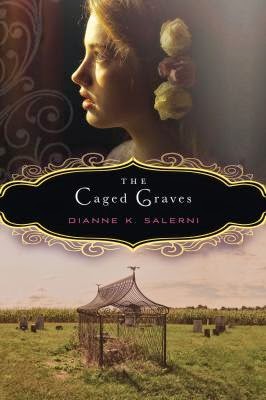
Verity Boone returns to her Pennsylvania home in The Caged Graves by Dianne K. Salerni and discovers the graves of her mother and aunt are encaged in iron bars. Why? In trying to determine the reason for what she believes is desecration, Verity also learns more about the man she is engaged to marry. The novel is inspired by two real caged graves in Pennsylvania.