Showing posts with label 1930s. Show all posts

Thursday, July 26, 2018

FAMILIES IN STORIES: by Mary Louise Sanchez


My soon to debut book, The Wind Called My Name,
is based on my mother's life growing up in a small southern Wyoming town during the Great Depression. Her Hispanic family plays a big part in the story.  Below is a picture of the real Margarita Sandoval with her brother, Ernesto.
When I was writing the Author's Note, I often thought I should include a genealogy chart because my two maternal great-grandmothers are in the story, as well as my maternal grandparents, and some of my mother's siblings.

The family in my story is intact, but that was the case for many families during the Great Depression era, even though the fathers were sometimes away working.  In my story, the father and eldest son are working for the Union Pacific Railroad in Wyoming, while the remainder of the family is in New Mexico.
After a year, they are reunited in Wyoming, but do not have their large extended family nearby, and now they must rely only on each other to be strong in the face of adversity.

So many children's books today show a picture where children deal with divorce and even abandonment, but I want readers to see a strong family unit and how it deals with injustices of the time. Hopefully readers will come away with a sense of what family meant to the Sandovals.

Here are some middle grade historical fiction books that exemplify the kind of family unit you will read about in my novel, The Wind Called My Name. The release date is September 18, 2018 which happens to be the birthday of my maternal grandmother, Josefita (Maes) Sandoval. 

Thursday, June 21, 2018

Don’t Let the Stories Die - Jodi Lea Stewart on keeping #History Alive

Cross the Bridge into History
Unique Challenges

Historic novel writing presents many unique challenges. Foremost, the writer didn't personally live during that time era, or perhaps he/she lives in New York but loves writing about the Old West.  Slick documentaries and photos often don’t go far enough to immerse the writer or the reader in the “feel” of that particular slot of time.

Stories from people who are long gone still live on to a degree via the written word through journals, newspaper articles, Bible notes, diaries, even plays. If you are fortunate enough to find someone whose ancestors lived during a particular historic time, say during the Ellis Island emigrant burst, all the better because you’re going to get stories no one else has heard, and most likely, tidbits from a different perspective.

I call those stories, especially the ones obtained first person, the REAL STORIES because they come from the mouths of those who lived them.

Blackberry Road, my latest novel, is a snapshot of a hot summer in 1934 Oklahoma. A girl called Biddy narrates a whopping tale of murder and spookiness that begins in May when school is out and ends when the blackberries are turning brown on the vine – about mid- to late-summer. Biddy’s family jumps right out at you like a real family, and why is that?

Because they are, and I didn’t let their stories die.

Turning 'Real' into Fiction

Collecting family stories, recipes, lore, and copying old handwritten Bible notes over the years created the realistic backdrop for Blackberry Road. Fictional Biddy has twelve brothers and sisters. My mother had eleven. Both Biddys, the fictional and the real, were from sharecropping families living in Oklahoma in the 1930s. 

Dirt poor, but rock solid, those families had to eat, live, and survive everything from snake bites to drought (or flood) to miserable housing conditions.

In my particular case, I was fortunate to mingle and mix with a real sharecropping family because they were my own relatives. You can be sure the stories at our reunions or get-togethers flew around like greased spitballs; and there I was, in the thick of it, laughing and asking questions, my pen flying over the notebook I kept with me at all times.

Most members of the real Blackberry Road family have now passed on, but their lives and experiences will live on forever simply because I didn’t let the stories die. My job as a writer was to make fiction seem like reality and reality seem like fiction. 

You can do the same thing.

No Family Stories to Collect? No Problem!

Don’t despair if you don’t have actual family stories to gather. Story opportunities full of "nuggets" pop up everywhere. All you have to do is cross the bridge, so to speak, and be ready to take notes. 

A chance to record stories “from the horse’s mouth” is as close as that elderly lady you see every day on the bus. Befriend her and see life as it was through her eyes. Maybe it’s a friend’s uncle who served in the military and lived through stories that seem too fictional to be true but are true just the same. 

A person volunteering for a church street choir used to be homeless many years ago – what was that like, and how did he or she escape homelessness? The Vietnamese family down the street who barely made it to the USA in 1971 – how did they do it, and what happened when they got here? 

Your friend tells you she has a grandfather who was a butler in the deep South in the early 1950s. Wow! Can you go see him and make sure his stories don’t die?

You don’t know until you try, right?

At an Early Age . . .

This history-collecting mindset can be encouraged at an early age. Teachers can inspire their students to sit down and talk to their own grandparents and parents to collect stories from long ago, or even a few decades ago. Telling the stories to the class or submitting them as a written assignment wins on all levels. A field trip to a retirement home to sit down one-on-one with the residents and collect stories from times past could turn up historical and entertaining information that might lead to a lifetime of story collection for those students. At the very least, it gives the young and the old a chance to relate and talk to one another.

Librarians are famous for encouraging the young to “dig and dig some more” academically. A contest for the most interesting, newly discovered historic story “as told by” could turn up a goldmine of data! A librarian’s influence on the young to respect and preserve history is something that cannot be measured but is truly a stake in our future.

Living stories are waiting for you, your students, your children, and your friends to discover, record, and save. It’s up to all of us to not let those stories pass away into oblivion.

Two Old Stories That Didn’t Die

“I remember Mom making my dresses from flour sacks and my bloomers from flannel undershirts. She used innertube rubber for the waist and legs. She made me at least three dresses for the year. When I grew out of them and had to wear them anyway, it was sure pitiful.” ~ the real Biddy, age 92.

“It was my job to lead my blind grandma to the outhouse, and I would read the Sears and Roebuck catalog to her while I waited. That’s how, when I was ten years old, I got the second doll of my childhood. We read about her in the catalog, and she cost 95-cents. Grandma bought it for me for taking such good care of her. I thought my doll was the most beautiful thing in the world. She had rubber bloomers, and I kept her hung up on a wall. In those days, we didn’t have screens on most of the windows and some grasshoppers got hold of those rubber bloomers and ate them up. I had to kill those varmints for doing that!” ~ the real Biddy, age 92

Jodi Lea Stewart was born in Texas to an “Okie” mom and a Texan dad. Her younger years were spent in Texas and Oklahoma; hence, she knows all about biscuits and gravy, blackberry picking, chiggers, and snipe hunting. At the age of eight she moved to a large cattle ranch in the White Mountains of Arizona. Later, she left her studies at the University of Arizona in Tucson to move to San Francisco, where she learned about peace, love, and exactly what she DIDN’T want to do with her life. Since then, Jodi graduated summa cum laude with a BS in Business Management, raised three children, worked as an electro-mechanical drafter, penned humor columns for a college periodical, wrote regional western articles, and served as managing editor of a Fortune 500 corporate newsletter. She currently resides in Arizona with her husband, two Standard poodles, two rescue cats, and numerous gigantic, bossy houseplants.
She is also the author of a “Nancy Drew meets Tony Hillerman” trilogy; SILKI: THE GIRL OF MANY SCARVES: Summer of the Ancient, Book One; Canyon of Doom, Book Two; Valley of Shadows, Book Three, set in the modern-day Navajo Nation and featuring a sassy protagonist with an addiction to scarves and a penchant for trouble.

Blackberry Road is a panorama of dirt-poor but honest Oklahoma life as told through a sharecropper’s teenaged daughter. The murder of a beloved teacher stretches into mysterious sounds coming from the woods to beyond the hidden caves of Coody’s Bluff. Before it’s over, the truth brushes shoulders with some of 1934’s most notorious criminals. Blackberry Road is Jodi Lea Stewart’s first historic novel.

Tuesday, July 7, 2015

Renee Heiss on Historical Fiction as it Relates to Modern Children and their Teachers

The Great Depression may have happened over 85 years ago, but the lessons learned and problems encountered are universal. During that turbulent time period in American history, children’s parents became unemployed at an epidemic level. Today, teachers will find an occasional child whose parents have lost their jobs.

During that early 20th century period, many families had little to eat. Fathers waited in bread lines while mothers wondered how to feed their children. Today’s teachers probably won’t see parents of their students in bread lines, but they will find them applying for food stamps.

And also during that time, children needed to quit school so they could earn a meager income for their families so they could have enough money for essentials. Today’s teachers may find that their students don’t complete homework because they had to take care of younger siblings while their parents went out to a second job. Not much has changed in 85 years, has it? Some children still must deal with financial hardships.

The clothing may have changed from knickers to jeans. The movies may have changed from silent to Disney productions. The toys may have changed from tin trucks to plastic blocks. And the books may have changed from simple tales to complex fantasies. However, children today have the same needs as their Depression-era counterparts – to have clean cloths, warm food, a roof over their heads… and simple fun with their friends.

The purpose of historical fiction is to help today’s children see that although they may be experiencing hardship because they aren’t allowed to watch TV on a school night, they do have that means of entertainment available to them at other times. Today’s children may spurn the dinner offering of beef stew, but they at least have food on the table. And they may not appreciate sharing a room with their sibling, but at least they have a home with their family.

How can teachers help children to see that the purpose of historical fiction is to help them appreciate what they have rather than yearn for what they have not? By analyzing middle grade fiction with a well-organized lesson plan that includes a Venn diagram, list of possible anachronisms, and journal prompts to personalize the lessons.

In Woody’s World, the main character’s life is carefree and effortless because the 1929 Stock Market Crash has not yet occurred. Young readers will identify with Woody as he narrowly escapes hitting a trolley with his sled. We may not have too many trolleys today but we have plenty of trains, trucks, and other potentially dangerous vehicles.

As the readers work their way through Woody’s World, they begin to see Woody’s life change. He loses a good friend because he can’t afford the same types of fun activities. He needs to find creative ways to earn money – like collecting and getting a rebate on empty bottles. And he needs to console his mother and sister when his father travels a long distance to earn money so they can keep their home. Woody’s life has gone from easy to difficult in the space of two months.

Readers will also find that Woody’s World includes many literary devices that enliven the story for them. History may be filled with facts, but historical fiction is filled with facts embellished with dialogue, description, and narration that make the time and tale come alive in the young reader’s eyes.

Teachers should help their students imagine traveling in Woody’s shoes as he captures a pig from an overturned stock car so his family can have meat for a change. Perhaps they can imagine having an internal discussion about saving money for his family vs. spending money for Boy Scouts dues. When students need to choose between two very different decisions, they will be able to see how Woody felt when he split his earnings in two between home and Scouts.

Woody’s World is based on actual incidents – some funny, others desperate - that occurred to my father as he grew up in Princeton, NJ during the Depression Era. The joys he felt and the problems he encountered were real. Only the ending was changed because the true story was too tragic to include in a children’s novel.

Woody’s World is a perfect novel to read during a unit on The Great Depression, but it also provides insight into Jim Crow Laws when Woody and his black friend couldn’t sit on the white side of the movie theater. It also provides insight into the clothing, customs, and culture of life in the 1920s and 1930s. Newspaper references show current events, sports nuances, and the relative cost of basic supplies. Researched heavily by the author, Woody’s World is an accurate depiction of life as it occurred 85 years ago so 21st century children can appreciate what they have today.

Renee Heiss is the author of Woody’s World available at www.amazon.com. She also developed an 8-Week Study Guide for Woody’s World available at www.teacherspayteachers.com. She is a retired teacher of middle school language arts and high school children development. Her website provides additional information about the time and setting of Woody’s World: http://reneeheiss.com/woody_s_world

Woody’s World earned the 2013 Silver Medal for Teen/Tween historical fiction.

Tuesday, March 10, 2015

Sara K Joiner: Women's History Is History

Statue of Joan of Arc
at Mont St. Michel in France
When I was younger, I only read books that featured girls or women as the main characters. That's still my preference, but I'm not as exclusive as I once was. I went through a phase where I read nothing but biographies—though describing those particular books as biographies is a bit of a stretch; they would more accurately have been called historical fiction.

But what I loved most about them were the stories. Stories about strong, independent women who pushed themselves to the limit and changed the course of human history. Women like Joan of Arc, Florence Nightingale, Marie Curie and Amelia Earhart.

Equally important to me now are stories about the lives of women lead, whether real or fictional, contemporary or historical. How they deal with the times and situations they find themselves in. Some of my recent favorites include:


Dancer, Daughter, Traitor, Spy by Elizabeth Kiem is about Marya, a Soviet ballet dancer, who is forced to defect and flee to the United States with her father after her mother, a star with the Bolshoi Ballet, disappears. Is her mother a spy? Has she been arrested? But most important, can Marya make a home in America? The novel tells a unique immigrant story from the 1980s. It is followed by the sequel Hider, Seeker, Secret Keeper.

Elizabeth Wein's Rose Under Fire is the brilliant sequel to the equally magnificent Code Name Verity. Rose Justice is an American pilot who is captured by Nazis and sent to Ravensbrück, the women's concentration camp. There, she is tortured but manages to form powerful friendships with other suffering prisoners.

Cece Maloney, the main character in Radio Girl by Carol Brendler, wants nothing more than to perform in a radio serial. Unfortunately, her mother refuses to let Cece work. Nothing can keep Cece from realizing her dream, but when everyone on her street panics during Orson Welles' "War of the Worlds" broadcast, only Cece knows it's a hoax because she's secretly been working at CBS with Mr. Welles himself.

Touched by Fire, a novel by Irene N. Watts, features the early twentieth-century immigrant experience. Miriam and her family flee the Jewish pogroms in Russia and move to Germany. For years the family struggles to save enough to immigrate to the United States. Miriam's father leaves first, and years later Miriam joins him. While they wait for the rest of the family to join them, Miriam begins working at the Triangle Shirtwaist Factory.

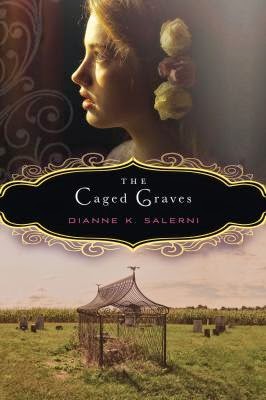
Verity Boone returns to her Pennsylvania home in The Caged Graves by Dianne K. Salerni and discovers the graves of her mother and aunt are encaged in iron bars. Why? In trying to determine the reason for what she believes is desecration, Verity also learns more about the man she is engaged to marry. The novel is inspired by two real caged graves in Pennsylvania.

Tuesday, January 20, 2015

Sara K Joiner: History Is a Story

Sara at Hadrian's Wall in England—
the sight of quite a few stories
throughout history!
Welcome to my first blog post for Mad About MG History. I've never been a contributor on a blog other than my own (and I'm pretty terrible about updating that one), so this is a new experience for me.

To help you understand why I enjoy history and historical fiction, I'll tell you a bit more about myself than on the author page. I grew up in a small town where everyone knew everyone. The town was rather insular and almost from a different time (most people still had black-and-white televisions in the late 1970s). One of my current co-workers is almost twenty years older than I, but our childhoods were remarkably similar thanks to my small town.

But to the blog post!

I have another co-worker who is a non-traditional student working on her college degree. Recently she mentioned having some difficulties with her American history class. "I think I need a tutor," she said.

Without a moment's hesitation, I suggested my mother, who taught history in high school for almost thirty years. "She would be a great tutor," I told my co-worker. "She taught me."

Then I said something that I didn't think was that profound, but my co-worker did. "It depends on what your professor wants though. If she wants you to memorize dates, then Mom's not the best tutor. When she taught, she wanted us to know ideas rather than dates. When the Civil War started was less important than knowing why it was fought."

My co-worker said her professor didn't seem to care about dates. "You're right," she said. "If I think of it like a story, it's more interesting and easier to remember."

That's what is so valuable about historical fiction. I know so much more about the world and my place in it because of the books I read.

It is often said that history is written by the victors, and that is generally true. It's also written by the powerful. So those people who are considered unimportant and insignificant are often ignored. Fortunately, much is being done in historical research to correct this. Children's historical fiction has been doing this for years.

Every year students learn about Christopher Columbus, but what about the other side of that story? Use Morning Girl by Michael Dorris (Hyperion, 1992) in your classrooms for a look at the Native experience before Columbus arrived on that fateful day in 1492. Morning Girl is a beautiful way to show students that history is more than dry dates in a textbook and can serve as a way to get students thinking about the stories that aren't in those textbooks.

Madeleine L'Engle wrote, "You have to write the book that wants to be written. And if the book will be too difficult for grown-ups, then you write it for children." Historical fiction for children, especially middle-grade readers, doesn't shy away from difficult subject matter. 

Joseph Bruchac's book Hidden Roots tells the story of the Vermont Eugenics Program in the 1930s which attempted to sterilize the state's Native population. It's horrifying to think about a state trying to eradicate an entire group of people. But it happened. Bruchac's novel deals with the repercussions of that, helping readers see how history can ripple out even decades later and impact people who weren't even born at the time of the major event.

If more students regard history as a story—and not boring dates—then people like my co-worker wouldn't be as frustrated with their classes.

These are only two examples of historical fiction for middle grade readers. Visit your school or public library to find even more.

Sara K Joiner is the author of the upcoming novel After the Ashes published by Holiday House. She is also the children's coordinator for Brazoria County Library System.