Showing posts with label Native Americans. Show all posts

Thursday, October 25, 2018

Native American Heritage Month

November is Native American Heritage Month , and although I believe Native American literature belongs in every month of the year, an opportunity to highlight it is always welcome.

This is not a comprehensive list, but rather some of the most often cited middle-grade historical fiction with Native American themes and characters.


I must begin with Joseph Bruchac, whose contribution to Native American children's literature is beyond measure. Some favorite historical fiction are: Children of the Long House, Hidden Roots (for upper middle-grade as the subject is genocide), and my personal favorite Code Talkers (A WWII story, which is sometimes listed as YA, but I think is appropriate for for upper middle-grade).


Louise Erdrich is a prolific author in multiple genres and forms. Her Birchbark series has become a staple of Native American historical fiction.

"[In this] story of a young Ojibwa girl, Omakayas, living on an island in Lake Superior around 1847, Louise Erdrich is reversing the narrative perspective used in most children's stories about nineteenth-century Native Americans. Instead of looking out at 'them' as dangers or curiosities, Erdrich, drawing on her family's history, wants to tell about 'us', from the inside. The Birchbark House establishes its own ground, in the vicinity of Laura Ingalls Wilder's 'Little House' books." --The New York Times Book Review


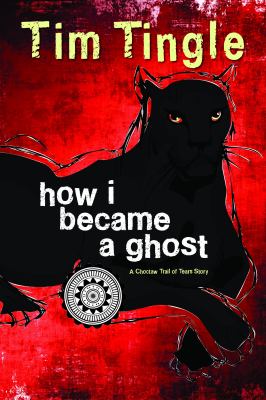
How I Became a Ghost, by Tim Tingle is on most lists for 
middle grade Native American historical fiction: "A Choctaw boy tells the story of his tribe's removal from its Mississippi homeland, and how its exodus to the American West led him to become a ghost --one able to help those left behind." Amazon Review. It is followed by Book 2, When a Ghost Talks, Listen.


Michael Dorris's  Morning Girl  is "a tale based on an entry in the diary of Christopher Columbus that tells of a native family living in a vibrant community striving to coexist with the natural world." Amazon. Sees Behind Trees is about a "Native American boy with a special gift to 'see' beyond his poor eyesight journeys with an old warrior to a land of mystery and beauty." Amazon. And Guests is a favorite Thanksgiving story with a wonderful twist of perspective. Dorris is an award winning author for children and adults.


You can find these and many more on lists at these websites:

https://americanindiansinchildrensliterature.blogspot.com/p/best-books.html
https://www.whatdowedoallday.com/native-american-middle-grade-books/
http://homeschoollifemag.com/blog/2017/11/20/great-books-for-studying-native-american-history-middle-school
https://www.nativerealities.com/collections
http://www.colorincolorado.org/booklist/historical-fiction-american-indian-heritage-grades-6-12
https://www.scholastic.com/teachers/lists/teaching-content/native-american-historical-fiction-book-list/
https://www.pragmaticmom.com/2010/06/top-10-native-american-childrens-books-ages-2-16/

Thursday, October 5, 2017

Sara K Joiner: Horror Historicals

Are you more likely to see a ghost in October?
photo by Sara K Joiner

October is the time of year when we want to be scared. The weather turns cooler, the trees begin losing their leaves, and we want to sit around a fire (either indoors or out) and give ourselves nightmares with tales of ghosts and devils, murder and mayhem.

Sit back. Relax. And enjoy some of these frightening treats that are all set in the past.

The Night Gardener by Jonathan Auxier
Orphaned Irish siblings travel to England and find work as servants in a creepy house. An enormous tree is growing into the house, and the family the siblings work for seems to be growing paler and weaker with each passing day. Will the siblings be able to save their employers from the evil creeping into the house? Or will they only have time to save themselves?


The Shadows That Rush Past: A Collection of Frightening Inuit Folktales by Rachel A. Qitsualik, illustrated by Emily Fiegenschuh and Larry MacDougall
Four stories passed down through generations of Inuit storytellers describe a horrible child-stealing ogress, a monster that is half man and half grizzly bear, an ice-covered polar bear that is ten times the size of a normal bear, and a creature who surprises unsuspecting people by tickling them to death. The illustrations can be horrific and heroic as men and women, children and adults are depicted fighting monsters and suffering their fates.

Wee Winnie Witch's Skinny: An Original African American Scare Tale by Virginia Hamilton, illustrated by Barry Moser
A boy and his uncle become victims of Wee Winnie, a witch who hangs her skin on a hook by the door and flies around on people. Only the boy's grandmother can save them, but how do you trick a witch, especially one as gruesome as Wee Winnie? The illustrations are wood engravings which up the creep factor even more and will haunt readers.


Forbidden by Eve Bunting
A teenage orphan girl is sent to live with an aunt and uncle she has never met on the stormy coast of Scotland. She finds herself surrounded by people, including her relatives, who are threatening and mysterious. Suspicious and determined to learn the truth about her new home, she finds answers that are more horrifying than anything she could have imagined.

Sara K Joiner is the author of After the Ashes. She is also a public librarian.

Thursday, October 27, 2016

"Soldier Sister Fly Home" by Nancy Bo Flood: A Short Review

Middle-grade novels featuring Native American protagonists are few. Finding one that is authentic, literary, and elegant is a delight. Sister Soldier Fly Home by Nancy Bo Flood and illustrated by Shonto Begay is such a story: a rich tapestry of symbol, metaphor, danger, and reconciliation.

It is 2003 and the war in Iraq has already claimed the life of Lori Piestewa, the first Native American Woman to die in battle on foreign soil.* And Tess's sister, Gaby, has just enlisted, leaving Tess feeling angry, abandoned, and afraid. To make matters worse, Gaby asks Tess to take care of her wild horse, Blue. The last thing Tess wants to do.

Not only is Tess fighting her fear of Blue, she also wrestles with being bi-racial: Navajo and Bilagáana (White). Having her feet in both worlds, she feels she is neither, feels at war with herself. Who is she? Navajo? White?

"We all have many parts Tess. We walk many paths, wear different shoes. Sometimes moccasins, sometimes sneakers. Some paths cross, some come together."

But if I follow one path and leave the other behind, will I lose one? Will I get lost?"

The quote above is a particularly powerful conversation between Tess and her Navajo grandmother, her Shima' Sani. As they draw closer, Tess begins to understand who she already is. Her relationship with her grandfather also unfolds through the story and paradoxically, it is through these Navajo grandparents that she understands more about the part of her that is 
Bilagáana.

Nancy Bo Flood also does a wonderful job of dispelling Navajo stereotypes. Tess is not an Indian who naturally loves horses, herding sheep, or weaving rugs. She is a runner, though, and her grandmother, while traditional in many ways, including the joy of a good joke, loves a good strong latte, Emily Dickinson poetry, and surprising Tess by negotiating the Internet. 

Through a tragic event, Tess learns that there are things she must do even though those are the last things she ever thought she could do. She does not answer all her questions, but she does learn to accept what she can not change. She also learns that her Navajo and White sides do not have to war with each other. The story suggests that perhaps it is not necessary to answer the question, that we can, in the end, be ourselves.

This was a short review, not worthy of the depth of symbol and meaning found in the book. I urge you to include it in your displays for Native American Heritage month, class room library, and personal bookshelves. It is just the sort of book We Need Diverse Books is calling for. And like all good stories, in the end it is about all of us. We discover ourselves and each other there.


You can find out more about Nancy Bo Flood on her website: http://nancyboflood.com/

You can find an interview here.


There is a glossary and discussion questions at the end of the book. You can find more discussion questions here.

*It should also be noted that Lori Piestewa was half Mexican American.


You should also be aware that there are animals killed in the story, which may upset some children (and adults). 


Michele Hathaway is a writer and freelance editor. She has an M. A. in Social Anthropology and has worked in libraries in California, New Mexico, and Pennsylvania. She writes stories set in culturally diverse, historical and contemporary periods.

Thursday, September 15, 2016

Native American Mythology, Some Middle-Grade Suggestions


In my last post, I presented the idea of mythology as a gateway to history. In the pursuit of mythology you don't have to look far. The J 398.2 section of your library groans under the weight of it all. Even in small libraries there is a surprising representation from around the world. Here, I'd like to focus on some perhaps lesser known Native American resources.

When researching California Indian mythology a few years ago, I came across Jane Louise Curry's delightful Back in the Beforetime.  Curry has also written several other collections, including: The Wonderful Sky Boat: And Other Native American Tales from the Southeast; Hold Up the Sky: And Other Tales From Texas and the Southern Plains; and Turtle Island: Tales of the Algonquian Nations. 


Another book that is fun and accessible for middle-grade readers is Navajo Folk Tales by Franc Johnson Newcomb. The cover here depicts one of my favorite tales of how Coyote stole fire from Fireman--note Fireman's arrows on the left and the torch Coyote used to steal fire burning on his tail. Now you know why, to this day, the tip of a coyote tail is black. The book also mentions that minor detail about how Coyote set a mountain on fire and nearly wiped out the People's homes in the process of helping them.


Another book of Navajo mythology that middle-grade should be able to tackle is The Pollen Path, by Margaret Schevill Link. The latter half of the book offers some additional information and analysis that will not be as relevant for your middle-grade readers, but teachers, librarians, and parents will enjoy the depth it offers.


Stories by Joseph Bruchac, one of the most prominent Native American children's authors of our time, should be available in any library. If not, be sure to recommend a purchase. The Girl Who Helped Thunder, and Other Native American Folktales is one suggestion among many.


Picture Books

I wanted to focus on larger collections of mythology in this post, but I can't leave it without mentioning the availability of some gorgeous picture books that are perfectly suited to any age. There are so many, I hardly know where to begin. But in tribute to Lois Duncan, the beloved children's author who recently passed away, I'd like to conclude with her picture book, The Magic of Spider Woman.


The Magic of Spider Woman

Illustrated by the gifted Navajo artist Shonto Begay, The Magic of Spider Woman is the story of a Navajo woman who loves weaving so much, she loses herself in her work--literally, she vanishes into the fabric. Spider Woman provides a way out of the weaver's self-made prison. The story shows that in the midst of our passions we must not forget one another. It's a great message for all. Thank you, Lois and Shonto!

November is Native American Heritage Month!

It's never too early to prepare for Native American Heritage month. I hope you find these suggestions helpful for stocking your home, classroom, or library. 

* As a note, some of these books may not be readily available, but in my research, I have found them worth the effort to acquire. I hope it will not stop you from pursuing them. Inter-library loan is a great resource in these cases. 

Michele Hathaway is a writer and freelance editor. She has an M. A. in Social Anthropology and has worked in libraries in California, New Mexico, and Pennsylvania. She writes stories set in culturally diverse, historical and contemporary periods.

Subscribe to get posts automatically and never miss a post. You can use the Subscribe or Follow by E-Mail buttons to the right, or add http://madaboutmghistory.blogspot.com/to Feedly or another reader.

Thursday, July 21, 2016

Buffalo Bill

Buffalo Bill served as an inspiration for the protagonist, Will Braddock, in The Iron Horse Chronicles. Both boys embarked on a life of their own at age fourteen. It has been said that the youth of the mid-nineteenth century grew up faster than those of today. Knowing the history of Buffalo Bill, I felt comfortable that the adventurous life into which I thrust Will Braddock at that age could actually happen. I also knew from personal experience that accepting responsibility at that age was possible, since I took my first job at age fourteen.

Born William Frederick Cody in 1846 in Iowa Territory, several months before it became a state, the future showman grew up on a frontier farm. When Bill was seven, his father, Isaac, was stabbed by a pro-slavery advocate during a rally when he spoke in support of abolition. Bill helped carry his father away, displaying early on his ability to act for himself. Bill’s father died in 1857 of pneumonia attributed to his earlier stabbing. From age ten, Bill worked to help support his mother and sisters. At fourteen, Bill became a Pony Express rider earning a reputation as one of the best. I wrote about the Pony Express on this website in a post entitled "Orphans Wanted" on May 26, 2016.

In The Iron Horse Chronicles, Will Braddock becomes a hunter for his uncle’s Union Pacific Railroad survey inspection team. At the same time Will is hunting antelope for a survey team of five working on the first transcontinental railroad in Wyoming, William Cody is hunting buffalo to feed hundreds of tracklayers for what would become the Kansas Pacific Railway. The Kansas Pacific, known until 1869 as the Union Pacific Eastern Division, had lost the race to the Union Pacific Railroad in 1866 to be the first railroad to lay track to the Hundredth Meridian and earn the right to build west to meet the Central Pacific Railroad, coming east out of California.

Cody earned the admiration of several Army officers for his marksmanship while hunting for the railroad, and it is believed they bestowed upon him the nickname of “Buffalo Bill.” Bill later served as a scout for the Army in its wars with the Native Americans. His efforts earned him a Medal of Honor in 1872. In a strange political maneuver, Congress revoked the medal in 1917 (along with 910 other recipients) when they retroactively tightened the rules. Since Bill had served as a civilian scout, and not a soldier, he was deemed ineligible. Seventy-two years after Cody died on January 10, 1917, Congress restored his medal.

Bill Cody would have known about the great hundredth meridian expedition organized by Thomas “Doc” Durant, the Union Pacific’s vice president and general manager, in October 1866. I wrote about what I consider to be “the first wild west show” on my own website’s blog on June 6, 2016. You can read that post by following this link:

Perhaps it was from the Union Pacific’s Grand Excursion to the Hundredth Meridian that Cody gained the inspiration for founding Buffalo Bill’s Wild West Show. This show became a huge success in the United States during his lifetime. Bill and his show also toured Europe repeatedly, and they played to Queen Victoria of Great Britain on three different occasions. 

Did Will Braddock and Bill Cody know one another in the late 1860s? It’s doubtful they met, but each was probably aware that the other was considered a top hunter by his respective railroad. In Bear Claws, The Iron Horse Chronicles—Book Two, Will Braddock guides a hunting expedition for a fictional German nobleman, much as Bill Cody did for a real-life Russian prince.


Eagle Talons, The Iron Horse Chronicles--Book One, received the Bronze Will Rogers Medallion Award in 2015 in the category of books for Younger Readers. Bear Claws has been selected as a finalist for the 2016 Will Rogers Medallion Award for Younger Readers.The winners will be announced at an awards ceremony in Fort Worth, Texas, on October 29, 2016. I plan to be there.

Thursday, March 24, 2016

Sara K Joiner: Picture Books for Middle Schoolers

It's easy to think that picture books are simple stories for young children. Once readers reach certain reading milestones they're expected to abandon picture books for the more complex stories found in chapter books and novels.

But ignoring an entire sector of publishing could be detrimental to your students' understandings of history. Think about what they could learn if you took fifteen to twenty minutes to read an historical fiction picture book to them. Besides, who doesn't love to be read to?

Here are just a few that I enjoy.

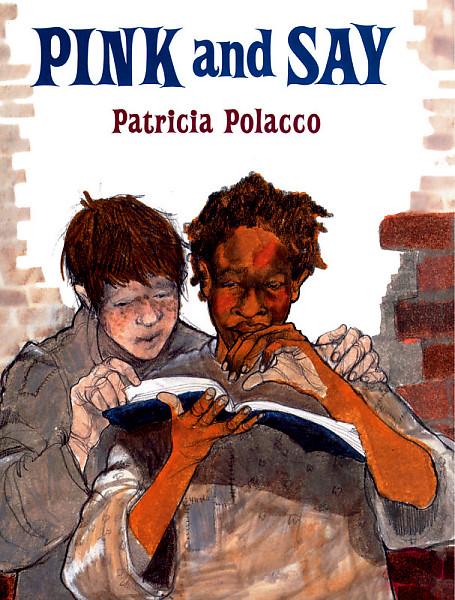
You can teach lessons about the Civil War, but one of the best stories is Pink and Say by Patricia Polacco. Although it's a picture book, the characters are teenagers. Both boys are soldiers in the Union Army, but Pink is African American while Say is white. The two form a powerful friendship and the story has a devastatingly heartbreaking ending. Fair warning: I can never read this book without crying, so have tissues on hand for your students.

Tim Tingle's Crossing Bok Chitto is another glorious story that would work perfectly in a middle school classroom. It's about a young Choctaw girl who befriends a slave family on a nearby plantation. When the family learns the mother will soon be sold away, they plan an escape and receive help from the Choctaws.
The illustrations are beautiful, and Tim Tingle is a gifted storyteller. He is also Choctaw which gives the story the authenticity that is lacking in a large percentage of fiction about Native Americans.

Finally, The Bicycle Man by Allen Say is set in occupied Japan after World War II. Two American soldiers and the tricks they can do on a borrowed bicycle impress the main character, an elementary student who has never seen Americans before. Reading this to your students can help impart a sense of wonder about the meeting of two different cultures.

There are a world of beautiful, inspiring and well-written historical fiction picture books out there. When you're trying to introduce history to your students, don't rule them out as a method to teach.

Sara K Joiner is the author of After the Ashes. She is also a librarian.

Thursday, December 24, 2015

On "The Huron Carol" by Michele Hathaway

Illustrated by Frances Tyrrell, Dutton, 1990.
It's the holidays and the last thing on your mind is historical fiction--right? That was not a question. But wait! Bookmark this page, because the The Huron Carol is a trail head into history any time of year. 


‘Twas in the moon of wintertime
When all the birds had fled,
That mighty Gitchi Manitou*
Sent angel choirs instead.

Before their light the stars grew dim,
And wand’ring hunters heard the hymn:
“Jesus, your king, is born.
Jesus is born. In excelsis gloria!”


"The Huron Carol" was written in Huron by the Jesuit missionary Jean de BrĂ©beuf (1643) who lived with the people for 22 years. He was tortured and killed when the Iroquois raided the Huron, nearly annihilating them. Many assimilated with other tribes. A small group, known as the Wyandott eventually migrated to Oklahoma, where they live today, and a larger group, the Wendat, followed the French priests and now live in QuĂ©bec.


Illus. Ian Wallace, Groundwood Books, 2013
Ehstehn yayau deh tsaun we yisus ahattonnia
O na wateh wado:kwi nonnwa 'ndasqua entai
ehnau sherskwa trivota nonnwa 'ndi yaun rashata
Iesus Ahattonnia, Ahattonnia, Iesus Ahattonnia

Ayoki onki hm-ashe eran yayeh raunnaun
yauntaun kanntatya hm-deh 'ndyaun sehnsatoa ronnyaun
Waria hnawakweh tond Yosehf sataunn haronnyaun
Iesus Ahattonnia, Ahattonnia, Iesus Ahattonnia


What is most astonishing about "The Huron Carol" was BrĂ©beuf's cultural awareness at this period in history when sensitivity and respect for other people groups was not part of the psychological landscape. His retelling of the Christmas story in a form that was relevant for the people is worthy of note. It must have impressed the Wendat, too, because they sang the carol for a hundred years in their own language before it was translated into French. In 1926, Jesse Edgar Middleton composed the English Lyrics, which is how it is best known today.

There is only one surviving verse in Huron and two in 18th century French. The English verses are more of a re-visioning than a translation. Here are the words of the original:


"Jesus, He is Born"

Have courage, you who are human beings: Jesus, he is born
The okie spirit who enslaved us has fled
Don't listen to him for he corrupts the spirits of our thoughts
Jesus, he is born

The okie spirits who live in the sky are coming with a message
They're coming to say, "Rejoice!
Mary has given birth. Rejoice!"
Jesus, he is born


BrĂ©beuf set the Carol to a 16th Century French song "Une Jeune Pucelle." It entered the public domain in 2011. There are many versions on You Tube that could be used in the classroom. Tom Jackson has a version that I like in particular because in addition to being a musician and actor, he is an outstanding philanthropist. One of his fundraising campaigns was the Huron Carol Tour.

Some more excellent links and comments are in Emily Gleichenhaus's blog post. Here is another lovely version of the carol sung by the Elora Festival Singers, Canada. Happy Holidays!


 * "Gitchi Manitou" is an Algonquin term that Middleton used for Great Spirit, but it is not from the Wendat language. Although today this is poor scholarship and culturally insensitive, it was not considered so in 1926. Another possible topic for discussion with students.
 
Michele Hathaway is a writer and freelance editor. She has an M. A. in Social Anthropology and has worked in libraries in California, New Mexico, and Pennsylvania. She writes stories set in culturally diverse, historical and contemporary periods.

Subscribe to get posts automatically and never miss a post. You can use the Subscribe buttons to the right, or addhttp://madaboutmghistory.blogspot.com/ to Feedly or another reader.

Tuesday, December 1, 2015

Mixing of the Bloods

Three recent events inspired me to write on this topic. First: November is Native American Heritage month. Second: Immigration reform and the acceptance of refugees are increasingly in the news. Third: On November 18, 2015, Five Star Publishing released Bear Claws, the second book in my trilogy, The Iron Horse Chronicles.

In my books, one fictional character is Charles Lone Eagle Munro, Jr., the son of a white mountain man and a Cheyenne Indian mother. I portray Lone Eagle’s struggle to identify with his proud Indian heritage while also acknowledging the adverse impact Manifest Destiny is perpetrating on that culture. Lone Eagle insists he is Cheyenne, although he is not full-blood. Will Braddock, the trilogy’s protagonist, thinks of his new Indian friend as mixed-blood. Paddy O’Hannigan, the antagonist, refers to Lone Eagle with the derogatory term half-breed.
 
According to the Navajo Times, the 2010 United States Census, reveals 5.2 million, 1.7 percent, of the US population is classified as American Indian and Alaska Native. Of this population, 44 percent of American Indians are considered “mixed-race.” The Navajos claim the largest percentage of full-bloods among American Indians at 86.3 percent.

America has long been known as the melting pot, usually interpreted to mean the beneficial blending of different nationalities and races. The Native American designation used by the government draws the ire of some American Indians, who prefer to be called “Indians.” Notwithstanding any argument over the “political correctness” of nomenclature, the arrival of Europeans in the Americas led to a blending of races that has greatly diminished the percent of full-blood, original inhabitants of the Western Hemisphere.

The mixing of the blood of Caucasians with Indians occurred early in the years of European settlement in the Americas. The story of Pocahontas, and her coming to terms with a world that was changing around her, is often the middle-grade reader’s first exposure to this blending of the bloods. Pocahontas was not mixed-blood, but her son was. Her story has been repeatedly told in print and on screen. Of the many books on this subject, The Double Life of Pocahontas by Jean Fritz won the Laura Ingalls Wilder Medal for its portrayal of her story.

Another middle-grade novel of the blending of the bloods is Sacajawea by Joseph Bruchac. A Shoshone girl, Sacajawea had been captured by the Hidatsa tribe, then married at a young age to Toussaint Charbonneau, a Quebecois (French) trapper. Lewis and Clark engaged Sacajawea and her husband as guides. The great Corps of Discovery Expedition probably would not have been successful in its famous trek to the Pacific Ocean without her help. Sacajawea was not mixed-blood, but like Pocahontas, her son was. In my book Bear Claws, I introduce fictional characters who are related to Sacajawea. One of them becomes the romantic interest of Lone Eagle.


The female involved in starting a mixed-blood family is not always Indian. Cynthia Ann Parker was a white woman whom the Comanches captured when she was about ten years old. She married a Comanche warrior and had three children by him. One of these was Quanah Parker, the last great Comanche chief. I had the privilege of meeting three of Quanah Parker’s great-grandsons during the 2015 Convention of Western Writers of America in Lubbock, Texas. They participated in a workshop on writing about Comanches, which was chaired by my friend Lucia St. Clair Robson. Robson’s wonderful book about Cynthia Ann Parker, Ride the Wind, won a WWA Spur Award. This book might be a struggle for some middle-grade readers, but it would be well worth the effort. An easier read and a fine book for the middle-grade student is Where the Broken Heart Still Beats by Carolyn Meyer.

Both full-blood and mixed-blood Indians have a right to be proud of their heritage and the  contributions they have made to the protection and betterment of all those who claim a relationship to the people who inhabited the Americas before the mixing of the bloods began. In The Iron Horse Chronicles I try to respect the legacy of the American Indian.       


Thursday, September 24, 2015

Verisimilitude or Phony History

Verisimilitude is a big word that means giving the appearance of being real or truthful. A historical novelist has an obligation to his or her readers to write a story that is credible, authentic, and plausible. In writing The Iron Horse Chronicles, I spend countless hours scouring sources to ensure the historical timeline in which I place my characters adheres closely to the truth. Readers implicitly place a trust in me to provide an account of events that is believable and honest, while at the same time being entertaining and educational.

Printed books must compete with a plethora of electronic media. E-books are becoming more prevalent, making access to the written word potentially easier; but to many it is still easier to watch a television show or a movie. Middle grade students undoubtedly learn much about history from these latter media, and I am frustrated by what has been presented recently about the building of the first transcontinental railroad.

Screenwriters apparently do not feel the necessity to adhere to the principle of verisimilitude. Today’s scripts remind me of the Western movies of the 1940s and 50s (which I devoured as a boy) that didn’t care what stood in the way of a “good story.” Two recent offerings from the producers of the visual media have been disappointing because of their unnecessary distortion of history.

Hell on Wheels, an original AMC television series (TV-14), commenced in the fall of 2011. I have watched every episode and have marveled at how the writers ignore the facts. Recently, the conclusion of the show’s fourth season invented a meeting between President Ulysses S. Grant and Mormon leader Brigham Young in Salt Lake City. No such meeting occurred. The screenwriters included Doc Durant, who appears throughout the series as the Union Pacific’s principal on-scene manager. They never mention General Grenville Dodge, who was the real force behind the physical construction of the UP. When Durant, a financier, occasionally came west from the company’s New York headquarters, he usually made a mess of things. The Salt Lake City scene also included Collis Huntington, whom the screenwriters present as the manager of the Central Pacific’s field construction. Huntington was the CP’s lobbyist in Washington, DC. Charles Crocker was the driving force in the field. Students, young and old, who are not familiar with the history of westward expansion will come away with a misunderstanding of the facts.

The Lone Ranger, a 2013 Walt Disney movie (PG-13), also presented a distorted version of the building of the first transcontinental railroad. The scriptwriters abandoned verisimilitude in favor of sensationalism. For the Comanche Indians to have attacked the Union Pacific Railroad, as depicted in the movie, they would have had to make a thousand-mile trek from Texas. The Sioux and the Cheyennes did attack the railroad in Nebraska and Wyoming, but the railroad traversed their hunting grounds. The Utes and the Shoshones, who inhabited Utah and were the tribes physically in a position to have attacked, were peaceable in 1869. There were no Indian attacks at the time of the driving of the Golden Spike. As a boy, I was an avid watcher of the Lone Ranger and Tonto. I looked forward to enjoying the resurrection of those memorable characters in the new movie, but the distortion of history ruined it. Sadly, some young readers of my book Eagle Talons told me the movie was a favorite.

Now that I have vented my frustration, I must return to finishing the third book in my trilogy and try to remain reasonably close to the truth. I admit to placing my fictional characters in juxtaposition with historical personalities in order to write about the real events of history. I'll try hard to use verisimilitude.

Thursday, July 16, 2015

Robert Lee Murphy--Museums Provide Hands-On Research Material

In writing The Iron Horse Chronicles I frequently visit museums where I can walk among the exhibits and sometimes even touch them. This provides a stronger sense of what life was like decades ago rather than simply reading about the items or looking at pictures in books. I want to share with you how I do this by looking at three museums in Lubbock, Texas, that I had the privilege of visiting recently while attending the 2015 annual convention of the Western Writers of America.


The American Wind Power Center exhibits a collection of windmills used in the western settlement of our country. In my book Eagle Talons I describe the huge windmills that the railroads erected along their right-of-ways every ten to twelve miles. Water was essential to the production of steam in wood-burning and coal-fired locomotives. In many places, the only way to obtain that precious commodity was to drill a well and pump the water to the surface with a windmill. The Center has a huge windmill actually used by the steam railroads. There are no more working windmills along the tracks today.


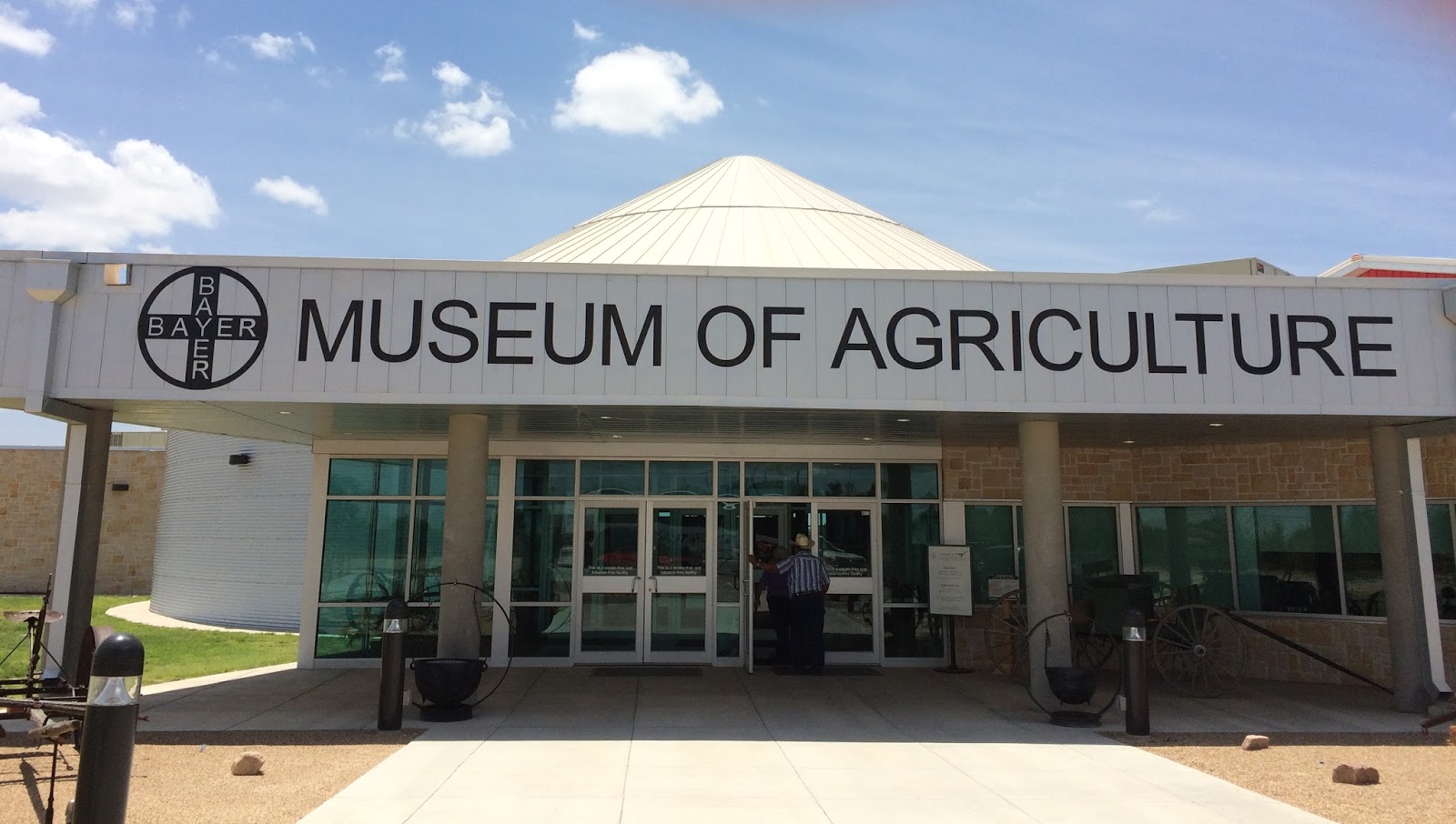
The Bayer Museum of Agriculture presents hundreds of farming and industrial implements used by farmers over the past couple hundred years. Of particular interest was a reconstruction of a blacksmith shop. It is the threat of having to spend years as an apprentice working in such a place that drives Will Braddock, the young protagonist of Eagle Talons, to run away on his quest to determine his own destiny and wind up helping build the first transcontinental railroad. Blacksmiths were indispensable to the settlement of America. Blacksmithing was, and still is, hard work.


The National Ranching Heritage Center contains dozens of structures relocated from sites in Texas and New Mexico. They range from dugouts to two-story frame houses and numerous barns and outbuildings. A railroad depot provides a close-up look at a typical waiting room with its pot-bellied stove. Will Braddock visits many of these depots throughout The Iron Horse Chronicles. The Center has a nice collection of firearms, some of which Will uses in his struggles with Paddy O'Hannigan and his other enemies. There are also examples of horse-drawn vehicles. The Conestoga wagon is the type in which Jenny McNabb, Will's young lady friend, is traveling west when her family is ambushed by Cheyenne Indians in Eagle Talons.


Folks who live in the Texas Panhandle have easy access to these museums. Others who may be traveling across the country should make time to stop and visit them. If you are not going to be in Texas anytime soon, visit similar museums in your area. Young people, and old, will be impressed with these wonderful institutions. Everybody will come away better educated.

Tuesday, July 14, 2015

Sara K Joiner: On the Confederacy, Textbooks and the Power of Historical Fiction

Since those horrible murders in Charleston in June, the country has engaged in a debate on the significance and meaning of the Confederate battle flag. Some argue it is a racist symbol of a racist past, while others believe it is a symbol of Southern pride.

Texas monument at Antietam
National Battlefield in Maryland.
photo by Sara K Joiner
Into the middle of that debate walked the new American history textbooks that the Texas Board of Education approved.

They whitewash history and sweep all the ugliness of our nation's past under a rug.

History textbooks are no strangers to controversy. There are people who want to include all the sordid details and those who want only the most pleasant facts mentioned.

Textbook writers and publishers have to find a happy medium. Then they have to cater to the education boards of the two largest textbook buyers in the country—California and Texas.

This is where historical fiction can bring history into focus.
New York monument at Antietam
National Battlefield in Maryland.
photo by Sara K Joiner

Now, more than ever, as our nation grows ever more diverse and the millennial generation is the largest group in the country, historical fiction writers have an obligation to be as honest as possible in their writing. We owe our readers emotional honesty and as much historical accuracy as we can provide.

We should refer to the wholesale slaughter of indigenous peoples as the genocide it was. We should speak truthfully about the horrors of slavery. We should remember the terrors perpetrated under Jim Crow.

Crystal Allen's The Laura Line wrestles with slavery as it continues to affect present generations. Noni Carter's Good Fortune shows one girl's experience from capture to enslavement to escape.

The Winter People by Joseph Bruchac gives readers an introduction to Native life and resistance in colonial times. How I Became a Ghost by Tim Tingle shows the cruelty meted out to the Choctaw during their forced removal from ancestral lands.

Sharon Draper's Stella By Starlight and Augusta Scattergood's Glory Be are both set in the segregated South and show the racism prevalent at the time, albeit from very different points of view.

Give these books to students. Let them read about fictional characters living and suffering through true historical moments. It's the best way to separate symbols from history and see the truth that lies somewhere between the textbook and the novel.

Sara K Joiner is the author of After the Ashes, coming in October from Holiday House. She is also the children's coordinator for the Brazoria County Library System.

Tuesday, April 28, 2015

Joanne Sundell on How I’m trying to find my Young Adult audience and get them reading!

My latest release, Arctic Storm, Book One, Watch Eyes Trilogy (Five Star Publishing, 2014), is the tale of 13-year-old Anya and her quest to save her pack of Siberian huskies against great danger in the spirit world. Set in 1908 Alaska, Anya battles dark forces in a landscape almost as dangerous as her enemies. A young Chukchi shaman, Anya is a medium, able to pass between the spirit world and the human world. Joining forces with a 16-year-old seafarer, Rune, Anya embarks on a deadly journey, determined to do anything to save her dogs from the dark forces threatening their existence. 

While this is a work of fiction, it is based in fact … historical fact.

I found my young adult, coming of age story when I looked back in history to unearth the origins of the Siberian husky.  In years past, I’ve written historical romance with my heroines seventeen or older.  Today some of my novels might be considered young adult crossover, but I never thought about my fiction audience before, in terms of age, per se.  I did my research.  Found my story in that research.  Then, let the characters develop as fact and fiction unfolded.   

That is precisely what happened when I began to undertake the writing of Watch Eyes Trilogy.  No one was more surprised than me when I found that my heroine was thirteen and my hero, sixteen—the human ones, that is.  The dogs are key to this story but then so are their young human guardians, Anya and Rune.  I didn’t find my young characters, but they sure found me in the mist and magic of times long forgotten.   My characters also “found me” in the books and films I’ve enjoyed, including Harry Potter, the Twilight series, and the Hunger Games.

The mist and magic in these stories sparked my imagination and opened up any possible “port-keys” in this grandma’s thinking, to allow me to enjoy the literary ride through page after page, reel after reel.  When I began writing Arctic Storm, the spirit of these captivating stories for young people stayed fixed in my heart and mind.  It was this pulse I wanted to strike … this reach-out to young adult readers … this note in history where the lines between fantasy and fiction become blurred … just enough to hook you on history and believe the impossible is, in fact, possible.

Call of the Wild meets Brother Bear in this epic tale of adventure, endurance and young love - a heroic journey tested against America’s last frontier. 

*****

Here is what PUBLISHER’S WEEKLY had to say about Arctic Storm:  “Sundell’s novel evokes the atmosphere of the early 20th century frontier, reminiscent at times of Jack London’s work.  Blending historical and fantasy fiction is no easy feat, but Sundell captures her reader’s interest with appropriate period details and a new take on common fantasy tropes.  This is a refreshing story that neatly fits within the genre while also exploring new ground.”

HISTORICAL NOVEL SOCIETY said the following:  “The plot revolves around the first race, in 1908, which pitted stocky Eskimo ‘malamutes’ against the smaller Siberian huskies, brought into Alaska, in the 19th century, by Russian traders.  In 1908 and 1909 the 408 mile race from Nome to Candle and back was won by malamute teams, but in 1910 the ‘Sibiriskiy haskis’ triumphed, and this historical tidbit has the makings of a fascinating sequel to this delightful book.”

*****

There is a well-drawn, respected line between credibility and the supernatural; not easily crossed.  But … the lines of possibility that exist in between surely can.  Books are a powerful and safe place to explore this possibility.  This is my purpose in Watch Eyes Trilogy, not only to share the human struggle for life and love in such a rugged land, but also to explore the spirit world that might exist in mist and magic, beyond ours.  Any telling of the factual, heroic journey of the Siberian husky to survive is impossible to tell, without this accompanying mystical exploration.  Young or old, books provide an opportunity to see outside ourselves and break through barriers that might keep us from learning and finding our own truth.

Anything is possible . . . when you open a book.

There is a dark side to the history of the Siberian husky and when I discovered the details of the horror visited upon the Chukchi people and their dogs in the wake of Communist collectivization and industrialization, essentially erasing thousands of years of careful breeding and wiping out the Siberian husky in Russia for the next eighty years, I couldn’t find my PC fast enough to begin the telling!  The young breeders of the Chukchi dog and the young pioneers on the Alaska frontier in the early 20th century are heroes in history who struggled valiantly to save this unique breed.  I would love young people today to learn of their forbearers. 

*****

Titles that might relate to Watch Eyes Trilogy and interest students are:

Gold Rush Dogs by Claire Rudolf Murphy and Jane G. Haigh

Call of the Wild by Jack London

White Fang by Jack London

All Alaska Sweepstakes: History of the Great Dog Race by Helen Hegener


The most famous Chukchi writer is Yuri Rytkheu.  His works are primarily in Russian and include:

The Chukchi Bible

A Dream in Polar Fog

*****


QUESTIONS to consider for students, after the reading of Arctic Storm: 

Where did the Siberian husky originate?

How old is the breed?

What makes the Siberian husky different from other husky breeds?

Who are the Chukchi people?

Why was it so important for the Chukchi dog, the Siberian husky, to escape Russia?

What is a shaman?

What is a medium?

What do you know about Viking mythology?

What was life like in Nome during Gold Rush days?

How did people survive the severe climate, the lawlessness, and the isolation of the Arctic West—America’s last frontier?

How hard was it for young people, growing up in Siberia and Alaska during this time?  What were their struggles?  How did they survive such a violent, often hostile, and always isolated frontier?

Could young people from two completely different cultures, come together to find happiness and love during such a difficult and unhappy time?

What do the history books tell us?

Though my career began as a nurse, I turned to the world of writing due to my love for literature, especially Jane Eyre and “all things Jane Austen.”  Trying my own hand at writing historical romance, I’ve had six published novels in the genre, to date.  After the death of my last Siberian husky, Xander, I researched the breed and uncovered a dark history no one seems to talk about.  This secret became the inspiration for Watch Eyes Trilogy.

I thank everyone at MAD ABOUT MIDDLE GRADE HISTORY for allowing me this opportunity to guest blog!

Husky Hugs, 
Joanne

If you wish, you may find me and my books here:

Thursday, April 2, 2015

Robert Lee Murphy - Historic Platte River Route

My frontier, historical trilogy The Iron Horse Chronicles takes the young protagonist, Will Braddock, on a quest to determine his own destiny at the time of the building of the first transcontinental railroad. Eagle Talons, book one, is currently available, while Bear Claws, book two, will be released in November 2015. The third book, Golden Spike, will follow thereafter. In Eagle Talons, Will’s adventures take him along the Platte River, which was the route the Union Pacific Railroad followed when they constructed the eastern half of the “Pacific Railroad.”


While doing research on the route of the first transcontinental railroad, one of the first places I visited was the Western Historical Trails Center in Council Bluffs, Iowa, located off I-80 where it crosses the Missouri River. The center provides an informative introduction to four important trails that passed through that region before the transcontinental railroad made travel easier and faster. The center is administered by the State Historical Society of Iowa, a division of the Iowa Department of Cultural Affairs. Their website: http://www.iowahistory.org/historic-sites/western-historic-trails/

The Lewis and Clark Trail passed north and south through the area, following the Missouri River. Three of the trails, however, crossed the river and proceeded west along the Platte River. Animals originally created paths beside the Platte River, which joins the Missouri south of Council Bluffs, Iowa, and Omaha, Nebraska. Native Americans, pursuing the animals over the centuries, pounded these paths into trails. The Oregon Trail, the Mormon Pioneer Trail, and the California Trail continued to follow the Platte River in the early part of the nineteenth century, providing the pioneers with the "road" to their future. These three, heavily-traveled trails paralleled the Platte across Nebraska and into the Rocky Mountains. The Pony Express followed a portion of the Platte during its short existence.

Council Bluffs Library
In 1859, Grenville Dodge met Abraham Lincoln in Council Bluffs to discuss the best route for a transcontinental railroad. At that time, there were competing proposals for building a railroad across the country, with routes ranging from south of the Canadian border to north of the Mexican one. Dodge had performed extensive surveys across the west, and based on these exploratory trips, he recommended the Platte River route as the best "path" for the first transcontinental railroad. After Lincoln became president, he wanted to connect Union-sympathetic California and Oregon more securely to the eastern states. Because of the secession of the southern states, which led to the Civil War, routes leading through the Confederacy were ruled out. Lincoln, remembering Dodge’s recommendation, signed the Pacific Railroad Act of 1862, designating that the railroad be built along the historic trails of the Platte River. During the Civil War, Grenville Dodge served as a general in the Union Army. Following the war he became the chief engineer for the Union Pacific and supervised the building of the eastern portion of the transcontinental railroad from Omaha to Promontory Summit, Utah.

The National Park Service, in conjunction with the Forest Service and in one instance the Bureau of Land Management, has produced full-color brochures for each of the three westbound trails and the Pony Express route. Each brochure measures approximately 8” by 45” in six folds. One side of the brochure is a profusely illustrated, comprehensive narrative about the trail. The opposite side is a detailed, annotated map of the entire route of the trail. History teachers and librarians who are looking for a fascinating way to provide historical information about the westward expansion across the western states can use these brochures as bulletin board posters. In a couple of instances the maps are downloadable in PDF, but without the narrative information. Having two copies of each brochure would enable the side-by-side posting of the entire brochure.

Here is a small portion of the Oregon Trail map to provide an example of the detail.


The National Park Service will provide the brochure if requested by email. (Hint: if there is a limit of one brochure per inquiry, have an associate order one.) Here are the websites for each of the four recommended brochures.

Oregon Trail:

Mormon Pioneer Trail:

California Trail:

Pony Express: