Showing posts with label multicultural. Show all posts

Thursday, December 24, 2015

On "The Huron Carol" by Michele Hathaway

Illustrated by Frances Tyrrell, Dutton, 1990.
It's the holidays and the last thing on your mind is historical fiction--right? That was not a question. But wait! Bookmark this page, because the The Huron Carol is a trail head into history any time of year. 


‘Twas in the moon of wintertime
When all the birds had fled,
That mighty Gitchi Manitou*
Sent angel choirs instead.

Before their light the stars grew dim,
And wand’ring hunters heard the hymn:
“Jesus, your king, is born.
Jesus is born. In excelsis gloria!”


"The Huron Carol" was written in Huron by the Jesuit missionary Jean de Brébeuf (1643) who lived with the people for 22 years. He was tortured and killed when the Iroquois raided the Huron, nearly annihilating them. Many assimilated with other tribes. A small group, known as the Wyandott eventually migrated to Oklahoma, where they live today, and a larger group, the Wendat, followed the French priests and now live in Québec.


Illus. Ian Wallace, Groundwood Books, 2013
Ehstehn yayau deh tsaun we yisus ahattonnia
O na wateh wado:kwi nonnwa 'ndasqua entai
ehnau sherskwa trivota nonnwa 'ndi yaun rashata
Iesus Ahattonnia, Ahattonnia, Iesus Ahattonnia

Ayoki onki hm-ashe eran yayeh raunnaun
yauntaun kanntatya hm-deh 'ndyaun sehnsatoa ronnyaun
Waria hnawakweh tond Yosehf sataunn haronnyaun
Iesus Ahattonnia, Ahattonnia, Iesus Ahattonnia


What is most astonishing about "The Huron Carol" was Brébeuf's cultural awareness at this period in history when sensitivity and respect for other people groups was not part of the psychological landscape. His retelling of the Christmas story in a form that was relevant for the people is worthy of note. It must have impressed the Wendat, too, because they sang the carol for a hundred years in their own language before it was translated into French. In 1926, Jesse Edgar Middleton composed the English Lyrics, which is how it is best known today.

There is only one surviving verse in Huron and two in 18th century French. The English verses are more of a re-visioning than a translation. Here are the words of the original:


"Jesus, He is Born"

Have courage, you who are human beings: Jesus, he is born
The okie spirit who enslaved us has fled
Don't listen to him for he corrupts the spirits of our thoughts
Jesus, he is born

The okie spirits who live in the sky are coming with a message
They're coming to say, "Rejoice!
Mary has given birth. Rejoice!"
Jesus, he is born


Brébeuf set the Carol to a 16th Century French song "Une Jeune Pucelle." It entered the public domain in 2011. There are many versions on You Tube that could be used in the classroom. Tom Jackson has a version that I like in particular because in addition to being a musician and actor, he is an outstanding philanthropist. One of his fundraising campaigns was the Huron Carol Tour.

Some more excellent links and comments are in Emily Gleichenhaus's blog post. Here is another lovely version of the carol sung by the Elora Festival Singers, Canada. Happy Holidays!


 * "Gitchi Manitou" is an Algonquin term that Middleton used for Great Spirit, but it is not from the Wendat language. Although today this is poor scholarship and culturally insensitive, it was not considered so in 1926. Another possible topic for discussion with students.
 
Michele Hathaway is a writer and freelance editor. She has an M. A. in Social Anthropology and has worked in libraries in California, New Mexico, and Pennsylvania. She writes stories set in culturally diverse, historical and contemporary periods.

Subscribe to get posts automatically and never miss a post. You can use the Subscribe buttons to the right, or addhttp://madaboutmghistory.blogspot.com/ to Feedly or another reader.

Tuesday, December 1, 2015

Mixing of the Bloods

Three recent events inspired me to write on this topic. First: November is Native American Heritage month. Second: Immigration reform and the acceptance of refugees are increasingly in the news. Third: On November 18, 2015, Five Star Publishing released Bear Claws, the second book in my trilogy, The Iron Horse Chronicles.

In my books, one fictional character is Charles Lone Eagle Munro, Jr., the son of a white mountain man and a Cheyenne Indian mother. I portray Lone Eagle’s struggle to identify with his proud Indian heritage while also acknowledging the adverse impact Manifest Destiny is perpetrating on that culture. Lone Eagle insists he is Cheyenne, although he is not full-blood. Will Braddock, the trilogy’s protagonist, thinks of his new Indian friend as mixed-blood. Paddy O’Hannigan, the antagonist, refers to Lone Eagle with the derogatory term half-breed.
 
According to the Navajo Times, the 2010 United States Census, reveals 5.2 million, 1.7 percent, of the US population is classified as American Indian and Alaska Native. Of this population, 44 percent of American Indians are considered “mixed-race.” The Navajos claim the largest percentage of full-bloods among American Indians at 86.3 percent.

America has long been known as the melting pot, usually interpreted to mean the beneficial blending of different nationalities and races. The Native American designation used by the government draws the ire of some American Indians, who prefer to be called “Indians.” Notwithstanding any argument over the “political correctness” of nomenclature, the arrival of Europeans in the Americas led to a blending of races that has greatly diminished the percent of full-blood, original inhabitants of the Western Hemisphere.

The mixing of the blood of Caucasians with Indians occurred early in the years of European settlement in the Americas. The story of Pocahontas, and her coming to terms with a world that was changing around her, is often the middle-grade reader’s first exposure to this blending of the bloods. Pocahontas was not mixed-blood, but her son was. Her story has been repeatedly told in print and on screen. Of the many books on this subject, The Double Life of Pocahontas by Jean Fritz won the Laura Ingalls Wilder Medal for its portrayal of her story.

Another middle-grade novel of the blending of the bloods is Sacajawea by Joseph Bruchac. A Shoshone girl, Sacajawea had been captured by the Hidatsa tribe, then married at a young age to Toussaint Charbonneau, a Quebecois (French) trapper. Lewis and Clark engaged Sacajawea and her husband as guides. The great Corps of Discovery Expedition probably would not have been successful in its famous trek to the Pacific Ocean without her help. Sacajawea was not mixed-blood, but like Pocahontas, her son was. In my book Bear Claws, I introduce fictional characters who are related to Sacajawea. One of them becomes the romantic interest of Lone Eagle.


The female involved in starting a mixed-blood family is not always Indian. Cynthia Ann Parker was a white woman whom the Comanches captured when she was about ten years old. She married a Comanche warrior and had three children by him. One of these was Quanah Parker, the last great Comanche chief. I had the privilege of meeting three of Quanah Parker’s great-grandsons during the 2015 Convention of Western Writers of America in Lubbock, Texas. They participated in a workshop on writing about Comanches, which was chaired by my friend Lucia St. Clair Robson. Robson’s wonderful book about Cynthia Ann Parker, Ride the Wind, won a WWA Spur Award. This book might be a struggle for some middle-grade readers, but it would be well worth the effort. An easier read and a fine book for the middle-grade student is Where the Broken Heart Still Beats by Carolyn Meyer.

Both full-blood and mixed-blood Indians have a right to be proud of their heritage and the  contributions they have made to the protection and betterment of all those who claim a relationship to the people who inhabited the Americas before the mixing of the bloods began. In The Iron Horse Chronicles I try to respect the legacy of the American Indian.       


Thursday, October 15, 2015

Michele Hathaway on "The Single Story"

One of the things I love about World War II stories is how many of them there are--and how many continue to be written. As a child, some of my most memorable were Children of the Resistance,  Anne Frank (of course), and my absolute favorite, Snow Treasure; what child wouldn't want to smuggle gold bullion on a sled right under the noses of Nazis? In addition to books, there are dozens of films, produced both during and after WII: The Sound of Music still sings to us all.

 But what if we didn't have all those stories? What if we had only one? How could we begin to know anything about WWII through only one story?


 "The Danger of a Single Story"


In 2009, Chimamanda Ngozi Adichie, Nigerian author, speaker, and teacher gave an excellent Ted Talk on "The Danger of a Single Story."  The single story, says Adichie, shows "people as one thing, as only one thing, over and over again, and that is what they become." As a middle-class child in Nigeria, she perceived her family's house boy, Fide, as poor, as having nothing. Then one day she went to visit Fide's family and discovered that although they were poor, his brother made beautiful raffia baskets. What she learned was that they worked hard and could create beautiful things. She no longer had a single story about Fide and about the poor. 

When Adichie went to college in the United States, she experienced the single story as her roommate applied it to her. Adichie says "She had felt sorry for me even before she saw me." Her roommate pitied her, expecting her English to be poor, her music to be tribal, and her knowledge of the world to be provincial and ignorant. I will not attempt to tell more of her honest and moving story here. I could not do it justice. I urge you to follow the link above and listen for yourself. The point is that,

"The single story creates stereotypes, and the problem with stereotypes is not that they are untrue, but that they are incomplete. They make one story become the only story."-Chimamanda Ngozi Adichie

Limited Views

If you only had the photo on the left to go by, could you identify this mountain? You can probably tell that it is a volcano, and you might guess some of the more famous ones around the planet, but could you know for certain? Hold that thought. I'll come back to it.


If we only had one story about the Lakota, could we assume we know all about the rest of the North American Indians or even the rest of their related Sioux tribes? Ridiculous, right? There were hundreds of tribes at the time of the first European contact, and even if we had one story about each of them, we would still have a limited view of Native Americans in North America. For that, we would need stories from different periods of history, from female and male perspectives, from the young, the old, the middle-aged, from people with various roles, skills, and  experiences. The list goes on. 

First the Good News

What this means for historical fiction and writers of historical fiction is that there is a great need for more stories! We need stories written by people from around the world. We need them to be written for their own people, and we need them to be translated so others can read them. 

The Bad News

Right now, most of these stories are unwritten. For some topics, such as WWII and perhaps a few others such as the American Civil War, there are enough stories that we have a more accurate picture, but there are always more stories. 

Some Possibilities

Teachers: I would urge teachers to consider the danger of a single story and include multiple books and short stories into a unit of study. It may be better to read three books from different perspectives on a subject, than to read three books on three different subjects. If this is not feasible, perhaps summer reading could focus on one subject. In the classroom, perhaps students could work in teams, each reporting on a different story to their team. You'll know best how to plan. Be sure to request books from your school and public librarians! 

Librarians: Check your collection and try to add multiple books on the same period or country. I know collection size is limited, but larger library systems may be able to handle this, and even small libraries can specialize.

Parents: Suggest purchases to your school and public libraries when you find gaps. One of the things I love about my local public library is how open and responsive they are to patron requests. Try it!


If you guessed Mt. Fugi, you were right. The danger of the single story is a mountain to overcome, but the view is worth it.


Thursday, September 3, 2015

Diversity in Children’s Literature

A student project for The Well of Sacrifice
This post is adapted from a chapter of You Can Write for Children: How to Write Great Stories, Articles, and Books for Kids and Teenagers. The Kindle version is currently on sale at Amazon.

We live in a world of many races, cultures, and religions. Children’s literature should reflect that diversity, but white, Christian characters and culture dominate. One recent study found that of children’s books with human characters, only about 10% featured nonwhite characters. Yet more than 37% of the US population is nonwhite, and that percentage is growing. (In these figures, Hispanic/Latino people and characters are counted as nonwhite.)

Historical fiction is certainly not the only way to show other cultures, but it is one way. Some authors may wonder if they have the “right” to write about other cultures, or fear being accused of appropriating another culture’s voice. Yet most editors feel an author’s background is a distant second to writing skill.

Although I am not Latina, I wrote a book set in ninth-century Mayan Guatemala because I’d spent several months traveling to Mexico and Central America and the culture fascinated me. With little historical fiction written about this culture and era, the book was embraced. The Well of Sacrifice was listed in the Seattle Public Library’s brochure “Chicano/Latino Doorways to Culture and Tradition.” In a MultiCultural Review article, “Great and Almost-Great Books about Latinos,” Isabel Schon called it “An exciting, fast-paced thriller that brings to life how a great Mayan city may have been abandoned as well as other details of Mayan civilization, such as their sumptuous markets….”

People who draw on their own experiences in a diverse world can create multicultural stories that explore deeper questions of how cultures interact. Eden Unger Bowditch is the author of the Young Inventors Guild series, set in 1903. She says, “The characters come from different parts of the world and find that, against their differences and against the dangers they face together, they become something of a family. As the mystery unfolds, they come to understand how the brotherhood of science is more than a common language but the very link that connects them.”

Living as an American in Egypt “has brought so many diverse and compelling people into my life,” Eden says. “Being expats, we are all drawn together. In this sense, the children of the Young Inventors Guild are expats, as it is a strange world in which they find themselves. It creates a unique bond among them that gives them strength to uncover the truth.”

Physical and Mental Conditions

Diversity involves many aspects of biology and culture. People of all ages have a variety of physical and mental abilities/illnesses. One young reader could be going through cancer treatment. Another may be blind or deaf. One might be on the autism spectrum or have just received a diagnosis of ADHD. Some children need to use wheelchairs. Some suffer from depression or an anxiety disorder.

Other young readers have family members with special needs, physical challenges, or mental illnesses. These kids may have responsibilities the average young person doesn’t have because of unusual family demands. Kids whose lives have not been affected in any of these ways still benefit from knowing about these situations. It helps them understand and empathize with their classmates, and it helps prepare them for challenges they could face in the future.

Fellow “Mad about Middle Grade History” blogger Suzanne Morgan Williams says, “My novel, Bull Rider, is the story of how Cam O’Mara helps himself and his older brother, Ben, when Ben returns from Iraq with a severe TBI [traumatic brain injury], having lost an arm, and initially unable to walk and talk. At first I minimized Ben’s injuries because I was uncomfortable with them myself. But as I wrote his character, I realized that he was still there, still the man he’d been – just changed. Good stories are about change and change comes to everyone. It doesn’t matter if a character is mentally or physically challenged, they can change. Disabled people can be interesting characters,” she adds. “Above all else – any other injury, happenstance of birth, personality trait – your character is a person.”

May B., by Caroline Starr Rose, has a young heroine with dyslexia, abandoned on the Kansas prairie in the 1870s. Caroline Starr Rose says, “I’ve come to the conclusion I am qualified to tell May’s story because it is one of identity and self-worth — something all of us must face at some point, something that becomes very real to young people as they become aware of their place in this world.”

Jennifer Bohnhoff’s historical novel, The Bent Reed: A Novel about Gettysburg, has a heroine in a body cast for scoliosis. Showing the Civil War from the viewpoint of a girl with scoliosis rather than a boy soldier gives this book a unique perspective.

Putting It All Together

Finally, it’s worth noting that books can include characters from more than one category of diversity. Christine Kohler’s novel No Surrender Soldier is set on Guam during the Vietnam war era. The characters are nearly all non-Caucasian, mainly Chamorros – indigenous Pacific Islanders in the Mariannas – or Japanese, or mixed Chamorro and Japanese. The main character’s grandfather has a disease similar to dementia. Two other characters have PTSD. That’s a lot going on in one book, but it reflects the complexity of real life. Strong storytelling means the novel is still accessible to the average teenager. According to the review journal Booklist, “This debut transports readers to an exotic place in a troubled time and reveals that being a teenager in Guam is not so different from being a teen elsewhere in the world.” By finding commonalities among differences, a writer can introduce young readers to different experiences and viewpoints.

Books that feature different cultures, especially historical fiction, can work well in the classroom. The Well of Sacrifice, has stayed in print since 1999 because many schools use it when they study the Maya. Stories need to appeal to a general audience, not just people within the culture. Writers do that, Kohler says, when they “write from the depth of emotion – from love to suffering – that we share in humanity.”

The more diversity we provide children through books, the better we’ll reflect real life – and help young people develop compassion and understanding.

Resources for Diversity:

The Children’s Book Council CBC Diversity shares news encouraging diversity of race, gender, geographical region, sexual orientation, and class.

Cynthia Leitich Smith’s Exploring Diversity page has links to book lists about many religions and races, and relevant interviews.

Multiculturalism Rocks! is a blog celebrating multiculturalism in children’s literature, with many useful links.

We Need Diverse Books promotes changes in the publishing industry to produce literature that reflects all young people.

Disability in Kidlit examines the portrayal of disability in MG and YA literature.

SCBWI has grants to promote diversity and children’s books.

The National History Education Clearing House has a database of state social studies and history standards, searchable by state and grade: http://teachinghistory.org/teaching-materials/state-standards

Chris Eboch is the author of The Eyes of Pharaoh, an action-packed mystery set in ancient Egypt; The Genie’s Gift, which draws on the mythology of 1001 Arabian Nights to take readers on a fantasy adventure; and The Well of Sacrifice, about a Mayan girl in ninth-century Guatemala who rebels against the power-hungry High Priest. Her writing craft books include You Can Write for Children: How to Write Great Stories, Articles, and Books for Kids and Teenagers. The Kindle version is currently on sale at Amazon for $2.99.


Thursday, August 6, 2015

Ingredients of Good Multicultural Historical Fiction: Psychology

One of the hardest things to get right in historical fiction is period psychology. How did people at a particular time and place think about their world? What were the underlying assumptions? What color were their glasses?

What Color Are Your Glasses?

This is hard to get right because we live and breathe the constructs of our day, with assumptions so deep we don’t often recognize them unless we are lucky enough to have an international friend who asks, “Why are you so achievement oriented? Can’t you just be for a while, and what’s with all the extreme sports and conflict? (If you are from outside the United States, please fill in whatever your cultural tendencies may be.)

Johnny in a Toga

Detectives in Togas by Henry Winterfeld
For middle-grade historical fiction, parents, teachers, and librarians can be on the alert for what I like to term Johnny in a Toga, that is, contemporary personalities dressed up in historical costume. Characters in historical fiction, multicultural or otherwise, must be authentic--a true Marcellus or a Marcella, or as close as one can get.  
Our modern day Johnny would have a deep sense that slavery was wrong, might even advocate the abolition of slavery. Roman Marcellus, however, assumes slavery is just part of the social order; everyone has a place. It is the way things are, even should be. This does not mean he lacks empathy or that he may want to stop abuse, but he sees slavery as part of his world.

Original Sources

Very rarely, you’ll find a story that quotes the original words of a character.

"Dave belongs to Mr. Miles/
Wher the oven bakes & the pot biles///
July 13,1840"

Andrea Cheng does this in her outstanding novel in verse, Etched in Clay: The Life of Dave, Enslaved Potter and Poet (Lee & Low, 2013).

"I wonder where is all my relation
Friendship to all – and every nation
August 16, 1857"

In addition to Dave’s own words, Cheng employs multiple voices from the period. The following quote is from the point of view of Dave’s first wife, who is being sold to another owner in Alabama.


 "I ask if I can say
Good-bye to Dave,
But Master Drake just laughs,
'No need, Eliza.
They’ll find you another man
Real quick.'
He winks—
And I cry." (p. 23)

In this short verse, Cheng portrays the belief of the slave owner that black slaves do not have feelings like the white people do, that they can be quickly satisfied with another mate. Within the same stanza she shows that this is the furthest thing from the truth.  


The Period Creates the Conflict

The Witch of Blackbird Pond, by Elizabeth George Speare
The wonderful result of getting cultural psychology right is that it often creates the main conflict in the story. It is also a great jumping off point for discussion for comparing and contrasting our times with the past. Many authors, for example, place a female character in a proactive role. Yet often in history their lives were circumscribed. They could still act, be brave and heroic, but they had to do so within certain bounds, or they would be ostracized, perhaps even endangered in, say, a culture where witches were burned at the stake.


May B, one of my favorite fictional heroines, by Caroline Starr Rose, (Yearling, 2012) is another example of the period creating the conflict. May dreams of becoming a teacher, but she also has dyslexia, a condition not yet understood or diagnosed in her day. This issue remains unresolved, but her identity shifts from a focus on what she can not do, to what she can—survive alone on the wide prairie in a dugout.

Finally, as recommended in my last post, pairing historical fiction with biography, wherever possible, is a good way to reinforce psychological accuracy. When I am writing, I always try to read a biography at the same time to keep me living in the period.

In the end, it is impossible for us to see the past with one-hundred percent clarity, but I believe we can get close, close enough to barely see the tint in our glasses. I wouldn’t be a fan of anthropology if I didn’t believe that.


Michele Hathaway is a writer and freelance editor. She has an M. A. in Social Anthropology and has worked in libraries in California, New Mexico, and Pennsylvania. She writes stories set in culturally diverse, historical and contemporary periods.


Thursday, May 28, 2015

Ingredients of Good Multicultural Historical Fiction: Language


Language is a gold mine of possibilities, and multicultural literature often has the opportunity to explore two or more languages in the same story. Add the dimension of time and the work pushes to new levels of richness and complexity. That’s the good news. But how do you know if an author has pulled it off?


Characters from different cultures or ethnic backgrounds often bring foreign languages or dialects to narrative. One quick way to check an author’s use of language is to flip to the back for a glossary and pronunciation guide. This can indicate the quality of the work as well as familiarize you with the vocabulary. A guide is great for teachers and parents who plan to read a book aloud. Not only will the reading flow, but your correct pronunciation will show respect for other cultures. Your listeners will intuitively pick this up and hopefully model it.

Accuracy

Authors have a tricky job when using foreign words. They may have provided a glossary, but how do you know they have applied the words accurately? A good clue is if they are a native speaker, have lived in the country where the story is set, or acknowledge assistance from native speakers. If the story is contemporary enough, ask someone from that culture what they think of the book.


How Many and Which?

Sometimes an author inserts too many unknown words. A paragraph of untranslated Latin makes me tetchy at best and usually stops the story cold. Sentences and words in context solve much of this problem and are a good stretch for readers and listeners: “Did you like the play?” “¡Si, me gusto!” Familiar terms are the best foreign words to use in a story: mother, father, yes, no, please, and thank you. Words for hello are always winners because many people already know them: hola, bonjour, kon’nichiwa, etc. We’re collecting gold dust here.

Translation

It is important that a conversation spoken in one language but presented in another does not sound broken. They are speaking seamlessly in their own language. For example if a person says in Spanish “Tengo doce años,” “I am 12 years old,” it would not be translated in English as “I have 12 years.” (It is another matter if the character is speaking English and this is how they say it.) This is pretty straight forward. Or is it? It is a truism that something is lost in the translation. Connotation and eloquence are embedded in the syntax of language. Sometimes a direct translation captures this best.

"...language is not just words, but ideas and culture." --Byron Shorty

In addition, there can be no direct interpretation for certain words or concepts. The Navajo word hózhǫ́ is such a word. More a state of being than a thing to be defined, hózhǫ́ has to do with being in balance with the universe and carries notes of beauty, harmony, peace, happiness, and contentment, as well as goodness. In cases such as this, the author may choose to use the foreign word directly and have a character define it specifically or in dialogue.

Word play

If possible, an author can use language in such a way that the indigenous reader will pick up on double meaning. Here’s a spoiler: In a story I am writing, a Navajo girl runs away from boarding school to tell her family that her brother is sick. Her grandmother says, “you ran for your little brother.” In Navajo, the word for help literally means “to run for.” I have placed this in the text because I was lucky enough to stumble on the term, and I hope it will be a small nugget for Navajo readers to discover.


History comes alive and sparkles with good language use. Multicultural historical fiction can lead to a gold mine of new vocabulary and ideas, connecting readers to unknown cultures, past and present. Let me know if you have more to add to this conversation!

Michele Hathaway is a writer and freelance editor. She has an M. A. in Social Anthropology and has worked in libraries in California, New Mexico, and Pennsylvania. She writes stories set in culturally diverse, historical and contemporary periods.


Thursday, April 23, 2015

Ingredients of Good Multicultural Historical Fiction: Avoiding the “Dances with Wolves Syndrome” by Michele Hathaway


Joseph Bruchac refers to stories that portray one culture as good and another as bad as the “Dances with Wolves Syndrome.” In these stories, protagonists are often complex, quiet, and deep, for example, the Noble Native American. Antagonists are notoriously uncomplicated and ignorant, such as the tobacco spitting, trigger happy, whites. Notice how even the terms underline the difference: the Native American is given a geographic reference, but whites have no geographic origin or color—or capitalization.


Human Dignity

Dances with Wolves literature not only perpetuates cultural stereotypes and inaccuracies, it re-sows and nourishes racial tension. Stories must show wrongs—in age-appropriate doses—in all their ugliness, of course. It is the way this is done that is problematic. One clue to poor storytelling is if the reader comes away with a sense of pity for the oppressed. Showing one people as entirely the victim of another, paradoxically, diminishes that culture’s humanity. Even people in concentration camps are not powerless. They make choices. They can decide to sacrifice themselves for others, to have hope, to endure—even to die well. They can have dignity. The difference here is respect, not pity.


Jim Murray, Scholastic, 2009
Human Complexity

Another problem with Dances with Wolves Syndrome is that it often simplifies the complex. As you know, history is a labyrinth of connecting passages, convergences, and dead ends. Those who attempt to teach or write about it for the young have an almost overwhelming job.

There is always a backstory. Usually the backstory has a backstory. Perpetrators of injustice can be convinced or brainwashed about their actions. Some, perhaps many, are conflicted. There were Germans during the world wars who were embedded in a system where they felt powerless. There were teachers in American Indian boarding schools who thought they were doing the right thing by not letting children speak their own language. I’m not suggesting that backstory excuses wrong, but good multicultural historical fiction fosters empathy, not enmity.

Truth in the Telling

I am writing a series of stories about a Navajo family set in the late to post WWII era where I explore life on the Navajo reservation, in boarding schools, and in a tuberculosis sanatorium, among other settings. Indian boarding schools have a long dark history. Children were sometimes stolen from their homes. They were stripped of their identity, given a European education, and returned to their families, if they survived, unrecognizable—living victims of ethnic cleansing, make no mistake.

Dig into the history, however, and you’ll find that on the Navajo reservation, things took a turn for the better in the 1930’s—better, not best. In the postwar ‘50s, education and conditions climbed upward. If you read biographies, even from earlier periods, you will get a wide spectrum of experience. While most children were still homesick, some liked indoor plumbing, getting more food, and solid ceilings rather than sand and dirt sifting down from a hogan roof. Some children escaped a life of hardship, sometimes even abuse. Also many parents and grandparents insisted their children go to school because they saw it as a path to making their way in a changing world. Conversely, there were children who loved their way of life and wanted nothing to do with any other. The point is that a story must be accurate for as many involved as possible. It must show the grey between the back and white.

It's a Human Thing

Good multicultural literature is for everyone. When the last paragraph is read, we should feel more connected to others and our own humanity, not less—more united than divided. Why do we love the story of the Christmas Truce so much? Because even our enemies can sing the same songs, love the same sports, dream the same dreams. In the end we are more alike than we are different.

As one of my Navajo friends likes to say “It’s a human thing."

Michele Hathaway is a writer and freelance editor. She has an M. A. in Social Anthropology and has worked in libraries in California, New Mexico, and Pennsylvania. She writes stories set in culturally diverse, historical and contemporary periods.

Thursday, March 19, 2015

Ingredients of Good Multicultural Historical Fiction: Turning Stereotypes Upside Down

Stereotypes are collages of tradition that paint people and events with broad strokes. They not only perpetuate inaccurate portraits but also lack imagination. Mention Thanksgiving and our minds conjure images of happy pilgrims in starched black clothes and buckled black shoes carrying platters of roast turkey, bushels of corn, and piles of bread, while stern half-naked Indians stand about holding spears—a cornucopia of cliché based on vague truth once upon a time. For an alternate point of view on this particular cultural icon, try reading Guests by Michael Dorris, Hyperion, 1994. Here are some more tips and selections to help you avoid other pernicious stereotypes.

Choose Literature That Is Specific to a Particular Culture, Time, and Place

The more specific the culture, setting, and characters, the more concrete the details will be. Truth still rests in the telling, but vague language should be reduced. For example, in Native American literature Joseph Bruchac writes “Seek out books that depict characters from a well-defined individual native nation—as opposed to generic Indians.” Cynthia Leitich Smith offers a good selection of such books, both historical and con- temporary, on her web site. There are not boatloads of such books, but there are a number that will appeal to most students.

First of a Trilogy in the same
 era as the Little House books
Diversity Within Diversity

As with almost all cultures, there will be a diversity of people groups within the culture. A Northeastern North American tribe such as Joseph Bruchac’s Abenaki people differ greatly from a Southwest tribe such as the Hopi or Navajo. Similarly, Plains tribes such as the Lakota or Northwest Coast tribes such as the Tlingit are markedly different. So when doing a unit study on Native Americans, try to offer books from a variety of tribes.

Diversity in Settings & Experience

Floyd Cooper writes,
“African-American experiences are diverse and unique. The black experiences of the South do not necessarily reflect those of the North, nor do inner-city situations parallel rural settings. Make sure your classroom library reflects this diversity, as well as that of blacks living in places such as the Caribbean, Africa, and Great Britain.” 

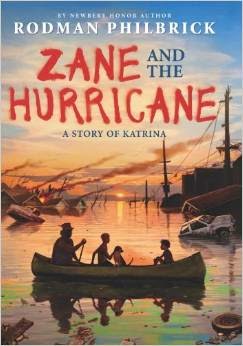
Zane and the Hurricane by Rodman Philbrick, Blue Sky Press, 2014, is a stellar example of this type of book. Zane's black father died years ago, and he lives with his white mom in Massachusetts. When he goes to New Orleans to meet his father’s grandmother for the first time, he doesn't know what to expect, but it certainly isn't hurricane Katrina. In the aftermath, he encounters a foreign world composed of New Orleans culture, prejudice, and life-threatening elements more ominous than a hurricane and broken levees. Philbrick unites themes of family, friendship, and disparate cultures in a way that is nothing short of jazz harmony.

Flying the Dragon by Natalie Diaz Lorenzi is a contemporary story, but an excellent example of showing diversity in experience. Told alternately from the point of view of American-born Skye, a half Japanese, half Caucasian, and her Japanese-born cousin Hiroshi, the clash of cultures and eventual resolution is an eye-opening journey. Adults and children of all ethnic backgrounds will be enriched. Skye eventually embraces her Japanese heritage and learns compassion and empathy for Hiroshi, who navigates the painful transition of an immigrant to life in the United States.

Are there any books you've found helpful in turning stereotypes on their heads and showing diversity within diversity? Please share them! In another post, I'll be looking at how to avoid the "Dances with Wolves Syndrome."

Michele Hathaway is a writer and freelance editor. She has an M. A. in Social Anthropology and has worked in libraries in California, New Mexico, and Pennsylvania. She writes stories set in culturally diverse, historical and contemporary periods.

Tuesday, January 27, 2015

Mary Louise Sanchez:The Battle of the Bulge


Since it's January, many people may think this post addresses weight loss. I am Mary Louise Sanchez, and yes, I need to fight the battle of the bulge too. However, our blog addresses middle grade historical fiction books, so I'd like to commemorate the seventieth anniversary of the Battle of the Bulge that took place from December 16, 1944 – January 25, 1945, and was Hitler's last gamble to win WWII.
Google Images - thenewstalkers.com
He wanted to recapture the port of Antwerp, Belgium and believed the Allied forces, especially the Americans, were not strong in the western part of Europe and so decided to attack them in the heavily forested Ardennes region, primarily in Belgium and Luxembourg but also in Germany and France. 

Hitler's plan was to split the allies in their drive towards Germany in a surprise attack by using the bad weather, which his meteorologists forecast; frozen roads to enable the German tanks to press forward; and  the special forces Panzer units.

The initial attack by the Germans caused a bulge in the Allied front line, thus, this offensive became better known as the Battle of the Bulge, rather than the Ardennes Offensive.  Because the Nazis needed much fuel for this offensive and the allied air power destroyed most of the supply, the mission was doomed from the beginning. Hitler also underestimated the camaraderie of the allied forces, and clear skies on December 23, which allowed Allied planes to drop supplies for the divisions. 

Google Images

Sometimes we get caught up in the Invasion of Normandy at D-Day, but forget or don't know that the Battle of the Bulge was the largest battle fought by the Americans in World War II. 600,000 American troops were involved in the battle. The Americans lost 81,000 men, while the Germans lost 100,000 killed, wounded and captured soldiers.

January 27, 2015 is also an important book anniversary, because two bloggers, Valarie Budayr and Mia Wenjen, have joined forces for the second year on the website, Multicultural Children's Book Day,  to raise awareness about the need for books that celebrate diversity; and to get these books into the classrooms and libraries. 

To recognize both the Battle of the Bulge and Multicultural Children's Book Day, I highly recommend Dog Tags-Prisoners of War by C. Alexander London published by Scholastic Inc. in 2013 for our middle grade and older readers. Boys, in particular, will thank you for adding this paperback book, from the Dog Tag series, to your collection of war books.

Goodreads.com
  I've been researching the Battle of the Bulge lately for my work-in-progress set in 1944 and 1945. Thus, I recognized many instances in the story where the author embedded research into the story.

In the book I learned that dark skinned American soldiers, who were not African American, were rounded up with their Jewish American brothers in arms and sent to concentration camps. This story was inspired by the life of Anthony Acevedo, a Mexican American medic. 

The protagonist of the story is an Hispanic medic, Miguel Rivera, from Albuquerque, New Mexico. (Some of my direct ancestors founded this settlement in the 1700s and you can see their names on a mural in Old Town). The  new friend Miguel is trying to save from the German captors, using their own dog, is Mike Goldsmith, a Jewish American from New York. I give the author kudos for making his protagonist Hispanic. In my research of the Battle of the Bulge, for my work-in-progress, Ken Burns made no mention of the important role Hispanics played in WWII in his book and his PBS special, based on the book. 

To put my research to work, in 2015 I will be posting information about WWII historical fiction and nonfiction books I've read. As I've been reading  about the Battle of the Bulge, I have to remind myself that my husband was only six months old at the time and I wasn't even born.

Be sure and tell me some of your favorite WWII books.