Showing posts with label Women's History. Show all posts

Wednesday, March 21, 2018

Sara K Joiner: Youth Activists Leading Change

With the student walkouts for gun control reform last week and the upcoming March for Our Lives, I've been thinking about how social movements often begin with children and young people. There are a number of fiction and nonfiction books that show the world as it was, and how children and young people agitated for change.

Civil Rights Movement
Fiction
  • A Thousand Never Evers - Shana Burg
    As the civil rights movement in the South gains momentum in 1963--and violence against African Americans intensifies--the black residents, including seventh-grader Addie Ann Pickett, in the small town of Kuckachoo, Mississippi, begin their own courageous struggle for racial justice.
  • Let the Children March - Monica Clark-Robinson
    Under the leadership of Dr. Martin Luther King, children and teenagers march against segregation in Birmingham, Alabama, in 1963.
  • Just Like Martin - Ossie Davis
    Following the deaths of two classmates in a bomb explosion at his Alabama church, fourteen-year-old Stone organizes a children's march for civil rights in the autumn of 1963.
  • The Rock and the River - Kekla Magoon
    In 1968 Chicago, fourteen-year-old Sam Childs is caught in a conflict between his father's nonviolent approach to seeking civil rights for African Americans and his older brother, who has joined the Black Panther Party.
Nonfiction
  • March Forward, Girl: From Young Warrior to Little Rock Nine - Melba Pattillo Beals
    A member of the Little Rock Nine shares her memories of growing up in the South under Jim Crow.
  • Through My Eyes - Ruby Bridges
    The autobiographical story of Bridges' involvement, as a six-year-old, in the integration of her school in New Orleans in 1960. 
  • Claudette Colvin: Twice Toward Justice - Phillip Hoose
    Presents the life of the Alabama teenager who played an integral role in the Montgomery bus strike, once by refusing to give up a bus seat, and again, by becoming a plaintiff in the landmark civil rights case against the bus company.
  • We've Got a Job: The 1963 Birmingham Children's March - Cynthia Levinson
    Discusses the events when more than 4,000 African American students marched and were jailed to secure their freedom in May 1963.
  • The Youngest Marcher: The Story of Audrey Faye Hendricks, a Young Civil Rights Activist - Cynthia Levinson
    A picture book biography of the life of nine-year-old Hendricks who became the youngest known child to be arrested for picketing against Birmingham segregation practices in 1963. 
  • The March Trilogy - John Lewis
    This graphic novel series is Congressman John Lewis' first-hand account of his lifelong struggle for civil and human rights, meditating in the modern age on the distance traveled since the days of Jim Crow and segregation.
  • Today the World Is Watching You: The Little Rock Nine and the Fight for School Integration, 1957 - Kekla Magoon
    On September 4, 1957, nine African American teenagers made their way toward Central High School in Little Rock, Arkansas. Armed soldiers of the Arkansas National Guard blocked most of them at the edge of campus. The three students who did make it onto campus faced an angry mob of white citizens who spit at them and shouted ugly racial slurs.
Girl's Right to Education 
Fiction
  • The Breadwinner - Deborah Ellis
    Eleven-year-old Parvana lives with her family in one room of a bombed-out apartment building in Kabul, Afghanistan's capital city. Parvana's father, a history teacher until his school was bombed and his health destroyed, works from a blanket on the ground in the marketplace, reading letters for people who cannot read or write. One day, he is arrested for the crime of having a foreign education, and the family is left without someone who can earn money or even shop for food.
Nonfiction
  • Dear Malala, We Stand With You - Rosemary McCarney with Plan International
    Captures the impact Malala has had on girls from all walks of life. In powerfully simple language and stunning photographs, the struggles from poverty and violence faced by girls everywhere become a catalyst for change.
  • I Am Malala: How One Girl Stood Up for Education and Changed the World - Malala Yousafzai with Patricia McCormick
    Raised in a once-peaceful area of Pakistan transformed by terrorism, Malala was taught to stand up for what she believes. So she fought for her right to be educated. And on October 9, 2012, she nearly lost her life for the cause: She was shot point-blank while riding the bus on her way home from school.
  • Malala's Magic Pencil - Malala Yousafzai
    As a child in Pakistan, Malala made a wish for a magic pencil. She would use it to make everyone happy, to erase the smell of garbage from her city, to sleep an extra hour in the morning. But as she grew older, Malala saw that there were more important things to wish for.
Workers' Rights 
Fiction
  • Iqbal - Francesco D'Adamo
    A fictionalized account of the Pakistani child who escaped from bondage in a carpet factory and went on to help liberate other children like him before being gunned down at the age of thirteen.
  • On Our Way to Oyster Bay: Mother Jones and Her March for Children's Rights - Monica Kulling
    Though eight-year-old Aidan and his friend Gussie want to go to school, like many other children in 1903, they work twelve hours, six days a week, at a cotton mill in Pennsylvania instead. So when the millworkers decide to go on strike, the two friends join the picket line. Maybe now life will change for them.
Nonfiction
  • Kids on Strike! - Susan Campbell Bartoletti
    Describes the conditions and treatment that drove workers, including many children, to various strikes, from the mill workers strikes in 1828 and 1836 and the coal strikes at the turn of the century to the work of Mother Jones on behalf of child workers.
  • Kid Blink Beats The World - Don Brown
    A story of the newsboys (and girls) who took on the world's most powerful press barons--and won.
  • Iqbal Masih and the Crusaders Against Child Slavery - Susan Kuklin
    An account of the former Pakistani child labor activist whose life and unexplained murder has brought the evil of child bondage to the attention of the world.
Social movements, alone, aren't the only place where children try to make lasting change. Some turn into activists and fighters when they see truly horrible situations arise and cannot remain silent.

Fiction 
  • Aluta - Adwoa Badoe
    For eighteen-year-old Charlotte, university life is better than she'd ever dreamed, a sophisticated and generous roommate, the camaraderie of dorm living, parties, clubs and boyfriends. Most of all, Charlotte is exposed to new ideas, and in 1981 Ghana, this may be the most exciting and most dangerous adventure of all. 
  • Finding Zasha - Randi Barrow
    Twelve-year-old Ivan has escaped from the siege of Leningrad, but when the town he has taken refuge in is occupied by Hitler's troops, he sees his chance to help the partisans he has met--and to rescue two German shepherd puppies, Zasha and Thor, from the cruel Commander Recht. 
  • Ahimsa - Supriya Kelkar
    Gandhi asks for one member of each family to join the fight for independence from the British, and when ten-year-old Anjali's mother is jailed for doing so, Anjali must step out of her comfort zone to take over her mother's work. 
  • Kiss the Dust - Elizabeth Laird
    Her father's involvement with the Kurdish resistance movement in Iraq forces thirteen-year-old Tara to flee with her family over the border into Iran, where they face an unknown future.
  • Number the Stars - Lois Lowry
    In 1943, during the German occupation of Denmark, ten-year-old Annemarie learns how to be brave and courageous when she helps shelter her Jewish friend from the Nazis.
  • The Bicycle Spy - Yona Zeldis McDonough
    Twelve-year-old Marcel loves riding his bicycle, and dreams of competing in the Tour de France, but it is 1942 and German soldiers are everywhere, stopping him as he delivers bread from his parents' bakery around Aucoin--then one day he discovers that it is not just bread he is delivering, and suddenly he finds himself in position of dangerous secrets about his parents and his new friend from Paris, Delphine.
  • When My Name Was Keoko - Linda Sue Park
    With national pride and occasional fear, a brother and sister face the increasingly oppressive occupation of Korea by Japan during World War II, which threatens to suppress Korean culture entirely.
  • Shadow On the Mountain - Margi Preus
    In Nazi-occupied Norway, fourteen-year-old Espen joins the resistance movement, graduating from deliverer of illegal newspapers to courier and spy.
  • When Morning Comes - Arushi Raina
    Zanele is skipping school and secretly plotting against the apartheid government. The police can't know. Her mother and sister can't know. Her best friend Thabo, schoolboy turned gang member, can tell she's up to something. Across the bridge, in the wealthy white suburbs, Jack plans to spend his last days in Johannesburg burning miles on his beat-up Mustang--until he meets a girl with an unforgettable face from the simmering black township--Soweto. Working in her father's shop, Meena finds a packet of banned pamphlets. A series of chance meetings changes everything. A chain of events is set in motion. And the students will rise. 
  • The War Within These Walls - Aline Sax 
    Misha and his family do their best to survive in the appalling conditions of the Warsaw ghetto during World War II, and ultimately make a final, desperate stand against the Nazis. 
  • The Fall of the Red Star - Helen M. Szablya
    Fourteen-year-old Stephen takes up arms and joins the resistance in this novel of the Hungarian Revolution.
Nonfiction
  • Hans and Sophie Scholl: German Resisters of the White Rose - Toby Axelrod
    Profiles the brother and sister who founded White Rose, a student group at Munich's Ludwig-Maximilians University which attempted to build resistance against Hitler through anti-Nazi leaflets and graffiti.
  • The Boys Who Challenged Hitler: Knud Pederson and the Churchill Club - Phillip Hoose
    At the outset of World War II, Denmark did not resist German occupation. Deeply ashamed of his nation's leaders, fifteen-year-old Knud Pedersen resolved with his brother and a handful of schoolmates to take action against the Nazis if the adults would not.
  • We Will Not Be Silent: The White Rose Student Resistance Movement That Defied Hitler - Russell Freedman
    The true story of the White Rose, a group of students in Nazi Germany who were active undercover agents of the resistance movement against Hitler and his regime.
  • Who Will Shout If Not Us? Student Activists and the Tiananmen Square Protest, China, 1989 - Ann Kerns
    In the spring of 1989, university students in Beijing grabbed world headlines with a courageous stand against decades of Communist authoritarian rule in China. Thousands and then millions of students and workers from all over China gathered on the city's Tiananmen Square to support demands for democracy, clean government, and increased personal freedoms.
But activism also doesn't have to mean great upheaval. It can be as simple as trying to encourage yourself and others to think about the life you want to have in the community in which you live.

Fiction
  • Edwina Victorious - Susan Bonners
    Edwina follows in the footsteps of her namesake great-aunt when she begins to write letters to the mayor about community problems and poses as Edwina the elder.
  • Steinbeck's Ghost - Lewis Buzbee
    Unhappy after his parents move to a weird subdivision and become workaholics, thirteen-year-old Travis returns to his old Salinas neighborhood and becomes actively involved in saving the John Steinbeck Library.
  • Imogene's Last Stand - Candace Fleming
    Enamored of history, young Imogene Tripp tries to save her town's historical society from being demolished in order to build a shoelace factory.
  • Going Going - Naomi Shihab Nye
    In San Antonio, Texas, sixteen-year-old Florrie leads her friends and a new boyfriend in a campaign which supports small businesses and protests the effects of chain stores.
Nonfiction
  • Teenage Rebels: Successful High School Activists, from the Little Rock 9 to the Class of Tomorrow - Dawson Barrett
    Provides a glimpse into the laws, policies, and political struggles that have shaped the lives of American high school students over the last one hundred years.
  • Marley Dias Gets It Done and So Can You! - Marley Dias with Siobhan McGowan
    Drawing from her experience, Marley shows kids how they can galvanize their strengths to make positive changes in their communities, while getting support from parents, teachers, and friends to turn dreams into reality.
  • Activism: The Ultimate Teen Guide - Kathlyn Gay
    Gay
    explains why people become activists, the types of causes they advocate or oppose, and how teenagers can get involved.
  • Luna and Me: The True Story of a Girl Who Lived in a Tree to Save a Forest - Jenny Sue Kostecki-Shaw
    Social activism combines with environmentalism in this picture book bio of Julia Butterfly Hill and Luna, the thousand-year-old redwood tree whose life she saved.
  • Political Activism: How You Can Make a Difference - Heather E. Schwartz
    Describes what political activism is and serves as a guide explaining how youth can make a change in their world.
The changes these children and young people sought to make are still being felt around the world. In some places, these changes are slower to arrive. In other places, these changes have paved the way for even more changes to move society toward a more just and stable place.

As we can see throughout history, there will be setbacks and obstacles, but change will come.

Sara K Joiner is the author of After the Ashes. She is also a public librarian.

Thursday, March 1, 2018

Ancient Egyptian #Women Inspire Children Today #WomensHistoryMonth

Can reading about remarkable historical women inspire girls and women today?

Research suggests yes. In “How Knowledge of Ancient Egyptian Women Can Influence Today’s Gender Role: Does History Matter in Gender Psychology?“ published in Frontiers in Psychology, the authors report, “Several studies on gender psychology have revealed that social learning and cultural factors affect gender roles and gender behavior.” This study looked specifically at gender inequality in the Middle East. It declares, “Ancient Egyptian female pioneers in science, arts, and even in ruling Egypt as Pharaohs can improve today’s gender role in Egypt and Middle Eastern countries.”

Most teachers probably realize that all girls benefit from seeing female role models in history and in today’s society. However, some educators may tend to focus on European and American examples. This could be a result of unconscious bias, or because these examples are the easiest to find. Teachers may also promote their own childhood heroines, wanting to share the role models who inspired them.

However, seeking out a wider range of cultural examples has benefits. The paper’s authors quote a social learning theory that states, “Individuals are more likely to adopt a modeled behavior if the model is similar to the observer and has an admired status.” In less academic words, children (and adults) are inspired by seeing examples of people like themselves – same gender, same culture. Thus we can combat problems such as sexism and racism, and inspire young people to greater heights, by showing them real world examples of great people from their background.

In other words, Black children benefit from seeing Black role models, Native American children benefit from seeing Native American role models, and so forth. That’s why the paper focuses on the benefits to women in the Middle East learning about female role models in ancient Egypt. It seems reasonable that girls in the US who have families of a Middle Eastern background might also benefit from learning about great women in ancient Egypt.

Both girls and boys benefit from seeing a wide range of female role models throughout history. In addition to gender equality, these examples show racial and cultural equality. They help counter the Western prejudice that tends to show all inventions and advances in civilization as coming from European cultures.

(As a side note, many books and television shows promote the idea that aliens were responsible for the pyramids and other advances in Egyptian or Mayan culture. This stems from a belief that non-European ancient cultures could not possibly have developed scientific advances without outside help. Learning more about ancient cultures can help counter this racism. People will understand that the great pyramids did not suddenly appear out of nothing. Instead we can trace the development of the pyramid through trials such as The Step Pyramid of Djoser and mistakes such as the Blunted or Bent Pyramid)

The article cited above discusses the roles of ancient Egyptian women in medicine, science, education, social life and more. It also compares ancient Egyptian women to ancient Greek women. I recommend reading it.

For some children’s nonfiction on ancient Egypt, see this post: Books and Websites on Ancient Egypt for Classroom Use. But don’t stop with nonfiction! Historical fiction can also offer examples of strong female characters from different cultures and in different times. These previous posts offer guidance:


Learning from the Maya includes a short list of middle grade historical fiction set in Latin America. Celebrate Diversity during Hispanic Heritage Month has links to resources for nonfiction and fiction relating to Hispanic heritage.


Historical Fiction Makes Learning Fun and Connecting Kids to History include examples of using historical fiction in the classroom. In Back to School: Historical Fiction Resources for the Classroom you’ll find links to lesson plans for my historical middle grade novels, and links to many other resources relating to historical fiction.

Fantastic History: Bringing Legends to Life Part 1 and Part 2 list some historical fantasy novels from different cultures. See also Time Travel Novels for Middle Grade Readers.

Subscribe to get posts automatically and never miss a post. You can use the Subscribe buttons to the right, or add http://madaboutmghistory.blogspot.com/ to Feedly or another reader.

Chris Eboch’s novels for ages nine and up include The Eyes of Pharaoh, a mystery in ancient Egypt; The Well of Sacrifice, a Mayan adventure; The Genie’s Gift, a middle eastern fantasy; and the Haunted series, about kids who travel with a ghost hunter TV show, which starts with The Ghost on the Stairs. 

Get lesson plans to use with The Well of Sacrifice, The Eyes of Pharaoh, and The Genies Gift at the “For Teachers“ tab on her website.

Chris's writing craft books include You Can Write for Children: How to Write Great Stories, Articles, and Books for Kids and Teenagers, and Advanced Plotting. Learn more at www.chriseboch.com or her Amazon page, or check out her writing tips at her Write Like a Pro! blog.

Thursday, June 23, 2016

Mad About Suffrage, by Mary Hertz Scarbrough

One of my current works in progress is a middle grade book about the women’s suffrage movement in the U.S. Years ago, I wrote about the 19th Amendment for an adult reference book, so I’ve had a pretty good grip on the topic since that time. However, digging into research on this children’s book has opened up avenues of research I never thought about when I was merely concentrating on the facts.

Historical fiction can incorporate offbeat information to bring those sometimes hard to relate to facts to life. Yet there’s surprisingly little fiction for middle grade readers where suffrage is featured prominently. There’s a ton of nonfiction, of course, and a fair number of picture books, some of which are suitable for older readers too. Here are a handful of worthwhile middle grade historical novels with a good suffrage connection; as a bonus, two of them feature boy protagonists: 

Secrets on 26th Street by Elizabeth McDavid Jones: In New York in 1914, Susan O’ Neal’s widowed mother has taken in a new boarder – a suffragette from England. Does this boarder have something to do with Susan’s mother’s disappearance?

Operation Clean Sweep by Darleen Bailey Beard: Cornelius’s mother is secretly running against his father for mayor in Umatilla, Oregon, in 1916. Based on a true story.

You Come to Yokum, by Carol Otis Hurst: 12-year-old Frank’s mother is an ardent suffragist, to the dismay of many, in rural Massachusetts in 1920.

A Time for Courage: The Suffragette Diary of Kathleen Bowen, by Kathryn Lasky: A Dear America book.

Searching for Silverheels by Jeannie Mobley: As the U.S. enters World War I, young Pearl gains an understanding of the big issues of the day as they play out in her small Colorado town.

Below are a few of my favorite sources for off-the-beaten path information about suffrage. Perhaps one of them will inspire you with ideas for a classroom display or another way to explore suffrage themes.

According to Kenneth Florey’s website, he has been collecting suffrage memorabilia for 35 years. A retired English professor, Florey’s website and two books are packed full of goodies of all sorts – both information and many great images.  

For example, I read in his memorabilia book that in 1916, a snake charmer walked around the midway at the South Dakota State Fair wearing a "Votes for Women" pennant and a large serpent!

Suffrage cookbooks, such as the Washington Women’s Cookbook, are a lot of fun. Read a quick round-up about such cookbooks in this NPR story.

Alice Duer Miller’s poetry: Are Women People?  Much of it is easily accessible for today’s students. You can read more about Duer Miller’s suffrage poetry at my blog.

If you’ve discovered some fun sites or books on suffrage, I’d love to hear about them. 


Mary Hertz Scarbrough writes for all ages, but loves writing for kids most of all. She is passionate about history, reading, research and writing, and dogs, among other things, and has written more than two dozen books for kids. Visit her site at www.dakotawriter.com to learn more.

Thursday, March 10, 2016

Warrior Women in Middle Grade Historical Fiction


Everyone clamors for strong women characters in middle grade fiction to inspire and empower our own girls. But is there historical precedence for powerful women? In the days before women had the vote, were there strong women who influenced policy or wielded political power? Strong women do not have to show up just in fantasy and myth. Here are a selection of historical fiction based on real women who wielded not only power, but a sword.

The strong woman in Rosemary Sutcliff's Song For A Dark Queen is Boudicca, the Queen of the Iceni, a British tribe under Roman rule. The story is told by Cadwan, Harper to the Queen, who watches her grow from a determined six-year-old into the leader who opposes the oppressive new laws of the Emperor, Nero. When the Romans flog her and rape her daughters, she leads a rebellion that destroys several cities and nearly causes the Romans to leave Britain. It is no secret to anyone who knows history that Boudicca's victories are short-lived and that Rome eventually triumphs. Because the Britains during this period were not yet leaving written records, all we really know about Boudicca comes from the writings of Tacitus and Cassius Dio, and these two sources differ as to how Boudicca dies. Sutcliff has chosen to follow Tacitus' more romantic version, and says that Boudicca returns home drink poison from a cup made of Roman glass. Boudicca's story does not end well, but it is stirring and eloquent and asks readers to think about power and its uses and limitations.


The Edge on the Sword, by Rebecca Tingle is set nine hundred years later. The strong woman in this story is Flaed, a shorter version of  the historical Æthelflæd. Flaed is the fifteen-year-old daughter of the West Saxon king, Alfred. She is betrothed to King Ethelred of Mercia, a man older than her father.
King Alfred has made sure that Flaed has military training. She has learned to protect herself with stealth and smarts because her male opponents will always be stronger that she is. She is forced to use these skills when her party is attacked on her way to Mercia.  Flaed begins to realize that she fights not only to save herself,  but to save the ones she loves, and Wessex and Mercia.


Æthelflæd as depicted
in the cartulary
of Abingdon Abbey by Anonymous
We know from the original source of Æthelflæd's history, The Anglo-Saxon Chronicles, that after her husband's death, Æthelflæd ruled Mercia in her own right for eight years, during which she kept the Danes out of Mercia and established a series of fortresses that protected the land. She was renowned as a formidable military leader.

The Dove and the Sword, by Nancy Garden, tells the story of the woman who is probably the most recognized woman warrior in history: Joan of Arc, the charismatic leader of the French during the Hundred Years War. Told through the eyes of Gabrielle de Domremy, a childhood friend of Joan, and the 'dove' to Joan's 'sword,' this story traces Joan from her first calling to her death at the stake. Gabrielle is a courageous young woman, but entirely fictional, but the author used many primary documents in building her story. As far as I could ascertain, most of the words attributed to Joan in this novel are actually her own words.

Women warriors might always win in fiction and fantasy, but the real world has not always been so kind to strong women. The stories of neither Joan of Arc nor Boudicca end well: both were destroyed by enemies and died brutally. But even if they failed to attain their goals, their noble lives and dedication to their causes can inspire today's girls to continue the fight for freedom to live their lives the way they choose.

Jennifer Bohnhoff is a seventh grade social studies teacher and the author of three works of middle grade historical fiction. You can read about her and her books at her website: www.jenniferbohnhoff.com.


Subscribe to get posts automatically and never miss a post. You can use the Subscribe buttons to the right, or add http://madaboutmghistory.blogspot.com/ to Feedly or another reader.

Thursday, March 3, 2016

Middle Grade Historical Fiction with Fantastic Female Characters #wmnhist #whm

Chris Eboch with The Eyes of Pharaoh #MGlit in ancient Egypt
Blogger/author Chris Eboch
In honor of Women's History Month, I wanted to cover some middle grade historical fiction that included real women from history. But how does one find such offerings?

Cleopatra is certainly popular in historical fiction for various ages. Several middle grade novels on this GoodReads list of “YA & Middle Grade Historical Fiction set in Ancient Egypt” feature her. Queen Hatshepsut also shows up, and Pharaoh's Daughter: A Novel of Ancient Egypt
by Julius Lester tells the story of Moses with a focus on his sister, mother, and the Egyptian princess who adopts him. I've read a few of these novels, but none recently enough to give a good review. I'm assuming mileage may vary in regards to historical accuracy.

The Royal Diaries series also features Cleopatra along with many other real-life princesses from around the world throughout history. Here's a list of the books from GoodReads.

Far more middle grade historical novels feature strong fictional girls in a realistic setting. Teachers and librarians are likely familiar with many of these, including Out of the Dust by Karen Hess, The Mighty Miss Malone by Christopher Paul Curtis, and Esperanza Rising
by Pam Muñoz Ryan. These three are all set during the Great Depression but have wildly different characters and styles; find more titles on this GoodReads list: “Young Adult & Middle Grade Fiction Set During the Great Depression.”

Caroline Starr Rose May B historical fiction on the prairie
Many other historical eras are represented in historical fiction with strong female characters. Consider the Revolutionary War novels Chains by Laurie Halse Anderson and Sophia’s War: A Tale of the Revolution by Avi. Dash by Kirby Larson and Number the Stars by Lois Lowry are among the offerings set during World War II. As a bonus, several of these feature diverse characters: a black slave girl in Chains, a Japanese American girl in Dash, and a Jewish friend in Number the Stars.

Bookworm for Kids lists these titles and many more (including many with male main characters) on its Historical Fiction page. Keene Public Library of New Hampshire offers "The Best in Historical Fiction for Young People” with pages for different regions of the world. (The Mayan Culture list features my novel The Well of Sacrifice!)

Jennifer Bohnhoff the Bent Read Civil War historical fiction
Caroline Starr Rose takes readers to a Kansas prairie homestead in May B., and all the way back to 1587 in Virginia for Blue Birds. Fellow blogger Jennifer Bohnhoff features strong girls near Gettysburg in The Bent Reed, and in occupied France in 1940 in Code: Elephants on the Moon.

And of course, a couple of my novels take readers to the distant past. The Eyes of Pharaoh is set in ancient Egypt while The Well of Sacrifice is set in the last days of a great Mayan city in the ninth century.

Do you have any suggestions for great middle grade historical fiction with strong female characters? Are any of them based on real people? Let's celebrate Women's History Month! #wmnhist #whm

Chris Eboch the Well of Sacrifice middle grade historical fiction about the Maya
Chris Eboch writes fiction and nonfiction for all ages, with several novels for ages nine and up. The Eyes of Pharaoh is an action-packed mystery set in ancient Egypt. The Genie’s Gift draws on the mythology of 1001  Arabian Nights to take readers on a fantasy adventure. In The Well of Sacrifice, a Mayan girl in ninth-century Guatemala rebels against the High Priest who sacrifices anyone challenging his power. Learn more at www.chriseboch.com or her Amazon page. You can also sign up for Chris’s newsletter or check out her writing tips at her Write Like a Pro! blog.

Subscribe to get posts automatically and never miss a post! Use the Subscribe or Follow by E-Mail buttons to the right, or add the blog to Feedly or another reader: http://madaboutmghistory.blogspot.com/

Thursday, August 13, 2015

A Historical Novel in a Month? by Louise Spiegler


Every November at least a few of my college students will ask me if I want to participate in NaNoWriMo (National Novel Writing Month). 

My response is usually incredulous laughter (the expression of the woman in the mosaic to the right is incredulous enough to express my feelings). November is a month when I am typically teaching three to four college classes with about 120 students and, no, I don’t have a teaching assistant to correct papers for me. Even finding time to write a blog post is a challenge!

However, I usually turn around and encourage those students to take part in the novel-writing challenge themselves.

And, mostly, they respond with incredulous laughter.

As well they might, since they often also work substantial jobs as well as being college students. Some of them work, are college students and parents. 

However, summer is my writing time, so this summer, I decided to take up the challenge and  try writing a first draft novel in month. A historical fiction piece, mind you, set in Ancient Rome.

Writing a first draft is usually is a slow and laborious process for me. In fact, I’d say it’s like clearing a garden of enormous rocks, pulling them out of the ground one by one. Does that sound dire? It’s not supposed to. But there’s a feeling of excavation, of unearthing or uncovering a story. And also a strong feeling of hard lifting. 

And a historical novel is, as many on this blog have pointed out, a massive undertaking of research and fact-checking.

So writing a historical novel in a month seemed crazy.

And yet, I’ve just finished my first extremely messy draft! (Feel free to cheer.)

I feel somewhat shocked, and, as usual when I finish a draft, I have no idea whether the goose has laid a golden egg or whether it has laid… what geese normally lay. No one has even read more than three chapters of it, so I have no sounding board. And that’s unusual for me as well, but I think that’s necessary if you want to write an initial draft so quickly.

The title, at the moment is Anaktoria Across the Waves. If you are an ancient history geek, you’ll recognize that as the title of a poem by the wonderful Greek poet, Sappho, a woman poet, actually, and even more interestingly, a lesbian poet. 

The image to the left is meant to be a portrait of Sappho, but read a little of her poetry and it will be hard to believe she would ever look this stern. (see below for a fragment of her work).

 So here’s how I did it.

I had a strong idea: a girl in ancient Rome, who is the daughter of a surgeon, and who is getting trained to follow in her father’s footsteps, as a doctor. (As I've mentioned elsewhere, this was a possibility for some women in the empire.) But her father disappears and her uncle takes over the surgery. And he is not a fan of having his niece become his apprentice --not least because he has a son of his own to whom he wants to hand down the position. The main thread of the story concerns Anaktoria’s freedoms getting taken away one by one, and how she turns the tables to eventually win back her rights.

For me, this reflects a dual social reality in ancient Rome: women, as in other ancient societies, were restricted in many ways, and to read men's writings about women is to be plunged into a sea of misogyny. And yet, if you dig (and I recommend Bonnie Anderson and Judith Zinsser’s book, A History of their Own, as a good introduction to the complexities of women’s history) there were certain freedoms that women had. For example, they had the right to divorce their husbands, to keep their own dowries and sometimes, to control their own finances. And  that gave them wiggle room.

And professional women, though a small minority, certainly existed, not least in the medical field. There are actually tombstones and memorial plaques commemorating women doctors.

So, what about the research? What about the painstaking hours of research? How can that meld with writing a very fast first draft?

Here’s the thing: You can only write a historical novel in a month if your research is already pretty much solid.


I’ve taught ancient history with an emphasis on Rome for more than ten years. So the era is very familiar to me, even the small details of everyday life. And now that I have a draft, I know which very specific details I still need to look up to make sure I’m accurate and to add depth and flavor. 

Another thing that helped was that I have already completed another novel, entitled The Healer’s Yew which involves Anaktoria as a secondary character. (My heroic agent is currently trying to place it).

Healer stars Anaktoria's best friend, Gaius Petronius Felix, the baker’s son who dreams of being an artist, and Titus, an escaped slave who knows the emperor’s murderous secret, and therefore is being stalked by the emperor’s spies.

So I have a very specific period which I have already extensively researched for another novel.

However, my new novel has a different focus, so I did more research on women’s lives in ancient Rome during the empire. This, again, is fairly familiar territory for me.

What is new and I continue to read up on is Roman medical knowledge and practice. Very surprising stuff! I can now tell you something about antiseptics, something about humoral theory, something about surgery, and perhaps more than I’d like about ancient gynecology. 

So now that I’ve got the story sketched out, I’ll be launching back into deeper research.

Now, if only I could get to visit Rome! If anyone hears of a fairy godmother who grants time and cash-strapped writers tickets around the world, let me know.

I don't know if I will ever try to write a novel in a month again, but I certainly am happy to have a draft to work from, as I get ready to plunge back into another busy school year.

POSTSCRIPT:

Here's a taste of Sappho's poetry:

The moon is down
And the Pleiades
And yet
Alone I lie.


Tuesday, June 2, 2015

Class and Gender in the Victorian Era, with Elizabeth Varadan

My love for history began with reading historical romance novels in high school. For one thing, I could find out, through novels, what the women were doing throughout history. (Textbooks seemed to dwell on wars and the generals who fought them.) Now I love to write fiction based in historical times. Historical fiction, I believe, makes history come alive in a way that mere facts cannot.

I’ve also been a Sherlock Holmes fan for years, so when a visit to the Sherlock Holmes museum sparked the kernel of a story idea, it became an opportunity to both indulge my love of research and to re-read my favorite Sherlock mysteries.

As a former teacher, I was especially interested in how educational opportunities differed by class and gender in the Victorian era.

In my book, Imogene and the Case of the Missing Pearls, Rusty, a street urchin, comes from a poor family. His father is dead, his mother is ill and cannot work, and Rusty is forced to scavenge whatever jobs he can. Before his father died, he would have attended one of the day schools, probably a “Ragged” school, where he would have learned, basically, the “three R’s”, mostly by rote, as well as religious instruction, usually from an unmarried “spinster”. In 1870, children were supposed to attend a weekday school from ages 5 to 10, but attendance wouldn’t have been enforced the way it is today.

Imogene, by contrast, the daughter of a banker, is schooled at home by a governess – which isn’t as privileged as it sounds. Girls were not expected to be well educated. Imogene would have been taught music, perhaps French, embroidery, handwriting, a bit of math, depending on the governess – usually an unmarried woman from a similar “privileged” background. (Because of England’s inheritance laws, sons became heirs, while daughters were groomed to marry. If they didn’t, they usually ended up caretaking elderly parents or teaching.)

On the other hand, Perry, one of Imogene’s obnoxious wealthy cousins, will start out with a governess but go on to a public boarding school like Eaton or Rugby, study classics and sports, and maybe go on to university and whatever opportunities await beyond.

Rich or poor, in Victorian times, the trajectory of ones place in life was rigidly circumscribed. In Imogene and the Case of the Missing Pearls, Imogene is already rebelling in her friendship with Rusty and by her desire to become a detective someday like Sherlock Holmes.

Information Sources:
Regina Jeffers’s Blog Post: The Nineteenth CenturyEducational System 

A Few Novels for Children by English Victorian Authors:
Black Beauty, by Anna Sewell
Tom Brown’s School Days, by Thomas Hughes
Alice’s Adventures in Wonderland, by Lewis Carroll
Treasure Island, by Robert Louis Stevenson
A Little Princess, by Francis Hodgson Burnett

Some Excellent Contemporary MG Novels set in Victorian England:
Nancy Springer’s Enola Holmes mystery series, featuring a
            Fictional younger sister of Sherlock Holmes
Splendors & Glooms, by Laura Amy Schlitz
Christopher Edge’s Penny Dreadful series
The Great Trouble, A Mystery of London, the Blue Death, and a Boy Called Eel,
   by Deborah Hopkinson

Guest blogger Elizabeth Varadan is the author of Imogene and the Case of the Missing Pearls: A day after Imogene’s obnoxious step-cousins pay a visit, her mother’s pearls go missing. When Sherlock Holmes is called in, Imogene, harboring a secret desire to become a detective, sees her chance to learn from the great Mr. Holmes. Imogene and the Case of the Missing Pearls can be pre-ordered at Amazon or Book Depository 

Connect with Elizabeth Varadan:

Twitter: @4thWishVaradan

Tuesday, May 5, 2015

Sara K Joiner: Insights from Historical Fiction Writers

In April I attended the Texas Library Association's annual conference in Austin where there were sessions about historical fiction for teens and adults.

The first session was called "The Many Facets of Young Adult Historical Fiction" and featured Andrea Cremer, A.C. Gaughen, Michaela MacColl, Ashley Perez, April Lindner and Stacey Lee.

To kick off the session, each of the authors was asked why they thought historical fiction is important.

Lindner: "Fiction is a lesson in empathy. It's the closest thing we have to a time machine."

Gaughen: "It's exploring the voices of teen girls which have been historically almost universally ignored."

Perez: "It's the voices from the margins."

MacColl:  "I got all my history as a kid through historical novels."

Lee:  "Recovering the historical record of women is difficult, so historical fiction is the place to engage that voice and illuminate ideas in new ways."

Cremer:  "As an historian, you're not allowed to change history, but as an historical fiction writer you can."

Their answers got me thinking. Why do I think historical fiction is important?

One of the reasons I read historical fiction as a child is that it was closer to my life experience. Even though I had a telephone, television and rode in a car, my life was still closer to Anne Shirley's Anne of Green Gables by L.M. Montgomery. Neighbors didn't live close, and I knew everyone in my small hometown.


Even though I didn't have any relatives who had died in World War II, I still understood Sally's experiences in Starring Sally J. Freedman as Herself by Judy Blume. We had a party line on our phone, and my father worked in the city and came home on weekends.


But that's probably not the main reason I read historical fiction as a child. I loved the stories! It was that simple. I don't think you need to be able to relate to a character's experience to have a connection with the book, but it probably does help.

Why do I write historical fiction?

I think it's interesting to see how people, especially girls, deal with the strictures of the societies in which they live. This is also true in contemporary fiction, but I think historical fiction provides insights into how far we've come as a society and lays the blueprint for how far we still have to go.

In my upcoming novel, After the Ashes, Katrien's life goal is to prove Charles Darwin's theory of natural selection. That's quite a goal for a thirteen-year-old girl living on Java in 1883. She has a supportive father, but her aunt wants her to be more ladylike. Katrien has to navigate the expectations society holds for her, and she finds it easier to navigate the wild jungle surrounding her home.

I hope Katrien's story touches readers. I hope they find connections to their own lives, but most importantly, I hope they enjoy it.


Sara K Joiner is the author of After the Ashes, coming in the fall from Holiday House. She is also the children's coordinator for Brazoria County Library System.

Tuesday, March 10, 2015

Sara K Joiner: Women's History Is History

Statue of Joan of Arc
at Mont St. Michel in France
When I was younger, I only read books that featured girls or women as the main characters. That's still my preference, but I'm not as exclusive as I once was. I went through a phase where I read nothing but biographies—though describing those particular books as biographies is a bit of a stretch; they would more accurately have been called historical fiction.

But what I loved most about them were the stories. Stories about strong, independent women who pushed themselves to the limit and changed the course of human history. Women like Joan of Arc, Florence Nightingale, Marie Curie and Amelia Earhart.

Equally important to me now are stories about the lives of women lead, whether real or fictional, contemporary or historical. How they deal with the times and situations they find themselves in. Some of my recent favorites include:


Dancer, Daughter, Traitor, Spy by Elizabeth Kiem is about Marya, a Soviet ballet dancer, who is forced to defect and flee to the United States with her father after her mother, a star with the Bolshoi Ballet, disappears. Is her mother a spy? Has she been arrested? But most important, can Marya make a home in America? The novel tells a unique immigrant story from the 1980s. It is followed by the sequel Hider, Seeker, Secret Keeper.

Elizabeth Wein's Rose Under Fire is the brilliant sequel to the equally magnificent Code Name Verity. Rose Justice is an American pilot who is captured by Nazis and sent to Ravensbrück, the women's concentration camp. There, she is tortured but manages to form powerful friendships with other suffering prisoners.

Cece Maloney, the main character in Radio Girl by Carol Brendler, wants nothing more than to perform in a radio serial. Unfortunately, her mother refuses to let Cece work. Nothing can keep Cece from realizing her dream, but when everyone on her street panics during Orson Welles' "War of the Worlds" broadcast, only Cece knows it's a hoax because she's secretly been working at CBS with Mr. Welles himself.

Touched by Fire, a novel by Irene N. Watts, features the early twentieth-century immigrant experience. Miriam and her family flee the Jewish pogroms in Russia and move to Germany. For years the family struggles to save enough to immigrate to the United States. Miriam's father leaves first, and years later Miriam joins him. While they wait for the rest of the family to join them, Miriam begins working at the Triangle Shirtwaist Factory.

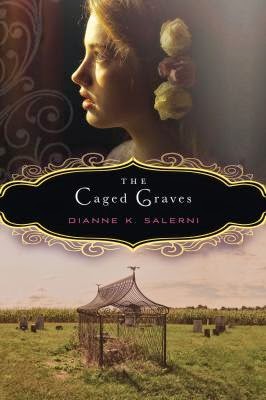
Verity Boone returns to her Pennsylvania home in The Caged Graves by Dianne K. Salerni and discovers the graves of her mother and aunt are encaged in iron bars. Why? In trying to determine the reason for what she believes is desecration, Verity also learns more about the man she is engaged to marry. The novel is inspired by two real caged graves in Pennsylvania.