Showing posts with label Slavery. Show all posts

Thursday, July 5, 2018

Ranging Through Time with Kate Messner's Time Traveling Rescue Dog


Need a stack of books to sustain your 2nd to 4th graders (and up!) on a road trip this summer? Look no further. The Ranger in Time series will eat up the miles. Why someone hasn't written about a time-travelling rescue dog before now is a mystery, but perhaps Ranger was waiting for Kate Messner to show up, and for Kelley McMorris to capture him in her winsome illustrations.


Squirrel Problems

Ranger is the best rescue dog on the planet. He just has one small problem--squirrels! Chasing one of the fluffy-tailed critters during his rescue test cost him his certification. But Ranger doesn't need paperwork to travel through time, find the lost, save lives, or hope for bacon. He returns home from each mission satisfied with a job well done and a small memento, reminders of the people he's met.


Corners of History


Ranger ends up in often overlooked corners of history.  Messner firmly sets her narrative in these corners without overwhelming young readers with facts. For example, Ranger in Time: Danger in Ancient Rome, leads us beneath the Roman Coliseum, with its wild lions, elaborate stage machinery, and tunnel to the Ludus Magnus gladiatorial school.

In Long Road to Freedom we learn about the Fugitive Slave Act of 1850 in the United States and it's devastating consequences for escaped slaves, and the abolitionists who tried to help them. Journey Through Ash and Smoke takes us to 934 A.D. and Viking Iceland where, rather than raiding, we see Viking families settling in a new land--a land of unexpected volcanic eruptions.

Inquiring minds can find many more fascinating facts in the end notes of all the books as well as personal photos from Messner's travels and her first hand observations.


Shadow and Light

History is a messy place full of shadow and light, hard edges and beautiful sunsets. Messner presents readers with fictional protagonists in true stories that include the shadows, but are still accessible to young readers.


For example, Race to the South Pole follows the fictional Jack Nin, a boy of Chinese and Maori descent from New Zealand who stows away on the fateful Scott Expedition to the South Pole. Although a few men survived the expedition, most did not, as well as all the ponies and some sled dogs. Hard truths well told.


Tid Bits:

It's the small concrete details that win me over in any story. Here's one from the Oregon Trail:

"The Fergusons had something called a roadometer attached to their wagon. It used cogs and gears to record the number of times the wagon wheels went around, and then turned that number to miles."

Who knew?!


Home
"Imagine saying good-bye to your house, almost all of your friends and extended family, and most of your possessions. Imagine leaving everything you know to begin a long, long journey to a new home in a place you've never seen." --Ranger in Time: Rescue on the Oregon Trail 

The theme of home runs through the series. Each child Ranger encounters in his time travels is on a journey toward home in some way, whether they are pioneer children, Roman or American slaves, or a viking daughter. Jack Nin journeys to the South Pole looking for adventure and glory only to discover home is the only place he wants to be.

"Ranger stood in the mud and looked up, too. It felt like something should happen. He'd rescued Pa. Would Luke come and take him home now? But when he heard the words 'Good job,' it was Sam's voice--not Luke's."

Home is a theme for Ranger, too. After a job well done of finding and rescuing, Ranger longs to return home to his boy, Luke. Eventually, he does, of course. Yet, each time the call for help comes Ranger answers without hesitation.

Eight Books and Counting!

The Ranger in Time series is eight books strong and counting. The series covers these topics:

1. Oregon Trail, 1850
2. Ancient Rome: Gladiators
3.The Underground Railroad
4. The Scot South Pole Expedition
5. Vikings in Iceland
6. San Francisco Earthquake
7. D-day
8. Hurricane Katrina
9. The Titanic (forthcoming Jan. 2019!)

Ranger in Time has appeal for both boys and girls. I highly recommend them for reluctant readers and agree with others that they are a next step for anyone who has devoured The Magic Tree House series.


Michele Hathaway is an author and freelance editor. She has an M. A. in Social Anthropology and has worked in libraries in California, New Mexico, and Pennsylvania. She writes middle-grade nonfiction and stories set in culturally diverse, historical periods.


Subscribe to get posts automatically and never miss a post. You can use the Subscribe or Follow by E-Mail buttons to the right, or add http://madaboutmghistory.blogspot.com/to Feedly or another reader.

Thursday, February 23, 2017

Sara K Joiner: A Review of "Mary Bowser and the Civil War Spy Ring"

If you or your students are interested in codes, ciphers and clues, then Mary Bowser and the Civil War Spy Ring by Enigma Alberti is just the book for you.

Telling the fictionalized story of Mary Bowser, a freed slave who worked as part of Elizabeth Van Lew's Union spy ring during the Civil War, readers will find a woman determined to do what she can to end the horrors of slavery. Mary served as a servant in the Confederate White House and was well-placed to learn a great deal of information that passed across Jefferson Davis' desk.

While the book isn't long or difficult to read, it has a great deal of drama and danger which makes it ideal for reluctant readers. Mary has an antagonistic relationship with O'Melia, the Irish lady's maid to Varina Davis. Will O'Melia discover that Mary isn't the simple-minded servant she claims to be?

Mary had been a slave for the Van Lew family before being freed by Elizabeth who recognized Mary's intelligence. After being sent to school in Philadelphia, Mary eventually taught in Liberia before returning to the United States to marry. Her wedding occurred on the same day Virginia seceded from the Union in 1861. Not long after that, Elizabeth Van Lew began recruiting spies for the Union and convinced Mary to work in the Davis household. Clever and educated, Mary Bowser risked her life spying for the Union. If anyone had learned she could read and write, she could have been killed as it was illegal in Virginia for slaves to be literate.

In addition to the story, the main focus of the book is on spycraft and deciphering messages. Throughout the tale, Mary keeps a diary (which may or may not be historically true) that she hides in different places throughout the Confederate White House. Readers' goals are to use the clues hidden in pictures and across the margins to find the final hiding place of the diary. An envelope with a Caesar cipher wheel, vellum with cutout holes, red acetate and a page from Uncle Tom's Cabin help readers solve the puzzles to lead them to the answer. If they grow frustrated or cannot solve them, the answers are provided in a sealed section at the end.

There are lots of clues. I have to admit that I didn't even spot all of them until I read the answers. Morse code, Vignere ciphers, the language of flowers, hidden writing -- it's all here to be pored over and puzzled out by readers.

While I will admit to not being the type of reader who particularly likes codes, I did enjoy deciphering the clues and challenging myself to solve the problems before I gave up and broke the seal. That's when I learned that although I had determined the location of Mary's diary, there were quite a few other clues I missed.

The acetate, vellum, cipher wheel
and page that come with the book.
Unfortunately, because of the pieces that come with it, this book wouldn't necessarily stand up to heavy library or classroom use and is really only able to be used by one, or perhaps two, readers at a time. It is fun to solve the riddles, though, and I gained a tremendous appreciation for the poor men and women who had to translate simple messages into codes that appeared to be gibberish. That takes some time!

And, of course, it is always worthwhile to learn about people and their lives. Mary Bowser was quite remarkable and even began teaching freed slaves to read almost as soon as the war ended.

Mary Bowser and the Civil War Spy Ring is written by Enigma Alberti and illustrated by Tony Cliff. It is the first of Workman Publishing's Spy On History series. The next book in the series, Victor Dowd and the WWII Ghost Army, will be available in January 2018.

Workman Publishing supplied a free copy of the book for review purposes.

Sara K Joiner is the author of After the Ashes. She is also a public librarian.

Tuesday, July 14, 2015

Sara K Joiner: On the Confederacy, Textbooks and the Power of Historical Fiction

Since those horrible murders in Charleston in June, the country has engaged in a debate on the significance and meaning of the Confederate battle flag. Some argue it is a racist symbol of a racist past, while others believe it is a symbol of Southern pride.

Texas monument at Antietam
National Battlefield in Maryland.
photo by Sara K Joiner
Into the middle of that debate walked the new American history textbooks that the Texas Board of Education approved.

They whitewash history and sweep all the ugliness of our nation's past under a rug.

History textbooks are no strangers to controversy. There are people who want to include all the sordid details and those who want only the most pleasant facts mentioned.

Textbook writers and publishers have to find a happy medium. Then they have to cater to the education boards of the two largest textbook buyers in the country—California and Texas.

This is where historical fiction can bring history into focus.
New York monument at Antietam
National Battlefield in Maryland.
photo by Sara K Joiner

Now, more than ever, as our nation grows ever more diverse and the millennial generation is the largest group in the country, historical fiction writers have an obligation to be as honest as possible in their writing. We owe our readers emotional honesty and as much historical accuracy as we can provide.

We should refer to the wholesale slaughter of indigenous peoples as the genocide it was. We should speak truthfully about the horrors of slavery. We should remember the terrors perpetrated under Jim Crow.

Crystal Allen's The Laura Line wrestles with slavery as it continues to affect present generations. Noni Carter's Good Fortune shows one girl's experience from capture to enslavement to escape.

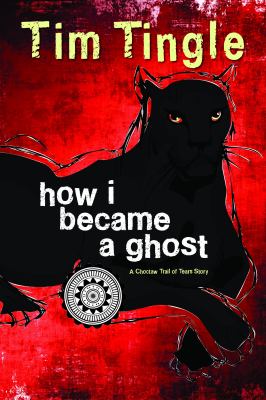
The Winter People by Joseph Bruchac gives readers an introduction to Native life and resistance in colonial times. How I Became a Ghost by Tim Tingle shows the cruelty meted out to the Choctaw during their forced removal from ancestral lands.

Sharon Draper's Stella By Starlight and Augusta Scattergood's Glory Be are both set in the segregated South and show the racism prevalent at the time, albeit from very different points of view.

Give these books to students. Let them read about fictional characters living and suffering through true historical moments. It's the best way to separate symbols from history and see the truth that lies somewhere between the textbook and the novel.

Sara K Joiner is the author of After the Ashes, coming in October from Holiday House. She is also the children's coordinator for the Brazoria County Library System.

Tuesday, June 30, 2015

Amazing Grace: Historical Fiction, Primary Sources and Social Justice


This has been a historic and moving few weeks, and the connections that have bubbled up between history, the opening of the human heart and the expansion of freedom have inspired this post.

When the Supreme Court expanded the definition of fourteenth amendment rights to guarantee the right to gay marriage in every state in the union, freedom was likewise expanded. That this decision fell roughly on the anniversary of the Stonewall Uprising makes it even more resonant with the struggle that went before.

Meanwhile, a more painful resonance came with the despicable and cowardly mass murder of nine Black worshipers at the Emmanuel AME church in Charleston in the name of white supremacy. The initial resonance was with our ugly history of racial violence. 
(right - a sign about the Confederate battle flag amidst the tributes at Emanuel AME)

But something astonishing happened which shifted that resonance to a deep and resounding echo of the history of the inspired struggle for civil rights and human dignity in the United States. Rather than the effect desired by the alleged killer of starting a ‘race war’, the ultimate effect of his crime was to galvanize people to tear down emblems of hate and segregation across the South: a symbolic step, no doubt, but a valuable one. A way of saying that Black Lives Matter -- the doing is still up to all of us. The forgiveness extended to the alleged killer by the relatives of his victims was stunning and heartrending.

President Obama’s eulogy for the Reverend Clementa Pinckney movingly engaged with the themes of violence, injustice and the possibility of change, and inspired me to think about how powerful historical narrative narrative can be. Here is a link to the eulogy:  (https://www.youtube.com/watch?v=RK7tYOVd0Hs)

The president wove his speech around the words of the hymn “Amazing Grace” and made repeated references to history, mentioning that while we “have a deep appreciation of history…we don’t have a deep appreciation of each other’s history”, and suggesting that “we’ve been blind to the way that past injustices continue to shape the present.”

And as a deep believer in the idea that knowing each other’s history is a step toward “…the steady expansion of human rights and human dignity” that the president lauded and that the Supreme Court ruling on gay marriage embodies, I’m thinking in this blog about how important it is to go directly to the source and listen to the voices of those who have too often not been heard. Historical fiction can be a first step for kids and teens toward that engagement. (left: Ouladah Equiano - see below)

At the end of my ancient history class this spring, I asked students to either bring in a quote from one of the “voices” that we encountered through our primary sources or to note which voices we did not hear. In the time period that I was teaching, such voices are limited, though some students loved that they could still hear Sappho, an ancient Greek poet, declare her love for another woman (notably, if they had read Sappho in the nineteenth century, the pronouns would have been changed by translators to make the poet appear heterosexual). Other students enjoyed hearing the wisdom of Confucius or the wild irreverence of Aristophanes. 

But many observed that they couldn’t hear at all from most women, or working people or slaves, and they wished so much they had been able to. They could only hear about people like Spartacus, the leader of the great slave uprising, or Boudicca, the warrior queen of the Iceni, through the words of others who were almost always elite, and often hostile.

As we teach history closer to the present day, more voices can potentially be heard as literacy expands and more sources survive — even the voices of the otherwise dispossessed (though there are still many, many silences).

An important role of historical fiction for young people is to give them an idea of who these voices belong to so that they can make the important step of transitioning to reading the actually primary source material that fiction writers use as sources for creating their work. Often the voices of the primary sources engage with issues that still stir and divide us today. In thinking of the legacy of slavery, several works of fiction and non-fiction primary source narratives come to mind.

For example, I remember reading Paula Fox’s novel The Slave Dancer as a child. The emotion it evoked is still vivid in my memory – pity and horror, as the main character’s musical talent is twisted into the service of macabre practice of “dancing” the captured slaves on a slave ship to keep them fit so they can be more readily sold once they arrive at slave ports.

Another story which has this powerful effect is “The People Could Fly” —the eponymous folktale in the collection of The People Could Fly: American Black Folktales by Leo and Diane Dillon. Many of the tales in the collection are ingenious examples of the oral tradition of riddle-making and story-telling which convey the richness of African American culture during the long period of slavery. Often there is a sense of joy despite dire circumstances. But the final story fully embodies the cruelties the slave system inflected and the passionate desire of enslaved people to ‘fly away’ to a land of freedom. 

This kind of narrative structure allows children and young teens to understand the horror of slavery and the value of every human being in the way a text- book just can’t convey.

The narrative form (usually an autobiographical narrative) was also used by eighteenth and nineteenth century former slaves who were also passionate abolitionists  in order to fuel others to join the abolitionist cause, and this ‘story telling’ of their own experiences is, I think, the next step for teens who have already read fictional accounts of slavery.

I’d suggest that history teachers can carefully and thoughtfully link the two, using the fiction as an introduction leading students into the primary sources. These primary sources are certainly much more challenging reading, which is why I’m specifying that this is a good tactic for older teens, though it is also possible to rework such connections so they are manageable for younger students (using only a chapter or a few paragraphs of a primary source and discussing how it differs from the fictional account and talking about the writer’s voice and purpose).

For example, no history teacher can hear "Amazing Grace",  the hymn the president so surprisingly sang, without connecting it back to the British abolitionists who fought and won the abolition of slavery by parliamentary vote in most of the British empire long before America achieved abolition through war.

Among this group was Olaudah Equiano, the former slave who bought his freedom and devoted his life to the cause of abolition. He wrote The Interesting Narrative of the Life of Olaudah Equiano and using his own story to make his appeal to the humanity of his readers in the cause of liberty. And he was not alone in using self-story-telling as a means toward liberation.

By telling their own stories, by engaging readers with empathy, and using the sort of structures that keep readers concerned with the outcomes of their tales, former slaves made slavery real and urgent to people who had never experienced it.

I am, of course, thinking of Equiano, but even more of the greatest (I believe) of all slave
narratives The Narrative Life of Frederick Douglass. This is a text I would love to see more teens reading in high school as they become more sophisticated readers of historical material.

The power of Douglass’s book is overwhelming. Every time I teach it to students, it is the autobiography that most powerfully moves them. From the description of Douglass’s mother walking miles from a neighboring plantation just to put him to sleep as a small child to the story of a man being shot dead by his master’s overseer for refusing to obey an order, to Douglass himself reaching his breaking point and beating up a degenerate overseer (in introducing this episode he says: “You have seen how a man was made a slave; you shall see how a slave was made a man”) to his final triumphant escape, the details are raw and the story urgent.

But for me, the most affecting chapter is the one where Douglass learns to read.

 His mistress begins teaching him, before being forbidden to do so by her husband (it will “unfit” Douglass to be a slave, the husband explains). But Douglass perseveres in any way he can, hiding books, tricking other kids into teaching him. 

What I love about this account of learning is how strongly he connects learning with liberation. He describes how learning about the slave trade engenders fury and discontent in him and concludes “I could regard (the slave traders) in no other light than a band of successful robbers”.

But even learning that causes pain is part of this process of liberation — for Douglass and for many others. As he explains, “(t)he silver trump of freedom…roused my soul to eternal wakefulness…” and once he had learned to read, he could never stop hearing that trumpet.

Douglass’s words ­—the words of any powerful primary source recording vast, systemic injustices —can still rouse our complacent souls to eternal wakefulness.

And if historical fiction for young people can serve as a bridge to Douglass’s thundering words, so much the better.