Thursday, April 2, 2015

Robert Lee Murphy - Historic Platte River Route

My frontier, historical trilogy The Iron Horse Chronicles takes the young protagonist, Will Braddock, on a quest to determine his own destiny at the time of the building of the first transcontinental railroad. Eagle Talons, book one, is currently available, while Bear Claws, book two, will be released in November 2015. The third book, Golden Spike, will follow thereafter. In Eagle Talons, Will’s adventures take him along the Platte River, which was the route the Union Pacific Railroad followed when they constructed the eastern half of the “Pacific Railroad.”


While doing research on the route of the first transcontinental railroad, one of the first places I visited was the Western Historical Trails Center in Council Bluffs, Iowa, located off I-80 where it crosses the Missouri River. The center provides an informative introduction to four important trails that passed through that region before the transcontinental railroad made travel easier and faster. The center is administered by the State Historical Society of Iowa, a division of the Iowa Department of Cultural Affairs. Their website: http://www.iowahistory.org/historic-sites/western-historic-trails/

The Lewis and Clark Trail passed north and south through the area, following the Missouri River. Three of the trails, however, crossed the river and proceeded west along the Platte River. Animals originally created paths beside the Platte River, which joins the Missouri south of Council Bluffs, Iowa, and Omaha, Nebraska. Native Americans, pursuing the animals over the centuries, pounded these paths into trails. The Oregon Trail, the Mormon Pioneer Trail, and the California Trail continued to follow the Platte River in the early part of the nineteenth century, providing the pioneers with the "road" to their future. These three, heavily-traveled trails paralleled the Platte across Nebraska and into the Rocky Mountains. The Pony Express followed a portion of the Platte during its short existence.

Council Bluffs Library
In 1859, Grenville Dodge met Abraham Lincoln in Council Bluffs to discuss the best route for a transcontinental railroad. At that time, there were competing proposals for building a railroad across the country, with routes ranging from south of the Canadian border to north of the Mexican one. Dodge had performed extensive surveys across the west, and based on these exploratory trips, he recommended the Platte River route as the best "path" for the first transcontinental railroad. After Lincoln became president, he wanted to connect Union-sympathetic California and Oregon more securely to the eastern states. Because of the secession of the southern states, which led to the Civil War, routes leading through the Confederacy were ruled out. Lincoln, remembering Dodge’s recommendation, signed the Pacific Railroad Act of 1862, designating that the railroad be built along the historic trails of the Platte River. During the Civil War, Grenville Dodge served as a general in the Union Army. Following the war he became the chief engineer for the Union Pacific and supervised the building of the eastern portion of the transcontinental railroad from Omaha to Promontory Summit, Utah.

The National Park Service, in conjunction with the Forest Service and in one instance the Bureau of Land Management, has produced full-color brochures for each of the three westbound trails and the Pony Express route. Each brochure measures approximately 8” by 45” in six folds. One side of the brochure is a profusely illustrated, comprehensive narrative about the trail. The opposite side is a detailed, annotated map of the entire route of the trail. History teachers and librarians who are looking for a fascinating way to provide historical information about the westward expansion across the western states can use these brochures as bulletin board posters. In a couple of instances the maps are downloadable in PDF, but without the narrative information. Having two copies of each brochure would enable the side-by-side posting of the entire brochure.

Here is a small portion of the Oregon Trail map to provide an example of the detail.


The National Park Service will provide the brochure if requested by email. (Hint: if there is a limit of one brochure per inquiry, have an associate order one.) Here are the websites for each of the four recommended brochures.

Oregon Trail:

Mormon Pioneer Trail:

California Trail:

Pony Express:


Wednesday, April 1, 2015

Surviving the Blitz, by Elizabeth McLaughlin

burned-out tram
In 1941, Clydebank, on the banks of the River Clyde, was a bustling, densely populated small town on Scotland's west coast.   The main industries were shipyards such as John Brown’s, the Singer Sewing Machine factory and lumber yard, the Royal Ordnance Factory, and, of course the distilleries.  An Admiralty oil storage depot was also housed in Clydebank. Munitions factories were added as the prospect of war loomed.  As they had done for centuries, the women took over while the menfolk were in the services.

Apparently, Clydesiders were quite confident they were safe from aerial attacks because ‘the iron in the mountains’ would knock the German radar askew.  What they hadn’t counted on was the waters of the Clyde estuary, the docks, the river, and the parallel Canal becoming glittering silver ribbon guides under the full moon on that clear frosty night of March 13th, 1941.  The strictly enforced blackout was not much use.  Under that merciless light, 266 of Goering’s Heinkels followed the silver ribbons and struck the town in a nine-hour barrage.  When morning came the destruction was unbelievable.  Whole families had been wiped out as their homes took a direct hit and collapsed, trapping them.

homeless - a wee cuppie tea helps
Emergency crews were overwhelmed; roads were blocked by the damage, preventing aid coming from neighbouring communities.  The town was still burning when the second wave of bombers returned the following night.     

Stunned, homeless they may have been, but hardship was nothing new to the Clydesiders, and their spirit was unbroken.   Nor was their innate sense of humour quenched.  Their story deserves to be much more widely known, and this, in small measure, is what I hope to do with my book in progress, Alec’s War.

Thursday, March 26, 2015

My Love Affair With the Roman World by Louise Spiegler


Since I am a complete history geek, I could probably reuse this title for my next several posts: “My Love Affair with Russian History”, “My Love Affair with Marco Polo, “My Love Affair with the Mongols -- Except for Genghis Khan”. And, if you’ve read my previous blogs, you’ll note my passion for American labor history and any other sort of rabble-rousing. But for now, I’ll confine myself to the Romans.


Did I say “confine”? How ridiculous! We are talking about an empire that spans about 1,000 years (if you don’t count Byzantium), and includes mad emperors, gladiators, Vestal Virgins, working class heroes, and loads and loads of surprises. But I will confine myself in this post to Roman Britain and the grand dame of historical fiction for young people written about Roman Britain, Rosemary Sutcliff.

Sutcliff was publishing from the late 1950's until her death in the 1990's. I’m focusing on her Aquila series, The Eagle of the Ninth, The Silver Branch and The Lantern Bearers, which won the Carnegie Medal in the UK. This trilogy follows young men in the Aquila family from the early years of Roman settlement until the last crumbling embers of the empire and the Saxon invasions. They are adventure stories, but so much more.

The Eagle of the Ninth features the engaging Marcus Flavius Aquila, a young Roman soldier stationed in the remote and barbaric Roman province of Britannia. When Marcus was a child, his father disappeared, along with the mysterious and cursed Ninth legion, somewhere north of Agricola’s wall in modern-day Scotland. Marcus wants nothing more than to follow in father’s footsteps and become a legionary commander. 

However, he is forced to give up his military command when he is lamed in battle. With his dream in tatters, the one thing that gives his life purpose is redeeming his father’s name from the charges of treason and cowardice which have been leveled against the Ninth Legion ever since their disappearance.

Along with Esca, a British slave who Marcus saves from death in the gladiators' ring, Marcus journeys north of the wall, into territory not controlled by the Romans, to seek the truth about his father. Using clever disguises, his knack for gaining people’s trust, and a growing understanding of British tribal culture gained from Esca, he risks life and limb to discover the secret of the lost legion and to recover the Eagle of the Ninth, the legion’s standard and symbol of its honor.

None of this is a plot that couldn’t be written by someone else. It is the way it is written that is remarkable. Sutcliff writes with amazing conviction. Her descriptions of nature are breathtaking, and the details of human interactions are nuanced and revealing. But it’s even more than that. The Roman world she creates just breathes. It is so convincing, and the way the characters see the world is so distinctly different and yet recognizable that you trust the authenticity. There’s no feeling of “these are modern people dressed up in period costume”. These are Romans colonists and British tribespeople. You suspend your disbelief.

Sutcliff has an affinity for soldiers’ lives. Her battle and action scenes are so immediate that you imagine she somehow experienced them. This is all the more remarkable because Sutcliff was afflicted with a disease that left her in a wheelchair for most of her life. In a wonderful interview, Sutcliff describes the soldiers in her novels as close in spirit to the World War I soldier-poets like Siegfried Sassoon and Wilfred Owens: men of action who are also deeply concerned with human development and sensitive to beauty. (Here's the link: http://d.lib.rochester.edu/camelot/text/interview-with-rosemary-sutcliff).

This shows through especially in the realizations Marcus has about the culture clash between his Roman imperial culture and that of the native Britons.

Look at the argument Marcus has with Esca over the designs on a Roman dagger and a British shield-boss. Marcus claims that they were both made by British artisans and therefore are essentially the same in spirit. The reader understands the subtext of his remark: conquered people can and should accommodate themselves to seeing life through the eyes of their conquerors.

 Esca, however, insists on the differences. He notes how the design on the dagger is perfectly balanced and accomplished -- what we’d now call classical: “It is beautiful, yes. But to me it is as meaningless as an unlit lamp”.

He shows Marcus the British shield-boss (imagine Iron-Age British art, like the Battersea shield shown on the right) and explains: “See the bulging curves that flow from each other as water flows from water and wind from wind, as the stars turn in the heavens and blown sand drifts into dunes.” Marcus, for the first time, gets a sense of the spirit of these “barbarians”. 

But Esca isn't satisfied. He goes on to tell Marcus something that no Roman, in all his assumed superiority, wants to hear: “You cannot expect the man who made this shield to live easily under the rule of the man who worked the sheath of this dagger.” (93)

One of the great pleasures of the book is the growing understanding, respect and affection between the two young men.

I would encourage anyone who loves excellent historical fiction to dive into this series so they can start a love-affair with Rome as well.


If you can recommend any wonderful historical fiction set in the ancient Roman world, leave the title in your comments. And – full disclosure – I am fiddling around writing a story about a girl training to be a doctor in ancient Rome. And, yes, in case you’re wondering, some girls could!


Louise Spiegler is the author of The Amethyst Road (Clarion) and The Jewel and the Key (Clarion). She teaches English and History at the University of Washington, Bothell, and Cascadia College.

Tuesday, March 24, 2015

Dancing with Death: Jennifer Bohnhoff on the Medieval Malady Known as St. Vitus' Dance


By Toffel (Own work) [GFDL (http://www.gnu.org/copyleft/fdl.html) or CC BY-SA 3.0 (http://creativecommons.org/licenses/by-sa/3.0)], via Wikimedia Commons


When Nathan Marshal ap Tewdr, the protagonist in my new middle grade historical novel, On Fledgling Wings becomes a page for Sir Terence Newcombe, he finds that the knight is not at all what he expected. Sir Terence is paunchy, with shaggy, unkempt hair and a strange, almost staggering gait that looks as if neither foot knows where the other is headed. At dinner he fumbles with his quaking knife. He drools. He also has an irascible temper, flailing out violently when angered.

Susanna the poultry woman explains that Sir Terence’s clumsiness and his temper are part of a family curse: a curse known as St. Vitus ’ Dance.

According to Christian legend, St. Vitus was a Sicilian who died in 303, during the persecution of Emperors Diocletian and Maximian. People celebrated the feast of Vitus on June 15 by dancing before his statue. This dancing became popular, and the name "Saint Vitus Dance" became connected
to any malady that involved rapid, uncoordinated jerking movements of the limbs. It also led to Vitus being considered the patron saint of dancers, actors, comedians, epileptics, and, incongruously, he is said to protect against lightning strikes.

No one in the Middle Ages knew about bacteria, viruses, DNA or hereditary diseases. There were no microscopes or throat swabs or blood tests to determine what ailed a body. Therefore, diseases were diagnosed purely on symptoms. It is clear to us now that the symptoms of St. Vitus Dance were caused by not just one malady, but many. Sometimes it afflicted just one person, as it afflicts Sir Terence at Farleigh. Other times, whole towns were caught up in a frenzy of jerking, erratic, frenzied behavior.

In Sir Terence’s case, the symptoms point to a hereditary disease now known as Huntington's disease. This neurodegenerative genetic disorder affects muscle coordination and leads to mental decline and behavioral symptoms. The disease begins with subtle problems with mood or cognition. This is followed by a lack of coordination and an unsteady gait. Uncoordinated, jerky body movements and mental abilities increase, often ending in dementia. Physical symptoms can begin at any age, but usually begin between 35 and 44 years of age and develop earlier at a younger age for each successive generation, a bad sign for Terence’s son Tobias.

Another disease that was once called St. Vitus Dance is Sydenham's chorea, which is most common in children. 20-30% of children who’ve had rheumatic fever will have a bout of trembling limbs six months later.

The larger outbreaks of St. Vitus Dance, those in which entire towns participated, are more difficult to diagnose. Ergot poisoning, caused by a fungus that grows on rye, has been blamed for hallucinations and convulsions accompanying the dance mania, but not all outbreaks of St. Vitus Dance occurred during the wet growing seasons that ergot requires. Other food poisonings may have contributed to some of the outbreaks. This is certainly one theory held by the sufferers themselves, who sometimes accused Jews of poisoning their wells and drove them from town in a misguided attempt to stop the malady.

Surely a few participants were hysterics, epileptics or mentally disturbed. Other modern researches have suggested that sufferers were afflicted with a mass hysteria that was more psychological in nature. Others believe that sufferers were actually participating in some cult, and that St. Vitus Dance was more akin to a Bacchanalian ritual than a malady. Perhaps all of the above is true at different places and times. The Middle Ages were a long period of time.


On Fledgling Wings is Jennifer Bohnhoff’s third middle grade historical novel.  It is now available for preorder in ebook form at Amazon.  If you would like to be notified when it is available in paperback, go to Ms. Bohnhoff’s website and sign up for her emails.

Thursday, March 19, 2015

Ingredients of Good Multicultural Historical Fiction: Turning Stereotypes Upside Down

Stereotypes are collages of tradition that paint people and events with broad strokes. They not only perpetuate inaccurate portraits but also lack imagination. Mention Thanksgiving and our minds conjure images of happy pilgrims in starched black clothes and buckled black shoes carrying platters of roast turkey, bushels of corn, and piles of bread, while stern half-naked Indians stand about holding spears—a cornucopia of cliché based on vague truth once upon a time. For an alternate point of view on this particular cultural icon, try reading Guests by Michael Dorris, Hyperion, 1994. Here are some more tips and selections to help you avoid other pernicious stereotypes.

Choose Literature That Is Specific to a Particular Culture, Time, and Place

The more specific the culture, setting, and characters, the more concrete the details will be. Truth still rests in the telling, but vague language should be reduced. For example, in Native American literature Joseph Bruchac writes “Seek out books that depict characters from a well-defined individual native nation—as opposed to generic Indians.” Cynthia Leitich Smith offers a good selection of such books, both historical and con- temporary, on her web site. There are not boatloads of such books, but there are a number that will appeal to most students.

First of a Trilogy in the same
 era as the Little House books
Diversity Within Diversity

As with almost all cultures, there will be a diversity of people groups within the culture. A Northeastern North American tribe such as Joseph Bruchac’s Abenaki people differ greatly from a Southwest tribe such as the Hopi or Navajo. Similarly, Plains tribes such as the Lakota or Northwest Coast tribes such as the Tlingit are markedly different. So when doing a unit study on Native Americans, try to offer books from a variety of tribes.

Diversity in Settings & Experience

Floyd Cooper writes,
“African-American experiences are diverse and unique. The black experiences of the South do not necessarily reflect those of the North, nor do inner-city situations parallel rural settings. Make sure your classroom library reflects this diversity, as well as that of blacks living in places such as the Caribbean, Africa, and Great Britain.” 

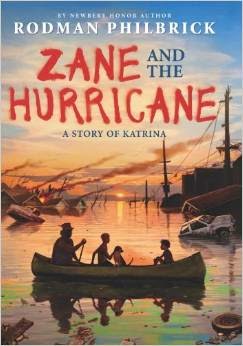
Zane and the Hurricane by Rodman Philbrick, Blue Sky Press, 2014, is a stellar example of this type of book. Zane's black father died years ago, and he lives with his white mom in Massachusetts. When he goes to New Orleans to meet his father’s grandmother for the first time, he doesn't know what to expect, but it certainly isn't hurricane Katrina. In the aftermath, he encounters a foreign world composed of New Orleans culture, prejudice, and life-threatening elements more ominous than a hurricane and broken levees. Philbrick unites themes of family, friendship, and disparate cultures in a way that is nothing short of jazz harmony.

Flying the Dragon by Natalie Diaz Lorenzi is a contemporary story, but an excellent example of showing diversity in experience. Told alternately from the point of view of American-born Skye, a half Japanese, half Caucasian, and her Japanese-born cousin Hiroshi, the clash of cultures and eventual resolution is an eye-opening journey. Adults and children of all ethnic backgrounds will be enriched. Skye eventually embraces her Japanese heritage and learns compassion and empathy for Hiroshi, who navigates the painful transition of an immigrant to life in the United States.

Are there any books you've found helpful in turning stereotypes on their heads and showing diversity within diversity? Please share them! In another post, I'll be looking at how to avoid the "Dances with Wolves Syndrome."

Michele Hathaway is a writer and freelance editor. She has an M. A. in Social Anthropology and has worked in libraries in California, New Mexico, and Pennsylvania. She writes stories set in culturally diverse, historical and contemporary periods.

Tuesday, March 17, 2015

GUEST POST: Author Dianne Salerni on Hunting Down the Details (Eden Unger Bowditch)

They walk among us. Authors who write historic fiction and compel us to follow them into their time and world. Yes, we have all fallen victim to their brilliance on turn of phrase.

Today, Dianne Salerni joins us here at Mad About MG History. I have fallen under her spell a number of times...and hope to do so again. (Do not miss The Caged Graves or her Eighth Day series.) Dianne explores the challenges of research for historic novels and, even in this time of fingertip-information, it's not always that easy.
-eden


Thanks for joining us, Dianne!
Hunting Down the Details

Writing a novel is hard, really hard, no matter the genre. But people often ask me about the research involved in writing a historical novel. Where do I get the information?

I have no idea how writers did it before the internet. Books? How many books did they comb through before finding one that contained the exact details they needed? (And how many libraries did they have to visit?) Historical societies? I imagine authors spent a lot of time pouring through aged letters and journals, searching for the everyday aspects of life that are essential for bringing a historical novel to life. Presumably, some authors still do.

For those of us without the time or means to visit historical collections in person, the wonderful people who scan and post historical documents and photographs online become our salvation. While researching THE CAGED GRAVES, I read accounts of the Wyoming Massacre (1778) that were written less than a hundred years after the event, nineteenth century descriptions of the history and settlement of Catawissa, Pennsylvania, a census, diary entries from the early 1800’s, and photographs of the region taken shortly after the Civil War -- all without leaving my home.


Some things were still hard to pin down. How long would it take to travel by train from Worcester, Massachusetts to Catawissa? Which neighboring towns were less than a day’s travel away – and in existence at the right time? I spent a lot of time trying to figure out how someone would acquire ornamental plants in a time when florists and nurseries were non-existent. Eventually common sense prevailed. My main character could acquire clippings from a neighbor who already had the plants. (How the neighbor got them – not my problem!)

One of the most interesting internet hunts I’ve ever done was for a different historical fiction manuscript. I needed to know how someone would handle an accidental poisoning by arsenic in 1885. Try Googling that!  I did turn up a newspaper article describing an accidental poisoning of an entire family in the mid-1800’s. From that article I was able to identify symptoms and recovery rates, but not how they were treated.

Eventually, Google Books saved me with a 1903 cookbook. (I figured 20 years off was close enough.) In the back of the cookbook was a section titled: What to do Before the Doctor Arrives. It listed various types of household poisons and recommended treatment for each. In the case of arsenic, the recommendation was to induce vomiting with salt water, have the victim swallow raw egg whites to coat the stomach, and if the doctor didn’t arrive quickly, make the victim eat rust.

Yes, rust. Iron binds with arsenic. The doctor, when he arrived, would be administering a suspension of ferric hydroxide and magnesium oxide, which is basically … also rust. Who knew?

Visit Dianne here! 
http://diannesalerni.com/
http://diannesalerni.blogspot.com/

Thursday, March 12, 2015

Chris Eboch: Why Write Historical Fiction for Children?

I’ve always loved foreign countries and ancient cultures. My family lived in Saudi Arabia when I was in grade school, and we visited a lot of other countries. We lived in the US when I was in junior high and high school, but my parents moved back to Saudi Arabia when I was in college. For several years, my brother and I met them in a different country each year over the holidays: Britain, Germany, Australia, Italy, and in one memorable year, Egypt. I later traveled to Turkey with a friend.

I’m interested in local people all over the world, and the ancient cultures that came before them. I like to know who these people were and how they lived – not just the kings and military leaders, but regular people like us.

Drama of the Maya

After college, my best friend and I spent a summer traveling through Mexico, Belize, Guatemala and Costa Rica. We visited the sacred pool at the ruins of Chichen Itza in Mexico. I imagined a girl being thrown into the well, and living. She had to have a lot of courage and inner strength to do that. I wanted to tell her story. Writing middle grade novels seemed like a natural fit to me. I read an enormous amount as a kid, and I still enjoy reading children’s books. It fits my style, with a focus on simple, clear language and plenty of action and dialogue to keep the pages turning.

A few years later I wrote The Well of Sacrifice. I asked myself, “Why was she sacrificed? How did she survive? What did she do next?” The story came from those questions.

Revisiting The Middle East

What kid isn’t drawn to stories of pharaohs and mummies? Growing up in Saudi Arabia, and visiting Egypt in my 20s, I have some familiarity with the Middle East. I wrote a novel about the six daughters of the Pharaoh Akhenaton and Nefertiti, but it was so complex that I couldn’t quite pull it together.

I decided to write another novel set in ancient Egypt, but with a smaller cast of characters and a shorter timeframe. I was able to use much of the research I’d already done, and although writing a mystery had its own challenges, the shorter timeframe and simpler story worked well. I loved being able to bring ancient Egypt to life through a story of mystery and friendship in The Eyes of Pharaoh.

I visited the Middle East again in The Genie’s Gift. This isn’t straight historical fiction, but rather a fantasy based on the mythology in A Thousand and One Nights (also known as The Arabian Nights.)

The Middle East today is very different from the culture shown in my novel. Still, reminders of those days exist in the buildings, artwork, and food. And of course in the stories. The stories in A Thousand and One Nights came from Indian, Persian, Arabic, and other sources. They were collected over hundreds of years, beginning in the eighth century. They were not originally seen as children’s stories, though later translations targeted kids.

As in The Arabian Nights, The Genie’s Gift is a series of interlocking stories that make up a whole. I started with many traditional stories and adapted them to suit my needs. Legends refer to a sorceress who changed a man into marble from waist down. Gnomes were said to dwell in the mountains and play tricks on people. A mechanical/magical horse of ivory and ebony could fly, controlled by pegs under its mane. Simurgh, a magic bird, offered advice and healed people by rubbing her feathers over wounds.

This fantasy element allowed me to explore history and culture from a different angle, and hopefully reach a new audience that might not know they enjoyed history. It also allows teachers to compare and contrast realistic fiction with fantasy, historical fiction with contemporary, and fiction with nonfiction related to the same subject.

Even though historical fiction has been considered in a slump in recent years, I've been delighted by the response from young readers. Give them an angle they enjoy – a mystery, a fantasy, an adventure – and they're happy to delve into ancient worlds.


Website info and samples:
Chris Eboch’s website, with sample chapters of the books, historical fiction resources for teachers, and tips for writers.

Kirkus Reviews called The Well of Sacrifice, “[An] engrossing first novel….Eboch crafts an exciting narrative with a richly textured depiction of ancient Mayan society….The novel shines not only for a faithful recreation of an unfamiliar, ancient world, but also for the introduction of a brave, likable and determined heroine.”

The Eyes of Pharaoh, set in Egypt in 1177 BC, brings an ancient world to life. When Reya hints that Egypt is in danger from foreign nomads, Seshta and Horus don’t take him seriously. How could anyone challenge Egypt? Then Reya disappears. To save their friend, Seshta and Horus spy on merchants, soldiers, and royalty, and start to suspect even The Eyes of Pharaoh, the powerful head of the secret police. Will Seshta and Horus escape the traps set for them, rescue Reya, and stop the plot against Egypt in time?

The Genie’s Gift is a lighthearted action novel set in the fifteenth-century Middle East, drawing on the mythology of The Arabian Nights. Shy and timid Anise determines to find the Genie Shakayak and claim the Gift of Sweet Speech. But the way is barred by a series of challenges, both ordinary and magical. How will Anise get past a vicious she-ghoul, a sorceress who turns people to stone, and mysterious sea monsters, when she can’t even speak in front of strangers?

Amazon links: