Thursday, January 18, 2018

Middle-Grade Historical Fiction 2017: Lists and Links to Some of the Best

The logical place to start any list of best middle-grade historical fiction is the Scott O'Dell Award, which went this year to Lauren Wolk for Beyond the Bright Sea, Dutton Books for Young Readers. 

"Twelve-year-old Crow has lived her entire life on a tiny, isolated piece of the starkly beautiful Elizabeth Islands in Massachusetts. Abandoned and set adrift in a small boat when she was just hours old, Crow’s only companions are Osh, the man who rescued and raised her, and Miss Maggie, their fierce and affectionate neighbor across the sandbar.

Crow has always been curious about the world around her, but it isn’t until the night a mysterious fire appears across the water that the unspoken question of her own history forms in her heart. Soon, an unstoppable chain of events is triggered, leading Crow down a path of discovery and danger." --Amazon Review.


The Kirkus list of Best Middle-Grade Historical Fiction of 2017 includes nine books which you can find here. Of of these is The War I Finally Won, the sequel to The War That Saved My Life, by Kimberly Brubaker Bradley, Dial.

"When Ada’s clubfoot is surgically fixed at last, she knows for certain that she’s not what her mother said she was—damaged, deranged, crippled mentally as well as physically. She’s not a daughter anymore, either. Who is she now?

World War II rages on, and Ada and her brother, Jamie, move with their guardian, Susan, into a cottage with the iron-faced Lady Thorton and her daughter, Maggie. Life in the crowded home is tense. Then Ruth moves in. Ruth, a Jewish girl, from Germany. A German? Could Ruth be a spy? " --Amazon Review


Publisher's Weekly lists their picks for best middle-grade of 2017 here, some of which are historical. Of particular note is the Hans Christian Anderson Award Winner, Bronze and Sunflower by the Chinese children's writer, Cao Wenxuan.

"Sunflower is an only child, and when her father is sent to the rural Cadre School, she has to go with him. Her father is an established artist from the city and finds his new life of physical labor and endless meetings exhausting. Sunflower is lonely and longs to play with the local children in the village across the river. When her father tragically drowns, Sunflower is taken in by the poorest family in the village, a family with a son named Bronze. Until Sunflower joins his family, Bronze was an only child, too, and hasn’t spoken a word since he was traumatized by a terrible fire. Bronze and Sunflower become inseparable, understanding each other as only the closest friends can." --Amazon Review.


Also, be sure to check out the Cooperative Children's Book Center (CCBC), which has a plethora of lists and links to awards that I especially like for leads to multi-cultural books. 

I hope these lists and tips enlarge your 2018 reading list. They've enlarged mine. What was your favorite middle-grade historical fiction read from 2017?


Michele Hathaway is a writer and freelance editor. She has an M. A. in Social Anthropology and has worked in libraries in California, New Mexico, and Pennsylvania. She writes stories set in culturally diverse, historical and contemporary periods.


Subscribe to get posts automatically and never miss a post. You can use the Subscribe or Follow by E-Mail buttons to the right, or add http://madaboutmghistory.blogspot.com/to Feedly or another reader.

Thursday, January 11, 2018

Movies Based on MidGrade Novels


With winter here, now's the perfect time to pull up a chair and enjoy a good book. I think it's even better if you can follow that up with a movie, as well. I think it's interesting to compare a written story to one told visually. Comparing and contrasting the two mediums can lead to some interesting and insightful conversations. 

The biggest movie release for the middle school audience this past fall was Wonder, which was based on R. J. Palacio's New York Times bestseller from 2012. Both the movie and the book tell the story of August Pullman, a boy born with Treacher Collins Syndrome or mandibulofacial dysostosis, a genetic disease that affects the bones of the head and face. August's many surgeries have caused him to be home-schooled, but at the beginning of this story he is entering the fifth grade (which is in Middle School in the book, and Elementary in the movie) for the first time. This story offers its tween audience great lessons on kindness, friendship, and acceptance, and the devastation of bullying.

Wonder isn't historical fiction. It is set in the present. But it made me wonder what other book to movie adaptations are available for middle grade readers.

Although it is not pivotal to the story, August Pullman's dog dies in Wonder. I don't know why, but dogs seems to die in a lot of middle grade novels. In Wilson Rawls' 1961 novel, Where the Red Fern Grows, an Oklahoma boy named Billy Colman saves up his money to buy two Redbone Coonhounds, Old Dan and Little Anne, which he trains. These two dogs end up saving Billy's life, but at an awful cost. This novel has been adapted to the screen several times, most recently in 2003.

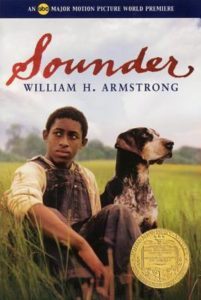
Sounder is another historical fiction that features a faithful dog. Set in the Deep South during the Depression, William H. Armstrong's Newbery Award-winning 1969 novel tells the story of an African-American family dealing with racism and poverty after the father is imprisoned for stealing a ham. The 1972 movie version of this story features moving performances by Cicely Tyson and Paul Winfield.


No dog dies in the classic Anne of Green Gables. L. M. Montgomery published Anne of Green Gables over 100 years ago, but it has remained a perennial favorite. Its main character, a spirited 11 year old orphan named Anne Shirley, is adopted by Matthew Cuthbert and his grumpy sister Marilla, who contacted the orphanage looking for a boy to work on their farm, and estate called Green Gables located on Prince Edward Island. There have been numerous screen adaptations of this novel, but by far the best is the TV miniseries from 1985.

Jennifer Bohnhoff is a writer and teacher. You can learn more about her and her books here. 


Thursday, January 4, 2018

Chris Eboch on Painful Truths in # History and Historical Fiction

A class acts out a Maya sacrifice scene
from The Well of Sacrifice
Every culture throughout history had problematic aspects. No matter how much you may admire or be fascinated by an era of the past, chances are that period had a dark side. The world today is filled with sexism, racism, slavery, and violence, and the past was certainly no different. 

What should an author of historical fiction do? Are such topics suitable for children? Do they belong in the classroom?

I feel we should write and teach the truth as realistically as possible. This includes writing accurately about the horrors of the past – with some adjustments to make subjects suitable for young audiences.

The Well of Sacrifice is set in Mayan culture. The Maya used human sacrifice and bloodletting in their religious ceremonies. I portrayed these things as accurately as I could (given what we think we know), but, since this novel is for middle grade readers:

  • I chose to soften the king’s bloodletting ceremony by having him pierce his tongue instead of his penis.
  • I tried to show why they did these things – this was religious devotion, not random violence.
  • I described the dangers involved in bloodletting, lest anyone be tempted to try it.
  • I showed the risks of accepting human sacrifices – the innocent can be victims.
  • The violence is disturbing, to Eveningstar (the main character) and to the reader.

The book includes other violent events as well. Eveningstar doesn’t participate in the violence; she fights it, as do other good characters:
  • When slaves plan to rebel, her mother finds a peaceful way to help them escape.
  • The enslaved character Small is taken into Eveningstar’s family. Some of his people have been killed by hers. Yet he helps Eveningstar, even saving her life. He shows kindness and forgiveness (and gets freedom in the end). Some young readers say he is their favorite character.
  • Eveningstar tries to stop Great Skull Zero, the high priest who is trying to take over the city and sacrificing anyone who stands in the way. She notes, “Great Skull Zero had disrupted the patterns of life. He acted for his own glory, not that of the gods. He must not be allowed to become king.” Still, she never hurts anyone. She fights by finding out the truth, by telling the truth, and by staying alive despite his best efforts to destroy her.

Student projects from The Well of Sacrifice
I wasn't sure if the violence would make it too old for middle grade readers. However, the publisher tagged the book as "for ages nine and up." It's been used in many schools in the fourth grade – although I sometimes do get e-mails from teachers who are struggling to get approval from the administration or the PTA. At least I can tell them that it is being used successfully, and with great enthusiasm. In fact, I've had teachers say, "Girls love the strong heroine, and boys love the gory stuff."

Hey, whatever gets kids reading, right?

Chris Eboch taking notes
in Coba, Mexico
Get lesson plans to use with The Well of Sacrifice, The Eyes of Pharaoh, and The Genies Gift at the "For Teachers" tab on my website.

Subscribe to get posts automatically and never miss a post. You can use the Subscribe buttons to the right, or add http://madaboutmghistory.blogspot.com/ to Feedly or another reader.

In The Well of Sacrifice, a Mayan girl in ninth-century Guatemala rebels against the High Priest who sacrifices anyone challenging his power. Kirkus Reviews called The Well of Sacrifice, “[An] engrossing first novel….Eboch crafts an exciting narrative with a richly textured depiction of ancient Mayan society….The novel shines not only for a faithful recreation of an unfamiliar, ancient world, but also for the introduction of a brave, likable and determined heroine.”


Chris Eboch’s other novels for ages nine and up include The Eyes of Pharaoh, a mystery in ancient Egypt; The Genie’s Gift, a middle eastern fantasy; and the Haunted series, about kids who travel with a ghost hunter TV show, which starts with The Ghost on the Stairs. 

Her writing craft books include You Can Write for Children: How to Write Great Stories, Articles, and Books for Kids and Teenagers, and Advanced Plotting. Learn more at www.chriseboch.com or her Amazon page, 

Thursday, December 28, 2017

Nurse Edith Cavell, heroine and inspiration.


Nurse Edith Cavell, Heroine of Belgium


Edith Louisa Cavell was the eldest of four children born in the tiny village of Swardeston, Norfolk,
England to the Reverend Frederick Cavell and his wife Louisa. Her childhood in the Anglican vicarage appears to have been a happy one, and the family close-knit. So when her father became seriously ill Edith left her job as governess to a Belgian family in Brussels to tend him.
Edith was in love with her cousin Ed, and it is thought probable he was with her. Unfortunately, he had a genetic nervous ailment which he felt prevented their marriage. Nevertheless, their deep love was lifelong.

Once the vicar had recovered, Edith decided to make nursing her profession. While she was working temporarily as matron at a hospital in Manchester, Dr. Antoine Depage persuaded her to return to Brussels. He opened a nurses’ training school and asked Edith to run it; the school and its clinic very quickly gained a sterling reputation both for the nurses and the patient care. 


With her clinic and training school well established in the fateful summer of 1914, Edith was visiting her widowed mother and family in Norfolk when the Archduke Ferdinand was assassinated on 28th June. War in Europe appeared inevitable.

Much to the distress of her family and friends, Edith insisted on returning to Belgium, saying she was needed there more than ever. It was the last time they saw each other. Edith was back in Belgium on August 3rd, 1914; on the following day Germany invaded Belgium and Britain declared war on Germany. By August 21st, Brussels was occupied by the Germans. The staff was informed the clinic was now a Red Cross hospital and as such the nurses were to treat the wounded of all nationalities but to remain impartial themselves. Red Cross nurses were not to take sides or to participate in any way in the war; the German authorities promised dire punishment would be meted out to anyone found assisting British or French personnel apart from the wounded.  At the battle of Mons the British were heavily outnumbered and forced to retreat; many allied soldiers found themselves cut off and left behind. Two found their way to the clinic and when Edith heard their story of how the Germans were shooting any allied soldier they found, she determined to do all she could to help. She sheltered the two soldiers, first at the clinic and then at her own home, while she found someone trustworthy who could guide them to the Dutch frontier. Holland was a neutral country, therefore once safely there the men could return to Britain. Afterwards, Edith set about helping everyone she could,  

She set up a small network of trusted people, some to forge papers and others to make passports. She organised safe homes where allied soldiers would be provided with shelter and money for their journey into Holland. This was desperately dangerous work, and strict secrecy had to be observed. However, the village grapevine is strong and despite every precaution taken news of her caring spread. Soon Nurse Cavell found desperate civilians, rendered either homeless by or in danger from the Germans, seeking her aid. True to her deep-rooted Anglican faith and her nurse’s training, she gave it unstintingly.
Edith with her dogs Don and Jack

In recent years it has been revealed that Edith not only assisted her fellow countrymen, other allies, and desperate civilians, she also a simple but effective spy network. The Germans became increasingly suspicious of activities at the clinic, and finally Edith was betrayed. Tricked by the Germans into thinking if she confessed her own guilt, her co-conspirators in the rescue network would go free, Edith freely confessed what she had done. On 3rd August, 1915, exactly one year after her return to Belgium, Edith Cavell was arrested and accused of harbouring Allied soldiers. She was taken to Saint-Gilles prison, where she languished for ten long weeks.

Her brother in law wrote anguished letters imploring for information on Edith, but the British government seems to have trailed its heels in coming to her defence, saying there was little that could be done. Since the U.S. was not then in the war, it was left to the ailing Brandt Whitlock, the American minister to Belgium, to instruct Hugh S. Gibson, First Secretary, to intervene on Edith’s behalf. Despite Mr. Gibson’s strongly worded letter, the Germans remained implacable. Though not a German national, Edith was accused of treason. . She was not given anything close to a fair trial but, strong in her Christian faith, she would not lie to save herself. She admitted to having helped young French and Belgian civilians of military age as well as British and French soldiers to escape to neutral Holland, and was given the death penalty.

On the night of 11th October, 1915, Edith met for the last time with the Anglican chaplain, Rev. Sterling Gahan. At 6a.m. on October 12th, she and Pascal Baucq, another of her network, were taken to the firing range Tir nationale and executed by a firing squad.
After the war, her body was taken to Britain and now rests in Life’s Green in the precincts of Norwich Cathedral, Norfolk.

To Rev. Stirling Gahan, when facing death, she said, “Patriotism is not enough. I must have no hatred or bitterness to anyone.”  A monument has been erected at Tir nationale. Another monument to Edith Cavell's heroism is the mountain in Alberta, Canada, named after her, Mount Edith Cavell. My young granddaughters climbed it last summer; unfortunately owing to the indisposition of the family photographer I don't have the pictures to enclose here. I must make do with the public domain one:
Mount Edith Cavell, Jasper National Park, Alberta, Canada.

Thursday, December 21, 2017

Solstice - Hope, Light, and Change

by Suzanne Morgan Williams

Today is Solstice and cultures and people around the world welcome the return of longer days, or in the Southern Hemisphere the change to shorter ones. Today marks change, and hope.

These days communications are instant, reading competes with streaming video and online games, and facts are questioned for their political overtones, yet we continue to read and write historical fiction. Some people would say historical fiction is out of touch or old fashioned. Literary agents often tell writers it’s a hard sell. But to me, understanding and connecting with the past is necessary and writing historical fiction is hopeful. I hope young readers will be touched by something that might have happened hundreds of years ago but rings true to them today. I hope that children will develop a taste for, even a passion for history. Knowing our past can inform our future.

“Those who fail to learn from history are doomed to repeat it.” – Winston Churchill and George Santayana

In order to ignore or fail to learn from history you must first know something about it. Since “No Child Left Behind” days, the push toward educational basics and skills assessment has shrunk the time dedicated to teaching history in the middle grades. With the advent of “Common Core,” one could imagine an emphasis on nonfiction historical works, but teachers were often bogged down in analysis of details and themes rather than talking about what history actually  meant to the people who lived it. The shift to nonfiction texts and primary resources, in many classrooms, made reading historical novels a luxury.

It is, indeed, time for a change. Let's see Civics, Citizenship, and History (not just U.S.) taught in every school. Our children need to understand the workings of our government, our Constitution, the free press, popular movements, and their role in these. They need to know that even at ages 9, 10, or 11 they are affected by history and politics. They deserve the truth - our democracy has been hard won and they, as citizens, can support it, change it, or let it shrivel away. They need history. As historical fiction authors it’s our job to hook them on MG history.

We keep writing. We keep reading and sharing. On this Solstice that gives me hope.


Thursday, December 14, 2017

FROM FAMILY TREE TO HISTORICAL FICTION by Mary Louise Sanchez


As the holiday season  is once again upon us, our thoughts turn to family. We remember Thanksgiving, Christmas, or other holiday gatherings. What a wealth of story nuggets we have available to us if we open our eyes and ears at family gatherings. These nuggets can make for authentic stories of historical fiction.
Authors of historical fiction often draw inspiration from their own lives and lives of their family members. Children can do the same thing. Teachers should encourage children to write and share their own stories. As Isabel Campo says, "Our universe is made up of 'vacant silences'. There is room for seven billion stories, one written by each person in this tiny planet."

Holidays are golden opportunities to get names of ancestors and details of the lives of family members, particularly the elderly. When I was a young girl, after the Thanksgiving foods were divided and the dishes were washed and dried, my maternal grandmother used to encourage me to play songs on the piano. I played the songs she enjoyed singing as a girl, when she attended school taught by  the Sisters of Loretto in New Mexico. Grandma particularly enjoyed singing The Old Oaken Bucket.


We also learned Santa Claus never visited our ancestors—not even my parents, who were born in the 1920s. In fact, my dad's northern New Mexican Christmas traditions resembled Halloween Trick or Treat today. He and his siblings went house to house gathering goodies as they asked for "Mis Christmas".  
On many Christmas Day evenings our dad played a Spanish version of the dreidel game with us. We bet using pinon nuts and never  realized this was a Jewish game because the only Jews we knew were in the Bible. How did my ancestors learn this game in their rural, northern New Mexico homes?


In my work-in-progress, The Wind Called My Name, the story is loosely based on my mother's life growing up in a small Wyoming town during the 1930s. I used the fact that Santa Claus was not a predominate figure in my dad or mom's lives in the story. My mother's maternal grandmother lived with the family in Wyoming. So, I put my great-grandmother in the story because I knew her from my mother's stories. My other great-grandmother plays a part in the story too. I actually knew her and used a little idiosyncrasy about her in the story. Some other ancestors have a part in the story because I've met them through my genealogy research. (I'm toying with putting a family tree in the Acknowledgement page).

 I gave my mom my first draft of my story as a gift about twelve years ago. Since then, I have made quite a few revisions. My father used to say my story was "all lies" because of all the changes I made to the story. He thought if you used real people in the story, then the story should be all factual. Thus, adults, as well as children, need to be taught and should understand that historical fiction stories are a combination of true facts and made-up details.

In the study of a historical fiction novel, it would be helpful to make a grid so that students can write down what they believe is factual and what they believe is imaginary. Then they can do research in various ways to check the facts about characters, settings, and plot.  These are things I do to learn more about the author and what he/she writes. This activity could certainly be used with my middle grade historical fiction novel, The Wind Calls My Name. Its anticipated debut is summer of 2018.

1.  Read the author's dedication for mention of people that might be in the story.

2.  Read the author's notes about settings.

3.  Read the author's Acknowledgement page.

4. Research character's names; historical events; places


Encourage your students to turn off their digital devices and connect to real people in their lives and family tree and see what roots they discover.

What story nuggets do you have from your own family or that you have learned about in stories?

Thursday, December 7, 2017

December 7—A Day That Will Live in Infamy

Today, December 7th, is Pearl Harbor Day. On this date in 1941 Japan attacked the United States Navy fleet lying at anchor in Pearl Harbor, Hawaii. President Franklin D. Roosevelt went to the Congress the day after the attack to ask for a declaration of war. In his remarks to the members of Congress he called December 7 “a day that will live in infamy.” Congress passed the resolution of war, and three days later Germany and Italy (Japan’s axis partners) declared war against the United States. After years of isolationism, America fully committed itself to participate in World War II.

This largest of world wars deserves the study and understanding by all citizens of a free world. The war had a significant personal influence on my life as a young boy, and its aftermath impacted my military service and civilian employment as I matured.

The Bombing of Pearl Harbor by John F. Wukovits is a book in the World History Series published by Lucent Books. The author, a retired junior high school teacher, knows how to write for younger readers. Wukovits explains the menace facing peace-loving people before the United States entered World War II. Throughout the 1930s, the majority of Americans strongly believed in isolation. They wanted nothing to do with the warfare that Japan, Germany, and Italy were inflicting on their enemies. The book tells how President Franklin D. Roosevelt worked to prepare America for war while appeasing those who opposed him. The book explains why Japan decided to start the war with America and the impact of that choice upon the Japanese people. Photographs provide vivid illustrations of the destruction of the fleet at Pearl Harbor and of airplanes on nearby airfields. Wukovits builds his agonizing story from both primary and secondary sources. He concludes by discussing the effort required following the attack to rebuild the Navy and how the sneak attack changed the attitude of Americans overnight.

World War II in the Pacific by Don Nardo is another book in the World History Series by Lucent Books. The author, having written over 200 books, is recognized as a leader in producing history lessons for younger readers. He contrasts the cultures of the United States and Japan, and delves into the transformation of Japan into a world power. Nardo writes vividly about the attack on Pearl Harbor. Excellent maps enhance the reader’s understanding of how the Japanese pulled off the surprise. He explains the defeat of the Americans in the Philippines, and discusses the horrors of the Bataan Death March. Twenty-two thousand Americans died on the march. My first grade teacher’s husband was one of the few survivors of the Japanese atrocities committed against their prisoners in the Philippines. Nardo appropriately documents the turning point in the Pacific War as the Battle of Midway, when the United States reestablished its supremacy of the seas. The American aircraft carrier USS Yorktown was sunk during that battle. An uncle of mine was one of the survivors of that sinking. Nardo discusses the development of the nuclear bomb and explains why President Harry S. Truman dropped two bombs on Japan. The author concludes by explaining how this horrible event caused the Japanese to surrender.

Kamikazes by Earle Rice, Jr., is a title in Lucent Books’ The American War Library Series. The Japanese high command created the Kamikaze Special Attack Corps late in the war. Rice explains how Emperor Hirohito approved the use of this suicide weapon after determining the war was not going well for his country. Kamikaze means “divine wind” and carries strong religious overtones. The sacrifice of one pilot and one airplane in exchange for sinking one American warship became an acceptable way to die for one’s country. The Japanese Army already had a reputation for seldom surrendering. Japanese soldiers died in banzai charges against the Allied troops confronting them in the Pacific. The author explains how the Japanese warrior had traditionally committed honorable death through seppuku. Disemboweling oneself with a sword, known in the vernacular as hara-kiri, had been the preferred way for warriors to die since the days of the samurai. The book is well illustrated with the destructive actions the Kamikazes inflicted on the American fleet. Today’s younger reader is aware of the suicide bombings committed by radical Islamic terrorists. This book confirms that such a way of attacking an enemy is not new.

Yet another book in the World History Series by Lucent Books is The Making of the Atom Bomb by Victoria Sherrow. The author begins by explaining what led to World War II and how it generated an arms race that resulted in the United States developing the atomic bomb. She provides a section on the science of nuclear physics and the roles played by such famous men as Albert Einstein and Enrico Fermi. She writes about the secretive Manhattan Project under the supervision of Robert Oppenheimer, known as the “Father of the Atomic Bomb.” To test this unproven weapon, the Army detonated the first atomic bomb near Alamogordo, a town in central New Mexico. I had recently completed the second grade in Hobbs, New Mexico, when on that July 16, 1945, morning, the first bomb was exploded at 5:30 AM. Those in my town who were awake at that time described an unusually bright light appearing in the sky 200 miles to the west. Ms. Sherrow covers the planning and execution of dropping the first bomb by the aircrew of the B-29, Enola Gay. She delves at some length into the horrific death and destruction to Japan caused by the event. After a second bomb fell on Japan, the country surrendered, and the war in the Pacific concluded. Ms. Sherrow ends her book with a discussion of what might happen to the world if atomic weapons’ development continues. The concerns she identifies impacted me when I served as an Army officer during the Cold War. In the decades following World War II, the threat of nuclear war between the United States and the Soviet Union resulted in me being stationed in Europe when the Berlin Wall was erected. Later, I was stationed on Johnston Atoll in the Pacific Ocean as part of the U.S. National Nuclear Test Readiness Program. Since then, several nations have acquired the atomic bomb. The question of further nuclear proliferation is pertinent today because of the ongoing disagreement between the United States and North Korea over their desires to possess nuclear weapons.

World War II—Pacific by Barbara Williams is part of Lerner Publications’ America’s Wars Series. This book summarizes the entirety of World War II in the Pacific. Excellent maps allow the reader to follow the war from the attack on Pearl Harbor in 1941 through the Battle of Okinawa in 1945. The author covers each of the major battles through the intervening years. She provides information on the soldiers and sailors as well as the ships, aircraft, and armaments they used to wage war. A brother-in-law of mine served as a bomber pilot in the battles fought in the South Pacific. Ms. Williams also describes the effort required on the home front to support the war. She includes a short section on the unfortunate Japanese-American internment camps where thousands of men, women, and children were incarcerated in the United States during the conflict. The author writes about the special effort American women provided during the war. Williams’ book includes a timeline of the significant battles and events comprising the Pacific war. Although shorter than the other titles reviewed here, Williams’ book provides the younger reader an easily understood account of the entire war in the Pacific.

Today, December 7, is a good day for middle-grade students to commence or continue their study of World War II. They live in a world created by the results of that mammoth conflict.