Thursday, May 4, 2017

Mary Louise Sanchez: Historical Fiction Museum


One of my favorite PBS shows is Antiques Road Show. It's interesting to see what people bring to the show to be appraised and the fascinating historical stories behind the objects. I know what I would take to the show. I have an heirloom Rio Grande wool blanket that my paternal great-grandmother wove in New Mexico.
About ten years ago I had a small hole in the blanket repaired. It cost me $300 but I did have an award winning New Mexican weaver (her works are at the Smithsonian) repair the hole. My husband painted this pastel of a weaving loom and put part of the design of our family's blanket in the picture.

I don't know what the blanket is worth monetarily, but to me it's priceless. Ever since I inherited the blanket, I have taken it to many family weddings. Usually after the marriage ceremony, the newly married couple kneels on the blanket and receives blessings from the guests, which are often the sign of the cross on their foreheads, while someone sings the Entriega de los Novios. This is a ballad for the newlyweds commemorating the day. The Spanish verses to the Entriega have been passed down for generations in New Mexico Hispanic families.

In many historical fiction books there are often objects or implied objects which play a part in the story. In the 2018 pending publication of my middle grade historical fiction book, The Wind Called My Name, one object I would associate with the story is a pine cone from a piñon tree. The main character, Margaríta, believes that the fragrance of the pine cone will help her remember her ancestral home, New Mexico, and the nuts in the pine cone could be shared with a possible new friend in Wyoming.

We recently attending our fourth grade grandson's celebration of learning at an event called "Blast from the Past." To partially meet the Colorado history standards, he wrote a research article and made a timeline of a Colorado personality. Since he studied John Denver, the (pretend artifact) he chose to display was a guitar.
Our grandson was dressed as John Denver in a western shirt and wore round glasses as he manned his display area with his information posted on his tri-board.
One student displayed traps as he portrayed a mountain man. There were four classes of fourth graders so I wasn't able to see all the displays, but I can imagine the learning that occurred as the students created/gathered and wrote about their artifacts. Students put the parts they learned together into a whole to create a new meaning or structure. A Common Core Language Arts standard states that students need to "refer to details and examples in a text when explaining what the text says explicitly and when drawing inferences from the text."
If I were in a Colorado fourth grade class today and needed to bring an item for display in a Colorado History Museum, I might bring the elbow length gloves Molly Brown put aside when she was helping people disembark from the Titanic. (You can see that I'm making a logical inference about what Molly Brown might have worn after dining aboard the Titanic.)
When I was a teacher/librarian, the teachers and I collaborated on various curriculum museums. In our storybook museum, one student displayed shaved whiskers for the "hairs on my chinny, chin chin."  In our Night of the Notables celebrations, students met many requirements and one of them was to bring a food that would reflect the person they studied. One student studied Harry Houdini and creatively constructed a black top hat out of paper and filled it with pink Peeps bunnies.
The possibilities are endless in creating curricular museums and of course they could be extended to historical fiction. What historical periods are your students studying that could  extend to a museum culminating activity? What are some real and implied objects in historical fiction books students could uncover that could tell even more of the story?
What objects would your students display with these books? They might need to stretch their minds and imply an object based on what they read in the text.
Goodreads image

Goodreads image


Goodreads image


Goodreads image


Thursday, April 27, 2017

World War I

The United States entered World War I one hundred years ago on April 6, 1917. This so-called War to End All Wars began in Europe in July 1914 and did not end until November 11, 1918. Originally celebrated in the US as Armistice Day, November 11 is now Veterans Day.

Over the course of WWI over nine million combatants and seven million civilians died. The war introduced the wide-spread use of trench warfare, barbed wire, chemical weapons, submarines, tanks, and airplanes. It also continued the use of animals in combat.

For the first three years of the war, the United States maintained a “non-intervention” policy. President Woodrow Wilson advocated US neutrality for most of the war. Then the German Foreign Minister, Zimmermann, invited Mexico to join in the war against the US in exchange for Germany helping Mexico recover Texas, New Mexico, and Arizona. After German submarines sank seven US merchant ships, coupled with the “Zimmermann Telegram” becoming public knowledge, Wilson changed his mind and asked Congress to declare war.

Numerous books are suitable for middle-grade readers to learn about the far reaching impact of this “Great War,” as it was sometimes known. Here are my recommendations:

BOOKS THAT PRESENT AN OVERALL HISTORY OF WWI:


DK Eyewitness Books: World War I, by Simon Adams, provides an in-depth look at the battles fought, the weapons used, and the lives lost. From the assassination of Archduke Ferdinand, to life in the trenches, and Woodrow Wilson's Fourteen Points, to the Treaty of Versailles, this profusely illustrated book highlights the highs and lows of the war. If this book had existed when I was a middle-grade student, it would have been a favorite.


World War I Heroes (Ten True Tales), by Allan Zullu, includes stories about brave heroes who risked their lives to serve their country during WWI. Corporal Alvin York won the Medal of Honor for leading an attack that killed 25 enemy soldiers and captured 132. Captured from his sinking ship by a U-boat, Navy Lieutenant Edouard Izak, was awarded the Medal of Honor for leading several fellow prisoners in an escape from a German POW camp. The soldiers of the 8th Illinois—all African Americans—overcame bitter racism and segregation to fight for their country.


The Story of World War I Coloring Book, by Gary Zaboly, begins with peaceful scenes of prosperity that were shattered by the assassination of Archduke Ferdinand and concludes with the signing of the Armistice and the Treaty of Versailles. Thirty-five illustrations depict Gallipoli, Jutland, and other momentous battles; the introduction of gas, machine guns, and other new weaponry; Mata Hari, Lawrence of Arabia, and other famous figures; and a chronological view of historic events.


Treaties, Trenches, Mud, and Blood (Nathan Hale's Hazardous Tales #4): A World War I Tale, by Nathan Hale, brings together several fascinating true-life tales from the war and presents them using his inimitable Hazardous Tales twist. This comic book format provides easy to understand, funny, and informative information about some of the well-known battles (and little-known secrets) of the war. School Library Journal describes it as: "A mixture of textbook and slapstick, this essential read makes history come alive in a way that is relevant to modern-day life and kids."


BOOKS THAT INTRODUCE NEW WARFARE TECHNOLOGY:


First World War Tanks, by E. Bartholomew, provides an illustrated history of the evolution of the tank which was originally created as a temporary solution to the deadlock created by trench warfare. The British Army at the Battle of Cambrai in 1917 proved that tanks were effective. By the end of the war, Britain, France, Germany, the United States, Italy, and Russia were all using tanks. This book covers tank design and development and describes the most important battles in which they fought.


Airplanes of World War I Coloring Book, by Carlo Demand, is an innovative way to study the use of the airplane in the war. This book presents 43 remarkable aircraft for coloring, which includes the most famous fighters, bombers, reconnaissance, sea planes, and trainers of this early period in aeronautical development. The planes are rendered with captions describing each craft's design, history, and original color scheme. Among the planes are the Red Baron's Fokker Triplane, Rickenbacker's Nieuport, the Sopwith Camel, the German Albatros, and the American Curtis "Jenny."


A BIOGRAPHY ABOUT AN AMERICA PRESIDENT WHO RESISTED WAR:


Who Was Woodrow Wilson?, by Margaret Frith, presents the rise to fame of Woodrow Wilson. It includes his time as president of Princeton University, his service as governor of New Jersey, and his two terms as president of the United States. Wilson was not in favor of taking the US into war, but events dictated otherwise. He was ahead of his time in trying to create the League of Nations after World War I to help prevent other wars. He was devastated when the United States refused to join the league. It was not until the United Nations was created following WWII that the US agreed to join other nations in working for peaceful solutions through diplomacy.


NOVELS ABOUT WORLD WAR I:


War Horse, by Michael Morpurgo, is the story of Joey, a beautiful bay-red horse with a distinctive cross on his nose. In 1914, Joey is sold to the army and thrust into the midst of the war on the Western Front. With his officer, Joey charges toward the enemy, witnessing the horror of the battles in France. In the desolation of the trenches, Joey's courage touches the soldiers around him and he is able to find warmth and hope. But his heart aches for Albert, the farmer's son he left behind. Will he ever see his young master again? In 2011, Steven Spielberg turned the book into an acclaimed motion picture.


Soldier Dog, by Sam Angus, tells the story of fourteen-year-old Stanley who is determined to find his older brother who has gone to fight in the Great War. Stanley runs away from an abusive father to join an increasingly desperate army. He is assigned to the War Dog School and given a problematic Great Dane named Bones to train. Against all odds, the pair excels, and Stanley is sent to France. The war turns out to be larger and more brutal than Stanley imagined. How can one young boy survive World War I and find his brother with only a dog to help?


All Quiet on the Western Front, by Erich Maria Remarque, follows the story of Paul Baumer, who enlists with his youthful classmates in the German Army of World War I. They become enthusiastic soldiers, but despite what they have learned, they break into pieces during the first bombardment in the trenches. As the horrible war plods on year after year, Paul holds fast to a single vow to fight against the principles of hate that pits young men of the same generation, but different uniforms, against each other. First, he must come out of the war alive. This book is frequently named as “the greatest war novel of all time.” Although not written specifically for middle-grade students, the book is certainly understandable by them.


History unfortunately repeats itself. Perhaps if today’s students studied more thoroughly the ravages created by the great wars of our past, they can strive to create a better world when they take their place as adults.

Thursday, April 20, 2017

Sara K Joiner: History in Verse

Part of a poem by Wilfred Owen, a soldier who fought in
and wrote poetry about the First World War.
April is one of my favorite months because it's National Poetry Month. I love poetry, but much to my chagrin, I am no poet. I cannot express myself as beautifully as poets, and that is something I continually practice.

We tend to think poetry is about nature or feelings. We tend to think that poetry should rhyme. However there are many poems about historic events that have delicious lines to say aloud (and which may or may not rhyme).

Half a league, half a league,
Half a league onward,
All in the valley of Death
     Rode the six hundred.
"Forward, the Light Brigade!
Charge for the guns!" he said:
Into the valley of Death
     Rode the six hundred.
from Charge of the Light Brigade by Alfred, Lord Tennyson

Listen, my children, and you shall hear
Of the midnight ride of Paul Revere,
On the eighteenth of April, in Seventy-five;
Hardly a man is now aliven
Who remembers that famous day and year.
from Paul Revere's Ride by Henry Wadsworth Longfellow

"Shoot, if you must, this old gray head,
But spare your country's flag," she aid.
from Barbara Frietchie by John Greenleaf Whittier

There are also poems that were written during significant historic events--like these from World War I--that make you weep for the writer.

I have a rendezvous with Death
     At some disputed barricade
     When Spring comes round with rustling shade
And apple blossoms fill the air.
     I have a rendezvous with Death
When Spring brings back blue days and fair.
from I Have a Rendezvous with Death by Alan Seeger

In Flanders fields the poppies blow
Between the crosses, row on row,
     That mark our place; and in the sky
     The larks, still bravely singing, fly
Scarce heard amid the guns below.
from In Flanders Fields by Lieutenant-Colonel John McCrae

There are even poems that seem to be written by history itself.

Pile the bodies high at Austerlitz and Waterloo
Shovel them under and let me work—
                                  I am the grass; I cover all.
from Grass by Carl Sandburg

Poets often bring a new perspective to the familiar and a sense of awe to the extraordinary. In addition to the poems I've mentioned, there are books that are perfect for middle graders to see history through new eyes and to encourage them to engage with their history in a new way. Here are some:

When Thunder Comes: Poems for Civil Rights Leaders - J. Patrick Lewis
Includes poems about Josh Gibson, Aung San Suu Kyi, Coretta Scott King, Mohandas Gandhi, Harvey Milk, Sylvia Mendez, Muhammad Yunus, and others.

A Wreath for Emmett Till - Marilyn Nelson
A powerful work about the lynching of a teen boy in Mississippi in the 1950s.

Freedom Over Me: Eleven Slaves, Their Lives and Dreams Brought to Life - Ashley Bryan
Using original slave auction and plantation documents, Bryan imagines the lives of enslaved individuals whose true hopes and dreams are lost to history.

America At War - Lee Bennett Hopkins, selector
Includes a variety of poems written during or about wars America fought from the Revolution to modern times.

Birmingham, 1963 - Carole Boston Weatherford
Using a fictional character, Weatherford explores the bombing of the Sixteenth Street Baptist Church that killed four girls.

Sara K Joiner is the author of After the Ashes. She is also a public librarian.

Thursday, April 13, 2017

Immigration: Always in the News

To say that Immigration is in the news these days is an understatement. The truth is, people have been moving around the planet since the first humans ventured out of Africa. What causes people to leave the comforts of home? Adventure lures some, economic gain attracts others. but the inciting incidents that move masses of people are usually due to famine, persecution, and war. It's no surprise then that much historical fiction centers on immigration stories. Here are a few I've discovered recently.


Last year, I reviewed several Irish historical fiction stories including the Nory Ryan series by award winning Patricia Reilly Giff. Maggie's Door, the second in the series, follows Nory as she journeys to America in the wake of The Hunger--the terrible potato famine of 1845-1847.Wrenching, yet inspiring, Nory overcomes tremendous odds to bring herself and her little brother across an ocean to find her remaining family.


Streets of Gold, by the beloved children's book author Rosemary Wells and beautifully illustrated by Dan Andreason, is a retelling for children of Mary Antin's memoir The Promised Land. Due to increasing persecution, a Jewish family emigrates from Russia at the turn of the century.

As with Maggie's Door, the father leaves first to establish a job and home before sending for the family. This struck me as a key dynamic I had not understood before. Immigration stories are very much about the courage of those left behind and the complication of making the journey without a father.

When the family arrives in America, they discover the streets are not paved with gold, of course. But they are safe. They are together, again.


Journey to America by Sonia Levitin is another Jewish immigration story, which takes place on the
eve of WWII. Again, the father precedes the family to America leaving his wife and three daughters to escape Germany when the time is right.

This story opened portrays the flight of many people into Switzerland before WWII, the difficulties children faced there, and the overwhelming situation for the Swiss in dealing with the flood of refugees. Some children were exploited while other Swiss generously took children into their own homes, although this further separated children from their families. It was often months before refugees could obtain an exit visa, if they could obtain one at all. Levitin also shows how each child may cope differently with upheaval in their lives.


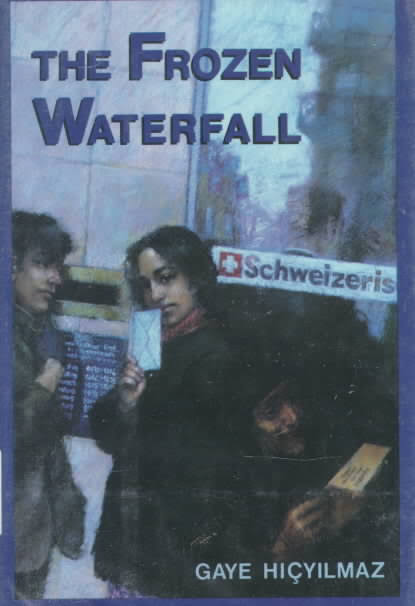
The Frozen Waterfall by Gaye Hiçyılmaz is a more contemporary immigration story, but I add it here because it is a rare find--a Turkish family that immigrates to Switzerland for economic reasons.

Twelve-year old Selda has trouble adjusting to life in Switzerland, but her friendship with a Turkish boy who is an illegal immigrant leads to the realization that life can not only be difficult, it can be dangerous. This book is for upper middle-grade and high school. It is also quite long, and the writing is fair, but for me, it was worth the effort to gain a valuable perspective, and to understand more intimately the hardships of immigration on not only children but also parents.


I hope these books will inspire you to find more immigration literature and share it with the children in your lives. Please share any of your favorites with me!


Michele Hathaway is a writer and freelance editor. She has an M. A. in Social Anthropology and has worked in libraries in California, New Mexico, and Pennsylvania. She writes stories set in culturally diverse, historical and contemporary periods.

Subscribe to get posts automatically and never miss a post. You can use the Subscribe or Follow by E-Mail buttons to the right, or add http://madaboutmghistory.blogspot.com/to Feedly or another reader. 


Thursday, April 6, 2017

The Southern Manifest Destiny


When most people think of the Civil War, they think of the huge battles that raged from Gettysburg to Atlanta. Few even realize that the Blue and the Gray also clashed in the arid Southwest, but they did because of a couple of Confederate schemers. Had their dreams come to pass, the outcome might have changed the war entirely.

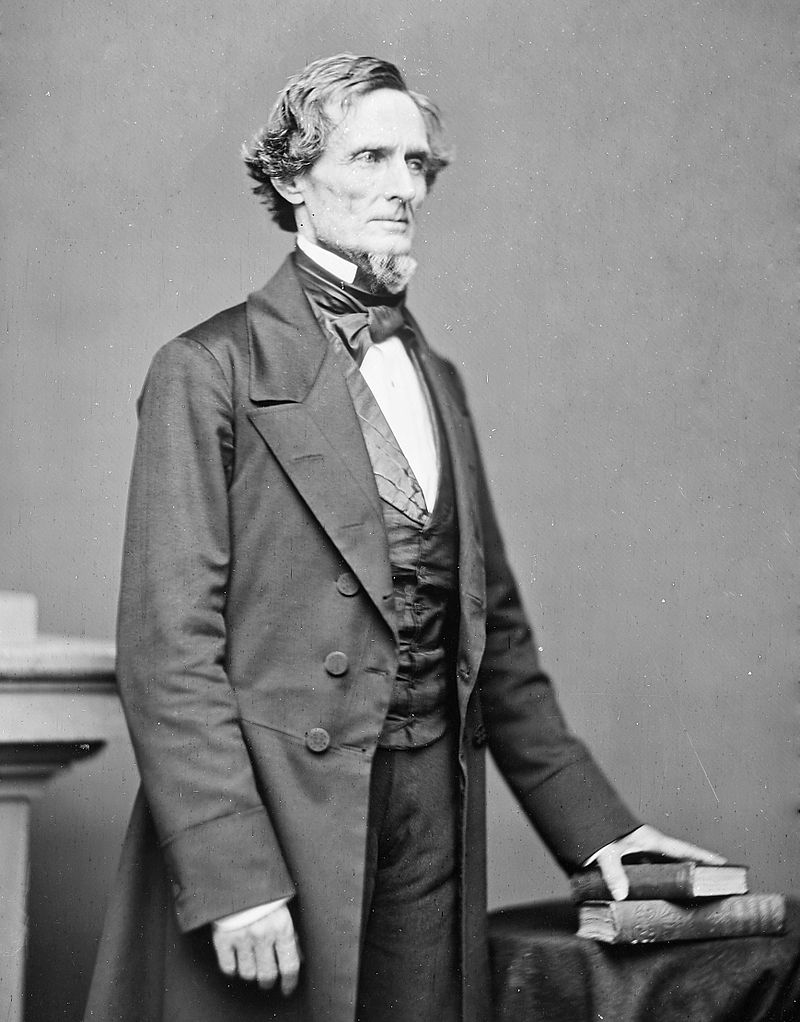
One of those schemers was Confederate President Jefferson Davis, whose fascination with the Southwest probably began during his tenure there as a lieutenant during the Mexican-American War. Like many men of the period, Davis believed in Manifest Destiny: that the future lay in the west.

While he was President Franklin Pierce’s Secretary of War, Davis advocated for the Gadsden Purchase, in which the United States bought nearly 30,000 square miles of barren sand in what is now southern Arizona and southwestern New Mexico from Mexico. Davis pushed for this $10 purchase so the federal government could build a transcontinental railroad that would link the southern states to the deep-water ports of California. That railroad never materialized, in part because of the rancor the northern industrial states felt for the south after the Civil War.

Davis’ interest in the Southwest also prompted him to lobby Congress to purchase camels for a Camel Corps during his tenure as Secretary of War. The camels, purchased in the Middle East and brought by ship to Texas, worked as military pack animals because horses and mules had difficulty in the rocky and dry western territories that the U.S. acquired. Although they could carry a huge amount of baggage and travel for days without food or water, the fact that they spooked horses and mules and most soldiers disliked them doomed the Camel Corps.

Soon after he was chosen by acclamation to be the president of the Confederacy, Davis received a visit from another schemer, Henry Hopkins Sibley. A fellow graduate of West Point who had also served in the Mexican-American War, Sibley left his post fighting Navajos in New Mexico to travel to Richmond and talk Davis into supporting an invasion of New Mexico. Although there is no record of their meeting, apparently Davis needed little persuasion. Sibley walked in a Major and walked out a Brigadier General.

Sibley’s plan was to go to San Antonio, where he would organize a brigade of three regiments of Texans. Once he’d taken New Mexico, he’d proceed north and capture the gold mines of Colorado, then travel west and procure California’s gold and ports for the Confederacy. Had Sibley’s plan succeeded, the South might have had the economic means to better support its army. Further, Davis was convinced that winning the west would convince England and France to support the Southern cause.

That was the plan. What actually happened is another story entirely.

Jennifer Bohnhoff teaches New Mexico History to 7th graders in Albuquerque. Her next book, Valverde, is a middle grade historical novel that follows two protagonists. One is a packer who travels with Sibley’s army into New Mexico. The other is a New Mexican boy determined to see all Americans, both Northerners and Southerners, out of his land.

Valverde will be available toward the end of this month. You can learn more about it and Jennifer's other books here.

Thursday, March 30, 2017

Chris Eboch: Putting the Story in History

Too many students think history is dry and boring. Historical fiction can bring history to life with action, adventure, and relatable characters.

What is historical fiction?

A real setting, with characters either real or imagined. The plot may be based on real events and partially fictionalized or dramatized, or it may be entirely fictional.

What can historical fiction do?

Bring history to life. Create a vivid background and greater drama. Author Jane Yolen says, “[F]or young students, history comes alive when we concentrate on the end of the word — hiSTORY.

Historical fiction can also connect history to other fields – science (inventions, discoveries, medicine, archeology, anthropology); geography (landscape, climate, flora and fauna); environmental issues; politics; culture (foods, clothing, religious beliefs and values); language (vocabulary, foreign language); art, music and drama.

What makes good historical fiction?

  • The story comes first. It's about interesting people doing challenging things in an exciting time and place.
  • Details should be relevant and fit naturally into the story. The action shouldn't stop for facts.
  • Historical fiction should not be an excuse to lecture within a fictional framework.
  • The characters should feel real. Although specifics of religion, social structure and politics differ by time and place, people are motivated by the same basic emotions: love, fear, greed, insecurity, pride, piety, etc. After all, the seven deadly sins are thousands of years old.


Making history live

The best lessons appeal to all five senses. People learn in different ways –through reading, through hearing material allowed, and through doing activities. To get children involved in history and historical fiction, bring the lessons beyond the book(s). Field trips to actual historical sites or museums are great, but there are other options.

Find a parent who has traveled to, or is from, another country and ask them to give a talk. Or ask an expert to visit. Authors may be able to do a classroom visit, in person or via Skype. Actors can help as well – imagine someone talking about ancient Egypt while dressed as a Pharaoh!

Bring in photos or drawings, clothing, toys, and other objects. (Museums and libraries sometimes have educational packs that can be lent out.)

Have the children make posters, act out skits, and write their own stories. For my Mayan novel, The Well of Sacrifice, teachers have developed many classroom projects. (Find these in my Lesson Plans.)

  • A group debate project where the students take on the roles of various characters from the book.
  • Discussion questions about social roles, coming-of-age rituals, attitude towards death, and more.
  • Various art projects, including comic strips, designing a monument, and drawing scenes from the book.
  • Team research projects where the students find out more about the Maya.
  • A persuasive letter project where the student writes as a character and tries to convince another character to do something.
  • Journal questions covering topics such as “Is human sacrifice different from murder? Why or why not?”


At the end of an educational segment centered around The Well of Sacrifice, the teacher may have a party for the kids. Some parents make food appropriate for the historical time and place. The kids share their posters and present their research. They dress in costumes and act out scenes from the book. It's a great time for everyone.

Mayan Pectoral Project

The Maya wore simple clothing—loincloths and cloaks for men, and a sleeveless dress for women. Peasants may have used bark cloth, while the nobility had clothes woven from colorful dyed cotton. Both men and women wore their hair long, often braided in two or four plaits. They also wore necklaces, bracelets, and jewelry in their ears, noses and lips. The jewelry was made of bone, shell, wood or stone for poor people, and of gold or jade for the rich.

Sometimes people wore pectorals—large pendants hanging over the chest. Some were simple circles or rectangles, but others were complex. Here are some designs, taken from ancient paintings and statues. The real ones would have been even bigger—up to six inches across.

You can make your own pectoral. Use the designs here to get ideas. Cut shapes out of colored construction paper and glue or tape them together. You can also paint or draw the designs. Have fun!


— Chris Eboch, The Well of Sacrifice

Chris Eboch’s novels for ages nine and up include The Eyes of Pharaoh, a mystery in ancient Egypt; The Well of Sacrifice, a Mayan adventure; The Genie’s Gift, a middle eastern fantasy; and the Haunted series, about kids who travel with a ghost hunter TV show, which starts with The Ghost on the Stairs. Her writing craft books include You Can Write for Children: How to Write Great Stories, Articles, and Books for Kids and Teenagers, and Advanced Plotting.

Learn more at www.chriseboch.com or her Amazon page, or check out her writing tips at her Write Like a Pro! blog.

Subscribe to get posts automatically and never miss a post. You can use the Subscribe buttons to the right, or add http://madaboutmghistory.blogspot.com/ to Feedly or another reader.

Thursday, March 16, 2017

Read Wide, Read Deep

By Suzanne Morgan Williams

    I was just giving school visits in rural Kansas with fellow author Terri Farley. It was great fun and we saw students from grades K-12 Together we did a family night that included folks from ages 3 to maybe 90. It was all about reading and writing. I kept thinking how differently one would experience the world from the open quiet prairies of Western Kansas than from, say, San Francisco Chinatown’s frantic pace. How can people, having such different perceptions understand each other. Time after time, I told the students to read. Read widely, read everything, read what you’re interested in and what makes you uncomfortable. This blog is about historical fiction, but today, I just want to talk about the power of books.

    Before my novel, Bull Rider, was published I wrote a dozen nonfiction books and that research covered a lot of history. I can tell you, that when a totalitarian government comes to power, or when one nation conquers another, one of the first things they do is burn the books. After this had happened a few times in ancient China, the people took to carving Buddhist texts in rock – harder to destroy. Books transfer cultural values, they provide information, and they give their readers the power of thinking beyond themselves and their own experience. Books level our experiences, allowing a sixth grader in a town of 350 in Kansas to share the same stories and information, as a sixth grader in Los Angeles or Chicago. It lets a grandmother who hasn’t taken a science class in fifty years understand what her grandchildren are learning in astronomy at school. And it let’s all of us see the world from multiple points of view, some comforting and familiar, some difficult or surprising. Reading stretches our minds and hearts.

    So bring on the books. Hand them to the kids you know. Let’s read about girls whose lives have been upended by war in Afghanistan, about boys who survived the U.S. Civil War only to get drawn in by the Ku Klux Klan, about the Russian Czars, and kids living on Alcatraz with Al Capone. Mostly, let's go for a variety of books, a mental feast, a healthy mix of the known and unknown. And let’s use what we read to better understand each other and our world.

    Read widely, read deeply, and read with your heart and mind wide open.