Thursday, March 17, 2016

The Easter Rising 1916


1916-2016: Remember, Reflect, Reimagine

In 1916 a rebellion took place in Dublin, Ireland that catapulted the country toward civil war and eventually the formation of the Republic of Ireland. This year marks 100 years since that pivotal event, also known as the 1916 Easter Rising, which began on Monday of Easter week, April 24th. The Commemorations offer a wonderful opportunity to introduce Irish history to middle-grade readers.


Bisto Book of the Year Award 1997
Eilís Dillon award - 1997


A good place to begin is with The Guns of Easter by Gerard Whelan. Through the eyes of 12 year old Jimmy Conway, an impoverished boy with big dreams, Whelan immerses us in the world of 1916 Dublin. It is a complicated setting, shaped by Ireland's long history, which includes loyalists, nationalists, unionists, those indifferent to any cause and those caught in between. Whelan's sequel, A Winter of Spies, follows Jimmy's sister Sarah during the War for Independence.


"There are too many people willing to die for Ireland," said Skeffy. "Why can't more people just live for it?" Molly's Diary, The Easter Rising 1916, p. 36


Molly's Diary is another middle-grade historical fiction on the Easter Rising. It is packed with information, and although I found it to be a bit too packed, Molly is an engaging character who readers will find fun and lively. 


The Aftermath

Kilmainham Jail photo my Michele Hathaway
The Easter Rising was over in 6 days with a total of 485 dead and the majority of the leaders executed. The largest percent of casualties were civilian. At least 40 were under the age of 16. Nothing may have come of the Rebellion if the British had not so harshly executed the leaders and some innocent civilians. Most of the population was not in favor of the Rebellion to begin with, but the martyrs soon gained sympathy for the cause, setting the trajectory inevitably toward an independent republic.


I write it out in a verse --
MacDonagh and MacBride
And Connolly and Pearse
Now and in time to be,
Wherever green is worn,
Are changed, changed utterly:
A terrible beauty is born. 
-- William Butler Yeats


Remember, Reflect, Reimagine

The Republic of Ireland is framing the 1916 anniversary as a commemoration, respecting the diverse groups of people who played a part in the history of this event. Because the Irish have a long and painful history of division and violence, they are careful to recognize that violence is costly for all. The commemoration websites stress that this is a time to remember history, to reflect on what has been learned, and to reimagine--to imagine an Ireland with a future of peace and prosperity for all. 


Further Resources:


  • "To mark the centenary of the 1916 Easter Rising, a gift for the people of the world, a free eBook of 1916 Portraits and Lives, has been produced. From 11th March to Easter, the eBook of the beautifully illustrated 1916 Portraits and Lives is available as a free download*. eBook for Kindle available as a free download here."

Websites:


Media:

  • Easter Rising in 8 Minutes: https://www.youtube.com/watch?v=rT8uFIbNrHw

  • 1916 documentary narrated by Liam Neeson. This documentary aired on March 16th 2016 in Ireland and is set to air soon in the United States. It looks to be excellent. 

For more historical fiction for middle-grade, see my January 2016 blog post here.

Michele Hathaway is a writer and freelance editor. She has an M. A. in Social Anthropology and has worked in libraries in California, New Mexico, and Pennsylvania. She writes stories set in culturally diverse, historical and contemporary periods.

Subscribe to get posts automatically and never miss a post. You can use the Subscribe buttons to the right, or add http://madaboutmghistory.blogspot.com/ to Feedly or another reader.


Thursday, March 10, 2016

Warrior Women in Middle Grade Historical Fiction


Everyone clamors for strong women characters in middle grade fiction to inspire and empower our own girls. But is there historical precedence for powerful women? In the days before women had the vote, were there strong women who influenced policy or wielded political power? Strong women do not have to show up just in fantasy and myth. Here are a selection of historical fiction based on real women who wielded not only power, but a sword.

The strong woman in Rosemary Sutcliff's Song For A Dark Queen is Boudicca, the Queen of the Iceni, a British tribe under Roman rule. The story is told by Cadwan, Harper to the Queen, who watches her grow from a determined six-year-old into the leader who opposes the oppressive new laws of the Emperor, Nero. When the Romans flog her and rape her daughters, she leads a rebellion that destroys several cities and nearly causes the Romans to leave Britain. It is no secret to anyone who knows history that Boudicca's victories are short-lived and that Rome eventually triumphs. Because the Britains during this period were not yet leaving written records, all we really know about Boudicca comes from the writings of Tacitus and Cassius Dio, and these two sources differ as to how Boudicca dies. Sutcliff has chosen to follow Tacitus' more romantic version, and says that Boudicca returns home drink poison from a cup made of Roman glass. Boudicca's story does not end well, but it is stirring and eloquent and asks readers to think about power and its uses and limitations.


The Edge on the Sword, by Rebecca Tingle is set nine hundred years later. The strong woman in this story is Flaed, a shorter version of  the historical Æthelflæd. Flaed is the fifteen-year-old daughter of the West Saxon king, Alfred. She is betrothed to King Ethelred of Mercia, a man older than her father.
King Alfred has made sure that Flaed has military training. She has learned to protect herself with stealth and smarts because her male opponents will always be stronger that she is. She is forced to use these skills when her party is attacked on her way to Mercia.  Flaed begins to realize that she fights not only to save herself,  but to save the ones she loves, and Wessex and Mercia.


Æthelflæd as depicted
in the cartulary
of Abingdon Abbey by Anonymous
We know from the original source of Æthelflæd's history, The Anglo-Saxon Chronicles, that after her husband's death, Æthelflæd ruled Mercia in her own right for eight years, during which she kept the Danes out of Mercia and established a series of fortresses that protected the land. She was renowned as a formidable military leader.

The Dove and the Sword, by Nancy Garden, tells the story of the woman who is probably the most recognized woman warrior in history: Joan of Arc, the charismatic leader of the French during the Hundred Years War. Told through the eyes of Gabrielle de Domremy, a childhood friend of Joan, and the 'dove' to Joan's 'sword,' this story traces Joan from her first calling to her death at the stake. Gabrielle is a courageous young woman, but entirely fictional, but the author used many primary documents in building her story. As far as I could ascertain, most of the words attributed to Joan in this novel are actually her own words.

Women warriors might always win in fiction and fantasy, but the real world has not always been so kind to strong women. The stories of neither Joan of Arc nor Boudicca end well: both were destroyed by enemies and died brutally. But even if they failed to attain their goals, their noble lives and dedication to their causes can inspire today's girls to continue the fight for freedom to live their lives the way they choose.

Jennifer Bohnhoff is a seventh grade social studies teacher and the author of three works of middle grade historical fiction. You can read about her and her books at her website: www.jenniferbohnhoff.com.


Subscribe to get posts automatically and never miss a post. You can use the Subscribe buttons to the right, or add http://madaboutmghistory.blogspot.com/ to Feedly or another reader.

Thursday, March 3, 2016

Middle Grade Historical Fiction with Fantastic Female Characters #wmnhist #whm

Chris Eboch with The Eyes of Pharaoh #MGlit in ancient Egypt
Blogger/author Chris Eboch
In honor of Women's History Month, I wanted to cover some middle grade historical fiction that included real women from history. But how does one find such offerings?

Cleopatra is certainly popular in historical fiction for various ages. Several middle grade novels on this GoodReads list of “YA & Middle Grade Historical Fiction set in Ancient Egypt” feature her. Queen Hatshepsut also shows up, and Pharaoh's Daughter: A Novel of Ancient Egypt
by Julius Lester tells the story of Moses with a focus on his sister, mother, and the Egyptian princess who adopts him. I've read a few of these novels, but none recently enough to give a good review. I'm assuming mileage may vary in regards to historical accuracy.

The Royal Diaries series also features Cleopatra along with many other real-life princesses from around the world throughout history. Here's a list of the books from GoodReads.

Far more middle grade historical novels feature strong fictional girls in a realistic setting. Teachers and librarians are likely familiar with many of these, including Out of the Dust by Karen Hess, The Mighty Miss Malone by Christopher Paul Curtis, and Esperanza Rising
by Pam Muñoz Ryan. These three are all set during the Great Depression but have wildly different characters and styles; find more titles on this GoodReads list: “Young Adult & Middle Grade Fiction Set During the Great Depression.”

Caroline Starr Rose May B historical fiction on the prairie
Many other historical eras are represented in historical fiction with strong female characters. Consider the Revolutionary War novels Chains by Laurie Halse Anderson and Sophia’s War: A Tale of the Revolution by Avi. Dash by Kirby Larson and Number the Stars by Lois Lowry are among the offerings set during World War II. As a bonus, several of these feature diverse characters: a black slave girl in Chains, a Japanese American girl in Dash, and a Jewish friend in Number the Stars.

Bookworm for Kids lists these titles and many more (including many with male main characters) on its Historical Fiction page. Keene Public Library of New Hampshire offers "The Best in Historical Fiction for Young People” with pages for different regions of the world. (The Mayan Culture list features my novel The Well of Sacrifice!)

Jennifer Bohnhoff the Bent Read Civil War historical fiction
Caroline Starr Rose takes readers to a Kansas prairie homestead in May B., and all the way back to 1587 in Virginia for Blue Birds. Fellow blogger Jennifer Bohnhoff features strong girls near Gettysburg in The Bent Reed, and in occupied France in 1940 in Code: Elephants on the Moon.

And of course, a couple of my novels take readers to the distant past. The Eyes of Pharaoh is set in ancient Egypt while The Well of Sacrifice is set in the last days of a great Mayan city in the ninth century.

Do you have any suggestions for great middle grade historical fiction with strong female characters? Are any of them based on real people? Let's celebrate Women's History Month! #wmnhist #whm

Chris Eboch the Well of Sacrifice middle grade historical fiction about the Maya
Chris Eboch writes fiction and nonfiction for all ages, with several novels for ages nine and up. The Eyes of Pharaoh is an action-packed mystery set in ancient Egypt. The Genie’s Gift draws on the mythology of 1001  Arabian Nights to take readers on a fantasy adventure. In The Well of Sacrifice, a Mayan girl in ninth-century Guatemala rebels against the High Priest who sacrifices anyone challenging his power. Learn more at www.chriseboch.com or her Amazon page. You can also sign up for Chris’s newsletter or check out her writing tips at her Write Like a Pro! blog.

Subscribe to get posts automatically and never miss a post! Use the Subscribe or Follow by E-Mail buttons to the right, or add the blog to Feedly or another reader: http://madaboutmghistory.blogspot.com/

Thursday, February 25, 2016

A Dangerous Path to Tread, by Elizabeth McLaughlin

We’re very nearly into March, which, I have been informed, is now to be known as Women’s Month.  Therefore, I make no apologies for writing about women in history, from earliest ages to present times.  I am focusing on women who followed and carried the Christian message to a dangerous world.  There are so few captivating books for young readers on any Christian missionary, never mind on women missionaries.  Yet today, to proclaim Christianity is almost as dangerous – and certainly as ostracizing – as it was in the days of Herod Antipas.

I’ve just been reading Two Women of Galilee, a historical fiction by Mary Rourke (Mira publications).  While it’s aimed at adult readers, it would appeal also to middle graders and young adults.  This gentle tale is the story of Joanna, a Galilean whose parents adopted Roman ways, and her association with Mary, the mother of Jesus.  The latter’s family, of course, kept the Hebrew faith and laws.  Joanna suffers from consumption, from which she is cured by Jesus. Slowly, although faced by imprisonment and death for her decisions, Joanna returns to her Hebrew faith and follows Jesus. 

Song of The Magdalene, by Donna Jo Napoli (Scholastic Inc).  Intended for Young Adults, it is a sensitive, beautifully told of doomed young romance.  Miriam, the Magdalene, was an epileptic.  Abraham was crippled.  In ancient Israel, they were considered sinners – else why were they penallised thus? – and so outcasts. 

The women in both these books risked their all by becoming followers of Jesus, by recognising Him as the Messiah.  Down through the centuries since, courageous women have faced hardships, danger, and death in order to spread the Gospel.  My compatriot Mary Slessor, ‘White Queen of Calabar’ was but one.

Just a few years ago, the missionary son of some American friends had to attend an important meeting with his wife.  He left his four children at home in Uganda, under the care of the eldest daughter.  While they were gone, natives invaded the home; hearing a commotion, the eldest daughter, with tremendous courage and great presence of mind, hid the tiny four-year-old under the bedclothes.  She is a latter-day, and very young, heroine.  Armed men burst in, ordered the children to lie face down on the floor, arms above their heads, and not to move a muscle.  When the parents returned, the poor children were still lying there, too terrified to move.  The faithful servants were either slain or had fled for their lives.  This is history.  History which, in the present climate, is politically incorrect to tell.  There are many, many such stories to be told and so very few in existence. 

I intend to write a modern historical fiction on what is happening today; the suppression of any Christian emblem, such as a cross or crucifix, being worn at work, and the plight of genuine Middle Eastern immigrants and refugees faced with an implacable government bent on bringing hundreds of migrants to this country.  The very people who wish to follow Sharia law, and from whom the aforementioned immigrants and refugees came to escape.  The history that needs to be told now is that of the Middle Eastern Christians who seek refuge in the west from the horrors of ISIL, the Muslim immigrants who may want to become Christians, and those who are happy with their Muslim, Hindu, or whatever faith they have but long for the freedom we enjoy here – while we still have it.  I hope I’m up to the challenge.

Thursday, February 18, 2016

Making Sense of the Political Noise - for Kids and Adults

By Suzanne Morgan Williams

We're preparing for our presidential caucuses here in Nevada - phones are ringing, television and internet sites are full of political ads, and campaign volunteers are knocking on doors. It's no wonder I'm thinking about books for kids with political themes. But I came up short on titles that actually talk about the political process, historical fiction or not. So that's my first question. Do any of you know of YA or children's books that address politics? Elections? I can think of lots of books that have to do with war, homelessness, drugs, and other social issues but very few about the process. Yes, there are biographies of politicians, but what else?

Instead of featuring books about politics this week, I want to recommend a book for eighth grade and up about how to assess the rhetoric and political claims that we're all bombarded with. It's no surprise to me that politics uses the vocabulary of war - contest, campaign, captains, ground game, target precincts.This is serious business that creates fortunes, gathers or shares power, and changes lifes. Our children, the future voters and citizens who will guide the country long after we're gone, need to be educated so they aren't just swept along by the media. They need to think carefully.

So, everyone please read Paul Fleischman's Eyes Wide Open, Going Behind the Environmental Headlines.  It's not directly about politics, and some of you may disagree with his point of view on the environment, but the lessons are clear and can be applied to most messaging, statistics, or claims we hear. Fleischman says on his website: "THE GOAL: Giving readers 14 and up the briefing they need to comprehend their moment in history. And a riveting moment it is."

This easy to understand book is a primer in media, democracy, and how the point of view of those behind the advertisements and articles determines the information they provide. I'd say in this election year, Eyes Wide Open is a must read for all ages. Comments are welcome!

Thursday, February 11, 2016

Historical Fiction Book Buzz at the Movies by Mary Louise Sanchez


Google image
 Movies have been on my mind lately, perhaps because we watched a few during the holidays. Also, we recently visited Palm Springs, California and side-stepped around the stars on the sidewalks honoring movie stars and various people in the entertainment business.


Recently  I was browsing the collection of movies at our local library and noticed it had E.T. the Extra-terrestrial.
Google image
Even though I've seen the movie, I didn't think our seven and nine-year-old grandchildren had seen it. So, I checked the movie out. Our grand kids gave it glowing reviews. It got me thinking that I should now browse the library more intently for children's movies based on history.


Google image
The 2016 Oscars will be broadcast on February 28.
This brings to mind the fact that many fine movies were first children's books—specifically historical fiction. There are other fine movies which are animated or were television shows that also help teach history. You can rent these movies or even purchase them. Many fine documentaries and some movies are even on YouTube. I encourage you to look at reviews and the ratings to see if these are appropriate for your children.

Be aware that movie producers and directors take artistic license when these movies are produced, and the movies may not be accurate portrayals of the historical events or people. They may also veer from the original book. While watching the movie, children could note where they think history may have been fictionalized; and then they could search for the facts. Even so, movies make the time periods come alive with the costuming, settings, and often the language and music. 

In the past I have hosted Oscar parties for our family, which included young children. Everyone was requested to attend the party dressed in their "red carpet attire." Our granddaughters and nieces came dressed in their Disney princess Halloween costumes.
Google image
(That's one way to get more use from the costumes.) We also had a red cloth at the entry way, complete with paparazzi (husband with a camera). We have played many games at various
Google image
Oscar parties, but one game that was particularly fun was where everyone, including children, had to find something in our house that called to mind a prop in a movie. The rest of us had to figure out which movie the prop was in. What Oscar parties have you had or attended that were memorable? What are your ideas for an historical movie family/classroom premiere?


 My favorite historical fiction movie was made for adults and is based on the book  Gone With the Wind by Margaret Mitchell. 

Google image


Here are some movies based on children's historical fiction books, and my nominees for an historical fiction film fest with your classroom or family. What are some of your favorite movies based on an historical event, time period, or person that would appeal to children?

Sarah Plain and Tall by Patricia MacLachlan

Google image


Roll of Thunder Hear My Cry by Mildred D. Taylor


Google image


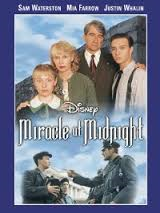
 Miracle at Midnight (TV movie) based on Number the Stars by Lois Lowry

Google image

Miracle at Moreaux based on, Twenty and Ten by Clair Hutchet Bishop

Google image

If you're interested in middle grade historical fiction books, we hope you'll click the button to the right side of the post and/or add your email so you can subscribe to: 

http://madaboutmghistory.blogspot.com


Thursday, February 4, 2016

The Revenant and the Mountain Men

The Revenant, an award-winning 2016 movie starring Leonardo DiCaprio, dramatically tells of the hardships endured by the  mountain men who hunted, trapped, and explored the western regions of the United States in the early decades of the nineteenth century. I recently wrote about this subject on my personal website, and some of what follows is copied from that post. You can read the original post here: http://robertleemurphy.net/characters/the-revenant-and-the-iron-horse-chronicles/

Hugh Glass, the real-life character DiCaprio portrays, suffered more than many of his mountain men compatriots. The Revenant, based upon a 2002 novel of the same title by Michael Punke, describes a heart-wrenching tale of injustice and revenge. Because of the level of violence depicted and the occurrence of some nudity, the movie is rated R, making it “not recommended” for middle-grade viewers. I personally think the level of violence is probably no greater than what is encountered on many video games. Too bad it is not readily available for young students of American history.

Hugh Glass

In the movie, as in real life, Glass was abandoned to die by two fellow mountain men, Thomas Fitzpatrick and Jim Bridger. Glass endured excruciating hardships in saving his own life and in pursuing his vendetta against the two who left him for dead. Although I had not read Punke’s novel when I wrote my trilogy, I was aware of the Glass story and the role Bridger played in it.


In Eagle Talons, The Iron Horse Chronicles—Book One, I introduce Charles “Bullfrog Charlie” Munro, a mountain man who befriends young Will Braddock, the protagonist. Bullfrog helps Braddock learn about the wilderness and aids him in overcoming seemingly insurmountable obstacles. Bullfrog is 65 years old when he first appears in Eagle Talons, where he reveals that Jim Bridger gave him his nickname. Bullfrog could have been with Bridger on the expedition when Glass was attacked by the bear, but we will never know for sure.


In Bear Claws, The Iron Horse Chronicles—Book Two, Will Braddock is with Bullfrog when the old mountain man is mauled by a grizzly bear. Later in the book, while leading a hunting expedition, Will is himself attacked by a grizzly. During the time period of The Iron Horse Chronicles, Bridger was very much alive and serving as a guide for the US Army. Bridger does not appear personally in Bear Claws, but Bridger Pass and Fort Bridger appear frequently in both Eagle Talons and Bear Claws. James Felix Bridger is justifiably considered one of the greatest of the mountain men.


My search for books about Hugh Glass and the other mountain men written specifically for middle-grade students was not very productive.

Hugh Glass, Mountain Man, by Robert M. McClung, fits the category, but is apparently out of print. A new copy is listed on Amazon for $2,400 and on Barnes & Noble for $2,000. That’s probably more than most young reader’s budget can manage. Both booksellers offer access to used copies of the book for less, but still not cheap. Copies should be available in libraries.


Jedediah Smith: And the Mountain Men of the American West, by John Logan Allen is a generalized study of many of the mountain men. As the title implies, the book is heavily oriented toward another famous mountain man, Jedediah Smith. Smith was with the expedition when Hugh Glass was attacked by the bear. In a later incident, Smith was mauled badly by a grizzly, and his compatriots had to sew his scalp and ear back in place. This is another book that is out of print, but new and used copies are available from Barnes & Noble. I found a copy of this book in my local library.

Because of my difficulty in finding books written for the middle-grade student, I recommend two books that I used while researching grizzly bear attacks and mountain men experiences in general. Both books are written at a reading level with which middle-grade students should have no difficulty.


Cowboys, Mountain Men & Grizzly Bears by Matthew P. Mayo contains what its subtitle explains: “Fifty of the Grittiest Moments in the History of the Wild West.” Each of Mayo’s fifty articles is only two or three pages long, and the book contains several illustrations. One of those tales presents what is considered to be the true story of Hugh Glass. Author Mayo is a fellow member of Western Writers of America and a winner of that association’s Spur Award.


The Mountain Men by George Laycock is subtitled “The Dramatic History and Lore of the First Frontiersmen.” Among the book’s twenty-five stories, one is about the amazing survival experience of Hugh Glass. The book also includes eight special “side-bar” articles with beautiful illustrations explaining how the mountain men trapped beaver, made fire without matches, and did many other things to survive. These exciting articles reminded me of my dog-eared copy of the official Boy Scout Handbook from years ago.


My experience in putting this article together for Mad About MG History indicates a need for a middle-grade novel about the mountain men. I’ll have to think more about that.