Tuesday, July 21, 2015

Mary Louise Sanchez: "Less is More"


A few years ago, when I was substituting in a high school library, I noticed the kids were asking for Ellen Hopkins' books. The majority of the time I read middle grade books, so I wasn't familiar with the author's works. I soon realized the subject matter she writes about is appealing to young adults. The large sized volume I found on the shelf seemed  imposing until I opened it. Then I discovered another reason her books resonate with young adults. They are novels in verse with lots of white space!  It occurred to me that reluctant readers, especially, would be attracted to this type of book because verse novels combine poetry with a story and are brief. As Sarah Tregay, an author of verse novels says, "With fewer words on each page, these books are perfect for reluctant readers and busy teens." Wouldn't you agree that busy people do appreciate brevity in their reading material at times?


In a few hours this summer, I read an interesting novel in verse about the Charles Lindbergh baby kidnapping trial written by Jen Bryant.
It inspired me to look into other verse novels which are historical in nature. I believe introducing historical novels in verse would be an excellent way to start meeting curricular standards at the start of the school year. Students (and even teachers) may still be in a summer mode with laid back attitudes. Everyone could be eased into the rigors of school by starting the year with these brief novels which have much substance. 


Teachers, you still have a few weeks before school starts and you could easily read many of these books in a few days.
Hopefully you'll find some short historical fiction books that match your students' needs, which would give you more time to incorporate additional and outstanding historical novels into your busy school year.


One good site which lists novels in verse is Goodreads novels in verse. I have posted some of their historical fiction books-in-verse-for kids, but please follow this link to Goodreads to find even more titles. On the Goodreads' site you can also read a synopsis of each book.

Here are some historical novels in verse which prove "Less Is More." The pictures are courtesy of Goodreads.


Slavery
1812 Indiana Territory
WWII
WWII
WWII Holocaust
WWII Germans dealing with handicapped
WWII Holocaust

1960s Civil Rights


Vietnam War
Women's Rights
 

Karen Hesse, a Newbery Award medalist for Out of the Dust, which is about the Great Depression, has written these other novels in verse too.


Great Depression
WWII Japanese invading Aleutian Islands

Ku Klux Klan 1924

Thursday, July 16, 2015

Robert Lee Murphy--Museums Provide Hands-On Research Material

In writing The Iron Horse Chronicles I frequently visit museums where I can walk among the exhibits and sometimes even touch them. This provides a stronger sense of what life was like decades ago rather than simply reading about the items or looking at pictures in books. I want to share with you how I do this by looking at three museums in Lubbock, Texas, that I had the privilege of visiting recently while attending the 2015 annual convention of the Western Writers of America.


The American Wind Power Center exhibits a collection of windmills used in the western settlement of our country. In my book Eagle Talons I describe the huge windmills that the railroads erected along their right-of-ways every ten to twelve miles. Water was essential to the production of steam in wood-burning and coal-fired locomotives. In many places, the only way to obtain that precious commodity was to drill a well and pump the water to the surface with a windmill. The Center has a huge windmill actually used by the steam railroads. There are no more working windmills along the tracks today.


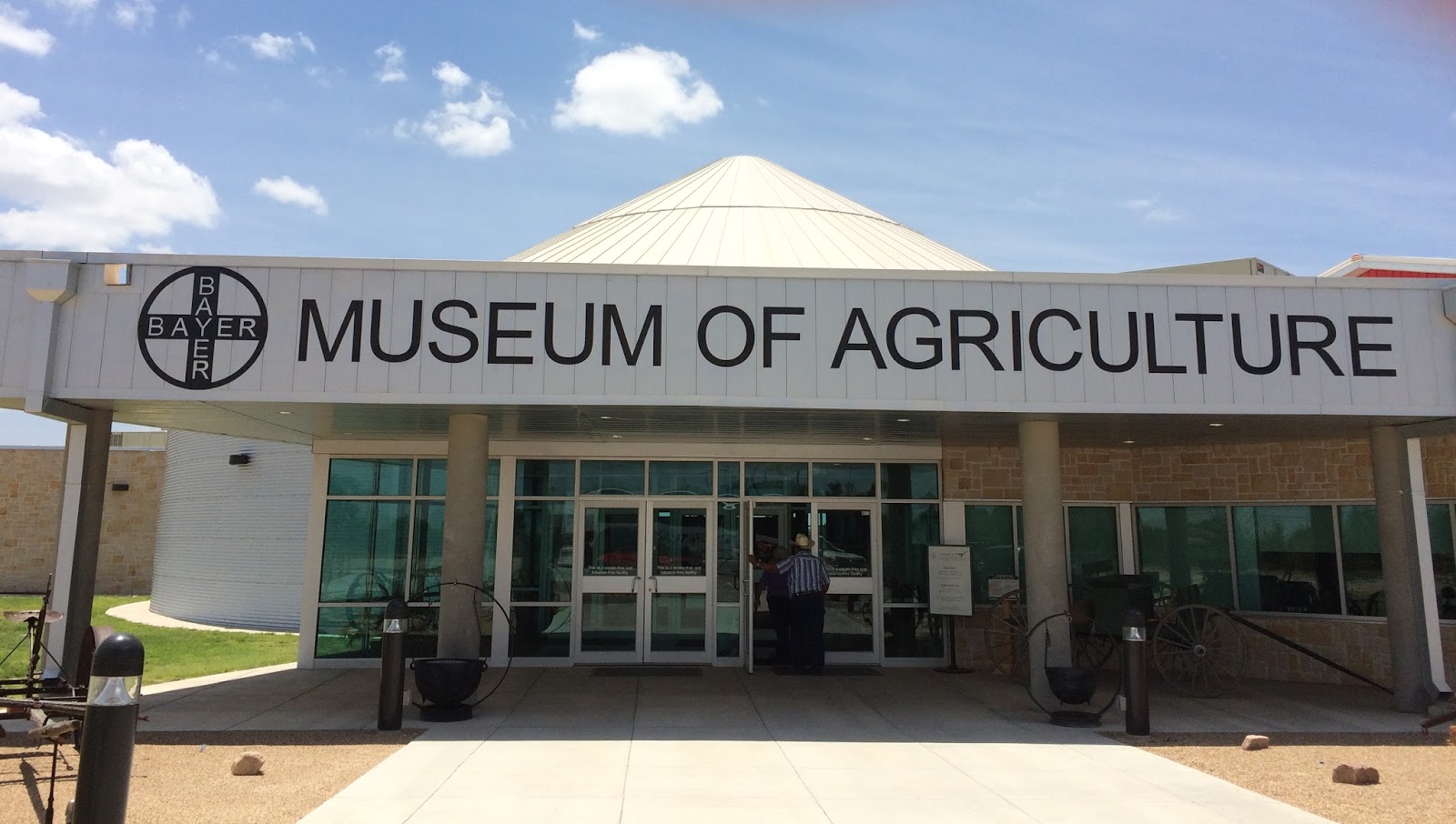
The Bayer Museum of Agriculture presents hundreds of farming and industrial implements used by farmers over the past couple hundred years. Of particular interest was a reconstruction of a blacksmith shop. It is the threat of having to spend years as an apprentice working in such a place that drives Will Braddock, the young protagonist of Eagle Talons, to run away on his quest to determine his own destiny and wind up helping build the first transcontinental railroad. Blacksmiths were indispensable to the settlement of America. Blacksmithing was, and still is, hard work.


The National Ranching Heritage Center contains dozens of structures relocated from sites in Texas and New Mexico. They range from dugouts to two-story frame houses and numerous barns and outbuildings. A railroad depot provides a close-up look at a typical waiting room with its pot-bellied stove. Will Braddock visits many of these depots throughout The Iron Horse Chronicles. The Center has a nice collection of firearms, some of which Will uses in his struggles with Paddy O'Hannigan and his other enemies. There are also examples of horse-drawn vehicles. The Conestoga wagon is the type in which Jenny McNabb, Will's young lady friend, is traveling west when her family is ambushed by Cheyenne Indians in Eagle Talons.


Folks who live in the Texas Panhandle have easy access to these museums. Others who may be traveling across the country should make time to stop and visit them. If you are not going to be in Texas anytime soon, visit similar museums in your area. Young people, and old, will be impressed with these wonderful institutions. Everybody will come away better educated.

Tuesday, July 14, 2015

Sara K Joiner: On the Confederacy, Textbooks and the Power of Historical Fiction

Since those horrible murders in Charleston in June, the country has engaged in a debate on the significance and meaning of the Confederate battle flag. Some argue it is a racist symbol of a racist past, while others believe it is a symbol of Southern pride.

Texas monument at Antietam
National Battlefield in Maryland.
photo by Sara K Joiner
Into the middle of that debate walked the new American history textbooks that the Texas Board of Education approved.

They whitewash history and sweep all the ugliness of our nation's past under a rug.

History textbooks are no strangers to controversy. There are people who want to include all the sordid details and those who want only the most pleasant facts mentioned.

Textbook writers and publishers have to find a happy medium. Then they have to cater to the education boards of the two largest textbook buyers in the country—California and Texas.

This is where historical fiction can bring history into focus.
New York monument at Antietam
National Battlefield in Maryland.
photo by Sara K Joiner

Now, more than ever, as our nation grows ever more diverse and the millennial generation is the largest group in the country, historical fiction writers have an obligation to be as honest as possible in their writing. We owe our readers emotional honesty and as much historical accuracy as we can provide.

We should refer to the wholesale slaughter of indigenous peoples as the genocide it was. We should speak truthfully about the horrors of slavery. We should remember the terrors perpetrated under Jim Crow.

Crystal Allen's The Laura Line wrestles with slavery as it continues to affect present generations. Noni Carter's Good Fortune shows one girl's experience from capture to enslavement to escape.

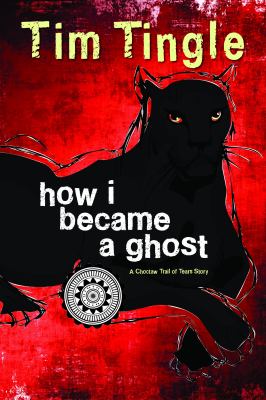
The Winter People by Joseph Bruchac gives readers an introduction to Native life and resistance in colonial times. How I Became a Ghost by Tim Tingle shows the cruelty meted out to the Choctaw during their forced removal from ancestral lands.

Sharon Draper's Stella By Starlight and Augusta Scattergood's Glory Be are both set in the segregated South and show the racism prevalent at the time, albeit from very different points of view.

Give these books to students. Let them read about fictional characters living and suffering through true historical moments. It's the best way to separate symbols from history and see the truth that lies somewhere between the textbook and the novel.

Sara K Joiner is the author of After the Ashes, coming in October from Holiday House. She is also the children's coordinator for the Brazoria County Library System.

Thursday, July 9, 2015

Jennifer Bohnhoff: A Short History of Barbed Wire, and Readings on WWI for Middle Grade Readers

One hundred years ago, Europe was embroiled in what they thought was the war to end all wars.

Barbed Wire Stakes National WWI Museum, Kansas City
Unfortunately, they were wrong.  Within a generation the entire world was again at war, in a conflagration that would kill far more than the First World War had.

One of the enduring symbols of World War I is barbed wire strung in No Man's Land.

 Invented in Ohio in 1867 to Lucien B. Smith, the use of barbed wire to keep livestock in had become ubiquitous world-wide by the turn of the 20th century.  In 1914, French troops took some barbed wire from a local farm to improvise a barrier against the Germans.  Soon, both sides were laying down miles of wire between the lines.  Most of the wire was laid down at night, when the danger of being seen was smaller.  But the sound of driving in stakes with hammers could attract the attention of snipers.  To avoid the noise, both sides developed stakes that could be silently screwed into the ground.

Almost nothing could get through barbed wire.  Artillery barrages designed to destroy it only served to make it into a bigger muddle, even more difficult to get through.  The war ground to a stalemate, both sides literally entrenched in their muddy defenses.  It wasn't until 1918, with the development of a tank big enough to roll over it, that mobility returned to the war.

If this brief history of barbed wire has whetted your interest, here are some titles that you might want to investigate:

A TIME FOR COURAGE: THE DIARY OF KATHLEEN BOWEN, by Kathryn Lasky. Thirteen-year-old Kathleen Bowen keeps a diary of what her life was like in Washington, D.C. in 1917. An historical note helps readers understand the struggle for women's suffrage, and the war in Europe.

PRIVATE PEACEFUL, by Michael Morpurgo, To prove himself to his country, his family, and his childhood love, Molly, fourteen-year-old Thomas Peaceful signs up to joins the British Army when his older brother is forced into service.

Also by Morpurgo: WAR HORSE, which has been made into a movie and a stage play.

REMEMBRANCE by Theresa Breslin follows the destinies of two Scottish families, one middle and one upper class through the events of World War I.

THE NIGHT THE BELLS RANG by Natalie Kinsey-Warnock focuses on the last year of World War I for a Vermont farm boy named Mason, who owes a thank you to a dead bully-turned-soldier.

Jennifer Bohnhoff is a 7th grade Social Studies Teacher in Albuquerque, New Mexico.  She has written three historical novels for middle grade readers.
You can learn more about her books here.


Tuesday, July 7, 2015

Renee Heiss on Historical Fiction as it Relates to Modern Children and their Teachers

The Great Depression may have happened over 85 years ago, but the lessons learned and problems encountered are universal. During that turbulent time period in American history, children’s parents became unemployed at an epidemic level. Today, teachers will find an occasional child whose parents have lost their jobs.

During that early 20th century period, many families had little to eat. Fathers waited in bread lines while mothers wondered how to feed their children. Today’s teachers probably won’t see parents of their students in bread lines, but they will find them applying for food stamps.

And also during that time, children needed to quit school so they could earn a meager income for their families so they could have enough money for essentials. Today’s teachers may find that their students don’t complete homework because they had to take care of younger siblings while their parents went out to a second job. Not much has changed in 85 years, has it? Some children still must deal with financial hardships.

The clothing may have changed from knickers to jeans. The movies may have changed from silent to Disney productions. The toys may have changed from tin trucks to plastic blocks. And the books may have changed from simple tales to complex fantasies. However, children today have the same needs as their Depression-era counterparts – to have clean cloths, warm food, a roof over their heads… and simple fun with their friends.

The purpose of historical fiction is to help today’s children see that although they may be experiencing hardship because they aren’t allowed to watch TV on a school night, they do have that means of entertainment available to them at other times. Today’s children may spurn the dinner offering of beef stew, but they at least have food on the table. And they may not appreciate sharing a room with their sibling, but at least they have a home with their family.

How can teachers help children to see that the purpose of historical fiction is to help them appreciate what they have rather than yearn for what they have not? By analyzing middle grade fiction with a well-organized lesson plan that includes a Venn diagram, list of possible anachronisms, and journal prompts to personalize the lessons.

In Woody’s World, the main character’s life is carefree and effortless because the 1929 Stock Market Crash has not yet occurred. Young readers will identify with Woody as he narrowly escapes hitting a trolley with his sled. We may not have too many trolleys today but we have plenty of trains, trucks, and other potentially dangerous vehicles.

As the readers work their way through Woody’s World, they begin to see Woody’s life change. He loses a good friend because he can’t afford the same types of fun activities. He needs to find creative ways to earn money – like collecting and getting a rebate on empty bottles. And he needs to console his mother and sister when his father travels a long distance to earn money so they can keep their home. Woody’s life has gone from easy to difficult in the space of two months.

Readers will also find that Woody’s World includes many literary devices that enliven the story for them. History may be filled with facts, but historical fiction is filled with facts embellished with dialogue, description, and narration that make the time and tale come alive in the young reader’s eyes.

Teachers should help their students imagine traveling in Woody’s shoes as he captures a pig from an overturned stock car so his family can have meat for a change. Perhaps they can imagine having an internal discussion about saving money for his family vs. spending money for Boy Scouts dues. When students need to choose between two very different decisions, they will be able to see how Woody felt when he split his earnings in two between home and Scouts.

Woody’s World is based on actual incidents – some funny, others desperate - that occurred to my father as he grew up in Princeton, NJ during the Depression Era. The joys he felt and the problems he encountered were real. Only the ending was changed because the true story was too tragic to include in a children’s novel.

Woody’s World is a perfect novel to read during a unit on The Great Depression, but it also provides insight into Jim Crow Laws when Woody and his black friend couldn’t sit on the white side of the movie theater. It also provides insight into the clothing, customs, and culture of life in the 1920s and 1930s. Newspaper references show current events, sports nuances, and the relative cost of basic supplies. Researched heavily by the author, Woody’s World is an accurate depiction of life as it occurred 85 years ago so 21st century children can appreciate what they have today.

Renee Heiss is the author of Woody’s World available at www.amazon.com. She also developed an 8-Week Study Guide for Woody’s World available at www.teacherspayteachers.com. She is a retired teacher of middle school language arts and high school children development. Her website provides additional information about the time and setting of Woody’s World: http://reneeheiss.com/woody_s_world

Woody’s World earned the 2013 Silver Medal for Teen/Tween historical fiction.

Thursday, July 2, 2015

Michele Hathaway on LARA'S GIFT by Annemarie O'Brien

Lara’s Gift by Annemarie O’Brien combines many elements of good historical fiction, and fiction in general, that I have discussed over the last few months.
.
Lara dreams of succeeding her father as steward of the Woronzova Kennel and raising borzoi dogs worthy of the Tsar, but when her brother is born her birthright is forfeit to him. Within moments the dogs are taken from her, she is relegated to the role of nursemaid with a future as a dressmaker and marriage to the midwife's nephew--who is afraid of dogs. But Lara also has a gift, which she has promised her father not to reveal, visions of future events involving the borzoi. In the end she must decide whether to accept this gift, break her promise, and risk everything to save her beloved dog, Zar. 

“I felt trapped, like I’d been thrown into a training pen with hungry wolves, not at all sure the wolves were muzzled.”

A Snapshot in Time

Perhaps one of the most remarkable, and appealing, aspects of  Lara’s Gift is that it is set in 1914 Russia and there isn't a whisper of war or conflict. It would not have served the story to include it, yet, with the world poised on the brink of WWI, and with the Russian Revolution only three years away, here we are on a lovely estate in a snapshot of time. Much historical fiction is set around conflict and war, yet I know children who avoid war stories, who long for windows on the past that show them everyday life--people who are different but at the same time not that different from themselves. They want to time travel to these places and do so with a good book.


The forest all in gold and purple clad;
The wind-sough's whisper in the treetops breezing
The brooding sky with swirling vapor sad,
The virgin frost, the sun's infrequent glinting
The hoary winter's distant ominous hinting. 
--Pushkin.


The setting is more than a picture, it is a character in the story. O'Brien captures this moment in Russian history with rich descriptions of church bells, icons, superstition, sleighs, fur-lined capes, champagne, and caviar. The world of the estate, the forest, and even the wind and snow frame and permeate the story.

This is the sort of book that teaches culture and history subtly. I would urge you not to neglect the Author’s Notes as O’Brien takes some liberties with culture and tradition, though not beyond its stretching point. There is great potential here for classroom discussion about historical fiction writer’s choices.

Language

Stories that seamlessly incorporate other literature such as myths or poetry offer the reader caviar when they are already enjoying a feast. O’Brien does this with a sprinkling of Pushkin’s poems. Besides a delightful addition to the story, it is an excellent opportunity to introduce the poetry of Russia’s most famous poet, Aleksandr Pushkin.

As I discussed in my last post, multicultural literature affords a wonderful opportunity to incorporate foreign languages. Lara’s Gift is an excellent example of how an author can incorporate lodestone vocabulary (mother, father, yes, no, etc.) as well as words set in context that need no translation. Naturally, there is a good glossary. These words lend authenticity and spice to the story. In addition, there are many words in English that will build vocabulary for children--and adults. O'Brien even slips in a French sentence: J’aime c’est chiens plus que tout. You will too, by the end of the book!


Ta-ra! Ta-ra! the bugles blow.
Up since dawn, the hunters sit
their horses chafing at the bit'
the borzoi tug the leash to go. --Pushkin


By now, you are asking, yes, but what about the dogs? Right! Lara’s Gift is a coming of age story, but it is also very much about the borzoi. O’Brien captures their dancing feet, curly hair, and almond eyes, as well as their intelligence, keen sense of the hunt, and significance in Russian society.

Annemarie O'Brien with her borzoi!
In Lara’s time and place, wolves preyed on livestock, as we see by the end of Chapter 1. Now, of course, we value wolves for their beauty and the part they play in a healthy ecosystem. However, even today, ranchers contend with wolves. I believe this element opens the door on good discussion, especially for upper-middle-grade students.

It should be noted that a portion of the proceeds from Lara’s Gift are donated to the National Borzoi Rescue Foundation (nbrf.org), and the International Wolf Center (wold.org). This book would also dovetail splendidly with a visit to a kennel or wolf rescue.


"Trust my gift, I kept telling myself. It rang through my mind like a pealing bell in a blinding blizzard leading me home.”

You can find an educational guide for Lara's Gift here . Annemarie also recommends The Family Romanov by Candace Fleming as a companion non-fiction. I have barely begun to plumb the depths of Lara’s Gift, but I hope you’ll discover it all on your own. I’d love to pursue a conversation in the comments! Thank you Annemarie O’Brien for sharing your lovely book!

Tuesday, June 30, 2015

Amazing Grace: Historical Fiction, Primary Sources and Social Justice


This has been a historic and moving few weeks, and the connections that have bubbled up between history, the opening of the human heart and the expansion of freedom have inspired this post.

When the Supreme Court expanded the definition of fourteenth amendment rights to guarantee the right to gay marriage in every state in the union, freedom was likewise expanded. That this decision fell roughly on the anniversary of the Stonewall Uprising makes it even more resonant with the struggle that went before.

Meanwhile, a more painful resonance came with the despicable and cowardly mass murder of nine Black worshipers at the Emmanuel AME church in Charleston in the name of white supremacy. The initial resonance was with our ugly history of racial violence. 
(right - a sign about the Confederate battle flag amidst the tributes at Emanuel AME)

But something astonishing happened which shifted that resonance to a deep and resounding echo of the history of the inspired struggle for civil rights and human dignity in the United States. Rather than the effect desired by the alleged killer of starting a ‘race war’, the ultimate effect of his crime was to galvanize people to tear down emblems of hate and segregation across the South: a symbolic step, no doubt, but a valuable one. A way of saying that Black Lives Matter -- the doing is still up to all of us. The forgiveness extended to the alleged killer by the relatives of his victims was stunning and heartrending.

President Obama’s eulogy for the Reverend Clementa Pinckney movingly engaged with the themes of violence, injustice and the possibility of change, and inspired me to think about how powerful historical narrative narrative can be. Here is a link to the eulogy:  (https://www.youtube.com/watch?v=RK7tYOVd0Hs)

The president wove his speech around the words of the hymn “Amazing Grace” and made repeated references to history, mentioning that while we “have a deep appreciation of history…we don’t have a deep appreciation of each other’s history”, and suggesting that “we’ve been blind to the way that past injustices continue to shape the present.”

And as a deep believer in the idea that knowing each other’s history is a step toward “…the steady expansion of human rights and human dignity” that the president lauded and that the Supreme Court ruling on gay marriage embodies, I’m thinking in this blog about how important it is to go directly to the source and listen to the voices of those who have too often not been heard. Historical fiction can be a first step for kids and teens toward that engagement. (left: Ouladah Equiano - see below)

At the end of my ancient history class this spring, I asked students to either bring in a quote from one of the “voices” that we encountered through our primary sources or to note which voices we did not hear. In the time period that I was teaching, such voices are limited, though some students loved that they could still hear Sappho, an ancient Greek poet, declare her love for another woman (notably, if they had read Sappho in the nineteenth century, the pronouns would have been changed by translators to make the poet appear heterosexual). Other students enjoyed hearing the wisdom of Confucius or the wild irreverence of Aristophanes. 

But many observed that they couldn’t hear at all from most women, or working people or slaves, and they wished so much they had been able to. They could only hear about people like Spartacus, the leader of the great slave uprising, or Boudicca, the warrior queen of the Iceni, through the words of others who were almost always elite, and often hostile.

As we teach history closer to the present day, more voices can potentially be heard as literacy expands and more sources survive — even the voices of the otherwise dispossessed (though there are still many, many silences).

An important role of historical fiction for young people is to give them an idea of who these voices belong to so that they can make the important step of transitioning to reading the actually primary source material that fiction writers use as sources for creating their work. Often the voices of the primary sources engage with issues that still stir and divide us today. In thinking of the legacy of slavery, several works of fiction and non-fiction primary source narratives come to mind.

For example, I remember reading Paula Fox’s novel The Slave Dancer as a child. The emotion it evoked is still vivid in my memory – pity and horror, as the main character’s musical talent is twisted into the service of macabre practice of “dancing” the captured slaves on a slave ship to keep them fit so they can be more readily sold once they arrive at slave ports.

Another story which has this powerful effect is “The People Could Fly” —the eponymous folktale in the collection of The People Could Fly: American Black Folktales by Leo and Diane Dillon. Many of the tales in the collection are ingenious examples of the oral tradition of riddle-making and story-telling which convey the richness of African American culture during the long period of slavery. Often there is a sense of joy despite dire circumstances. But the final story fully embodies the cruelties the slave system inflected and the passionate desire of enslaved people to ‘fly away’ to a land of freedom. 

This kind of narrative structure allows children and young teens to understand the horror of slavery and the value of every human being in the way a text- book just can’t convey.

The narrative form (usually an autobiographical narrative) was also used by eighteenth and nineteenth century former slaves who were also passionate abolitionists  in order to fuel others to join the abolitionist cause, and this ‘story telling’ of their own experiences is, I think, the next step for teens who have already read fictional accounts of slavery.

I’d suggest that history teachers can carefully and thoughtfully link the two, using the fiction as an introduction leading students into the primary sources. These primary sources are certainly much more challenging reading, which is why I’m specifying that this is a good tactic for older teens, though it is also possible to rework such connections so they are manageable for younger students (using only a chapter or a few paragraphs of a primary source and discussing how it differs from the fictional account and talking about the writer’s voice and purpose).

For example, no history teacher can hear "Amazing Grace",  the hymn the president so surprisingly sang, without connecting it back to the British abolitionists who fought and won the abolition of slavery by parliamentary vote in most of the British empire long before America achieved abolition through war.

Among this group was Olaudah Equiano, the former slave who bought his freedom and devoted his life to the cause of abolition. He wrote The Interesting Narrative of the Life of Olaudah Equiano and using his own story to make his appeal to the humanity of his readers in the cause of liberty. And he was not alone in using self-story-telling as a means toward liberation.

By telling their own stories, by engaging readers with empathy, and using the sort of structures that keep readers concerned with the outcomes of their tales, former slaves made slavery real and urgent to people who had never experienced it.

I am, of course, thinking of Equiano, but even more of the greatest (I believe) of all slave
narratives The Narrative Life of Frederick Douglass. This is a text I would love to see more teens reading in high school as they become more sophisticated readers of historical material.

The power of Douglass’s book is overwhelming. Every time I teach it to students, it is the autobiography that most powerfully moves them. From the description of Douglass’s mother walking miles from a neighboring plantation just to put him to sleep as a small child to the story of a man being shot dead by his master’s overseer for refusing to obey an order, to Douglass himself reaching his breaking point and beating up a degenerate overseer (in introducing this episode he says: “You have seen how a man was made a slave; you shall see how a slave was made a man”) to his final triumphant escape, the details are raw and the story urgent.

But for me, the most affecting chapter is the one where Douglass learns to read.

 His mistress begins teaching him, before being forbidden to do so by her husband (it will “unfit” Douglass to be a slave, the husband explains). But Douglass perseveres in any way he can, hiding books, tricking other kids into teaching him. 

What I love about this account of learning is how strongly he connects learning with liberation. He describes how learning about the slave trade engenders fury and discontent in him and concludes “I could regard (the slave traders) in no other light than a band of successful robbers”.

But even learning that causes pain is part of this process of liberation — for Douglass and for many others. As he explains, “(t)he silver trump of freedom…roused my soul to eternal wakefulness…” and once he had learned to read, he could never stop hearing that trumpet.

Douglass’s words ­—the words of any powerful primary source recording vast, systemic injustices —can still rouse our complacent souls to eternal wakefulness.

And if historical fiction for young people can serve as a bridge to Douglass’s thundering words, so much the better.