Thursday, October 27, 2016

"Soldier Sister Fly Home" by Nancy Bo Flood: A Short Review

Middle-grade novels featuring Native American protagonists are few. Finding one that is authentic, literary, and elegant is a delight. Sister Soldier Fly Home by Nancy Bo Flood and illustrated by Shonto Begay is such a story: a rich tapestry of symbol, metaphor, danger, and reconciliation.

It is 2003 and the war in Iraq has already claimed the life of Lori Piestewa, the first Native American Woman to die in battle on foreign soil.* And Tess's sister, Gaby, has just enlisted, leaving Tess feeling angry, abandoned, and afraid. To make matters worse, Gaby asks Tess to take care of her wild horse, Blue. The last thing Tess wants to do.

Not only is Tess fighting her fear of Blue, she also wrestles with being bi-racial: Navajo and Bilagáana (White). Having her feet in both worlds, she feels she is neither, feels at war with herself. Who is she? Navajo? White?

"We all have many parts Tess. We walk many paths, wear different shoes. Sometimes moccasins, sometimes sneakers. Some paths cross, some come together."

But if I follow one path and leave the other behind, will I lose one? Will I get lost?"

The quote above is a particularly powerful conversation between Tess and her Navajo grandmother, her Shima' Sani. As they draw closer, Tess begins to understand who she already is. Her relationship with her grandfather also unfolds through the story and paradoxically, it is through these Navajo grandparents that she understands more about the part of her that is 
Bilagáana.

Nancy Bo Flood also does a wonderful job of dispelling Navajo stereotypes. Tess is not an Indian who naturally loves horses, herding sheep, or weaving rugs. She is a runner, though, and her grandmother, while traditional in many ways, including the joy of a good joke, loves a good strong latte, Emily Dickinson poetry, and surprising Tess by negotiating the Internet. 

Through a tragic event, Tess learns that there are things she must do even though those are the last things she ever thought she could do. She does not answer all her questions, but she does learn to accept what she can not change. She also learns that her Navajo and White sides do not have to war with each other. The story suggests that perhaps it is not necessary to answer the question, that we can, in the end, be ourselves.

This was a short review, not worthy of the depth of symbol and meaning found in the book. I urge you to include it in your displays for Native American Heritage month, class room library, and personal bookshelves. It is just the sort of book We Need Diverse Books is calling for. And like all good stories, in the end it is about all of us. We discover ourselves and each other there.


You can find out more about Nancy Bo Flood on her website: http://nancyboflood.com/

You can find an interview here.


There is a glossary and discussion questions at the end of the book. You can find more discussion questions here.

*It should also be noted that Lori Piestewa was half Mexican American.


You should also be aware that there are animals killed in the story, which may upset some children (and adults). 


Michele Hathaway is a writer and freelance editor. She has an M. A. in Social Anthropology and has worked in libraries in California, New Mexico, and Pennsylvania. She writes stories set in culturally diverse, historical and contemporary periods.

Thursday, October 20, 2016

Avi: King of the Middle Grade Historical Novel


There are many writers of middle grade historical fiction, but for my money Avi is king because despite adversity, he’s written a lot of highly readable works set in a wide timespan.

Avi is living proof that writing doesn’t always come easily, and that disabilities don’t have to become excuses or barriers. Avi has dysgraphia, which caused him to be labeled as sloppy, erratic and inattentive when he was in school He still reverses letters and misspells words, but that hasn’t stopped him from writing hundreds of thousands of them. Avi says that he persevered because he liked what I wrote, so he learned to refuse to listen to his critics. Now that he is an award-winning author, Avi likes to visit schools and encourage students with learning disabilities. He says those students “come in slowly, waiting for yet another pep talk, more instructions. Eyes cast down, they won't even look at me. Their anger glows. I don't say a thing. I lay out pages of my copy-edited manuscripts, which are covered with red marks. 'Look here,' I say, 'see that spelling mistake. There, another spelling mistake. Looks like I forgot to put a capital letter there. Oops! Letter reversal.' Their eyes lift. They are listening. And I am among friends.”

Avi is the author of over 30 books, many of which are historical novels. His novels range from ones set in the Middle Ages up to the present. Here are a few to try, each from a different historical period:

Crispin: Cross of Lead is a Newbery Award Winner. Set during the Peasant’s Revolt of 1381, this book tells the story of an orphaned peasant boy who flees his village after he is declared a "wolf's head," meaning anyone can kill him on sight. Carrying his mother's lead cross, Crispin goes on a journey to discover who he is.

Sophia’s War tells the story of Sophia Calderwood, who becomes a spy for the American Revolutionaries after witnessing Nathan Hale’s execution in New York City. As a maid for General Clinton, the supreme commander of the British Army, she discovers a traitor in the American army. When no one believes her, Sophia decides to single-handedly stop his treacherous plot.

Iron Thunder tells the story of the nautical battle between the Merrimac and the Monitor through the eyes of Tom Carroll Early, a thirteen-year-old who works in the Brooklyn ironworks after his father is killed fighting for the Union. Hounded by Confederate spies who offer him money for information, Tom must decide whether he trusts the crazy inventor who is building an iron-clad ship.

Catch You Later, Traitor, one of Avi’s most recent books, is set in the 1950s and is about a twelve-year-old kid who loves Sam Spade detective books and radio crime dramas, but finds himself in the middle of a real-life mystery when the FBI accused his father of communism.

Jennifer Bohnhoff is the author of three middle grade historical novels, The Bent Reed, Code: Elephants on the Moon, and On Fledgling Wings. Her next novel, set in New Mexico during the Civil War, is due out next spring. You can read more about her writing at her website, jenniferbohnhoff.com.

Source for this blog post: http://www.scholastic.com/teachers/contributor/avi

Friday, October 7, 2016

Jane’s Book of Ages: Three Not-So-Plain Janes

My blog this month is dedicated to three Janes: the tragic girl queen, a famous author, and a woman whose life was one of drudgery and much sorrow and who yet managed to carry an unquenchable faith in the Lord, joy in reading, and delight in life.

Queen Jane
Lady Jane Grey was born to wealth and power. As the great-granddaughter of King Henry Vll, she was the first cousin once removed to the only surviving son of Henry Vlll, Edward Vl. She was every bit as precocious and brilliant as her bigoted Protestant cousin, and they were close friends. When he was dying, Edward named in her in his will as his successor, knowing that otherwise his half-sister Mary, equally bigoted and  a devout Catholic, would inherit the throne. 

Queen Jane reigned for only nine days. Then Mary – Bloody Mary of our school history books in Scotland – rode into London at the head of an army. Jane’s nine day reign was over.

At first Mary pardoned Jane. However, upon learning Jane’s father had taken part in a rebellion, Jane and her husband, Lord Guilford Dudley, were both beheaded. Queen Jane was a girl of 16. After her accession, Jane became  a popular name for girls  and may have been even more so after her execution.

Author Jane

Jane Austen was born the seventh child to a comfortable middle-class life. Her father was an Oxford-educated English vicar, and he and her mother were much respected in their community. Well-educated themselves, Reverend George and Mrs. Cassandra Austen encouraged their family in creative thinking and to read from his extensive library. Jane and her eldest sister Cassandra were sent to boarding school until financial constraints forced their return home. It was a close, clever family in which the children put on plays, wrote, and played games of charades. 

It was only after Jane’s death her brother named her as author of comical love stories, which were a gently sardonic commentary on the nobility and customs of the day. These novels, of which Pride and Prejudice was ‘her darling’, were  required reading in my English literature class at school and are still widely read and enjoyed today. 

Jane in Sorrow

Finally we come to our third and last Jane.

Jane Franklin was born to Josiah and Abiah Franklin, the youngest daughter in Josiah’s large family. Her father was a tallow chandler, a soap and candle maker. He had neither wealth nor standing in his adopted city of Boston, Massachusetts. His first wife had borne him five living children; his second bore him another twelve, of which the last son was Benjamin Franklin. The youngest, a girl, Josiah named after his mother, and the little English Queen, Jane.

Jane adored her brother Benjamin, and in his turn he loved her. In his own way, he cared for her. Reading a biography through the eyes of the twenty-first century, we think he didn’t do much. But we have to recall how different were times and mores in the eighteenth century. 

Josiah didn’t have the money to educate Benjamin as he would have liked. Jane was fortunate in that her mother could read and taught her to read and Benjamin encouraged this reading. Who knows what the world has lost because Jane was unable to pursue an education.   All of their lives the brother and sister wrote letters to each other. This correspondence is beautifully and delicately described in Jill Lepore’s Book of Ages – Jane Franklin Mecom’s homemade book. 

Benny ran away from home at seventeen to make his fortune and ended one of America’s founding fathers and most famous men. Jane never left home. Her lot was to be marriage and child bearing.

At fifteen, she married a layabout. She lost her first baby and the following two. Jill Lepore speculates Jane, who her brother had heard was ‘a noted beauty’ may have been pregnant when she married. If so, she threw her life away on a ne-er-do-well.

Jane spent her married life either pregnant or nursing, with a husband who was always in debt.
She worked for her father, making soap and candles. She made her own little book through the painstaking boiling and pulping and pressing of rags into parchment. Her Book of Ages. Her days were long and full of drudgery. Throughout, she kept her passion for reading, loving and tending to her family, and writing always to her brother Benny. Although I have not yet finished Lepore’s fascinating book, I’ve read more than enough to heartily recommend it, and to urge teachers and librarians to seek out middle-grade biographies on Jane Franklin Mecom and her little Book of Ages.  A fascinating glimpse of American life. 


As far as I know, the picture I have attached (the recently found Eastman portrait of Lady Jane) is in the public domain. Rather than rely entirely on (distant) schoolday memories, I’ve resorted to Wikipedia to make sure I’m on the right track with my mini-biographies of little Lady Jane Grey and Jane Austen.  I guess she was never crowned, as she was referred to only as ‘Lady Jane’ in our history books.  

- Elizabeth Junner McLaughlin

Subscribe to get posts automatically and never miss a post. You can use the Subscribe buttons to the right, or add http://madaboutmghistory.blogspot.com/ to Feedly or another reader.

Thursday, September 29, 2016

Picture History

By Suzanne Morgan Williams

Historical fiction isn't just for middle grade readers. There's plenty of it for young adults and adults. But are there historical fiction books for our youngest readers? There are legends and folk tales about world cultures. There are some tall tales. But I can't think of many historical fiction picture books. Can you?Some, like Drum Dream Girl  are based on fact but fictionalized. Perhaps there are enough true stories to give our youngest readers a basic sense of history. After all, you have to know a bit about history to identify what is and isn't fictional.

But there are plenty of good nonfiction picture books, and told in the best way, their stories are as engaging as fiction. Here are few of my favorite nonfiction picture books from my collection. Enjoy

Pow-Wow is Coming, written and illustrated by Linda Boyden (this is contemporary but  a favorite)
My Name Is * Me Llamo Gabriela; the Life of Gabriela Mistral by Monica Brown, illustrated by John Parra
Iron Horses by Verla Kay, illustrated by Michael McMurdy
Hanging Off Jefferson's Nose, Growing Up on Mount Rushmore by Tina Nichols Coury, illustrated by Sally Wern Comport
Drum Dream Girl, How One Girl's Courage Changed Music by Margarita Engle, illustrated by Rafael LĂłpez
Harvesting Hope, the Story of Cesar Chavez by Kathleen Krull, illustrated by Yuyi Morales
Go Singing into the World; The Story of Pablo Neruda written and illustrated by Deborah Kogan Ray
The Christmas Coat, Memories of My Sioux Childhood by Virginia Driving Hawk Sneve, illustrated by Ellen Beier.
Ellington Who Was Not a Street by Ntozake Shange illustrated by Kadir Nelson
Moses; When Harriet Tubman Led Her People to Freedom by Carol Boston Weatherford illustrated by Kadir Nelson
The Jade Stone, A Chinese Folktale, adopted by Caryn Yacowitz, illustrated by Ju-Hong Chen

Tuesday, September 27, 2016

Celebrate #Diversity during #HispanicHeritageMonth #HHM

September 15 through October 15 is Hispanic Heritage Month! Some 55 million people in the United States identify as Hispanic, making this the second largest ethnic group.

Why September 15 to October 15? September 15 marks the anniversary of the independence of five Latin American countries: Costa Rica, El Salvador, Guatemala, Honduras, and Nicaragua. In addition, Mexico celebrates its independence on September 16 while Chile’s anniversary is September 18.

According to the US government, “The Library of Congress, National Archives and Records Administration, National Endowment for the Humanities, National Gallery of Art, National Park Service, Smithsonian Institution and United States Holocaust Memorial Museum join in paying tribute to the generations of Hispanic Americans who have positively influenced and enriched our nation and society.”

In the Americas, many Hispanic people can trace their roots back to indigenous peoples. These include the Maya, Inca, Aztec, and others. Today’s Hispanics may also have roots in the Spanish explorers, the Africans who were brought to the New World as slaves, and of course many other cultures.

This provides teachers, librarians, homeschooling parents, and students many options for exploring Hispanic heritage in the Americas.

Middle Grade Novels and Nonfiction

Unfortunately, there aren’t many historical fiction novels about the Maya for young people. This National Geographic post only lists my novel, The Well of Sacrifice, and Seven Serpents Trilogy—Book 1, The Captive by Scott O’Dell as historical fiction for young people. It also lists a couple of travel books and titles on Mayan prophecy and myth.

Terra Experience has an extensive page of “Children’s Books on Mayan Culture, Guatemala, Southern Mexico, Nicaragua, and Latin America.” This site lists many books about current or historical Mayan people, plus Mayan legends and folk tales. Most of the books are for younger children, but picture books can work for middle grade students as well!

A Book In Time has a list of some Books on Early American Civilizations: Inca, Aztec, Mayan, & other Native Americans.

School Library Journal has a post from 2009 on The Aztecs, the Inca, and the Maya: Empires Lost & Found, with fiction and nonfiction for different grades, pus links to Museum Collections

Resources
 
To learn more about Hispanic Heritage Month, visit the following sites:

The National Education Association provides Lesson Plans, Quizzes, Activities and Background Resources for National Hispanic Heritage Month, Grades K-5.

The US government site for National Hispanic Heritage Month includes resources for teachers and a calendar of events, mainly in and around Washington DC.

The National Endowment for the Humanities has lesson plans and links to websites on the conquistadors, the gold rush, the US-Mexican War, prayer to Ricoh, and much more. A featured lesson plan is for Esperanza Rising: Learning Not to Be Afraid to Start Over (also available inSpanish).

The PBS Hispanic Heritage Month site links to episodes about famous Latinos, issues affecting immigrants, and much more.

Scholastic offers resources for celebrating the month, including information on Latinos in history and Hispanic history in the Americas. Scholastic also has Bring Hispanic Heritage Month to Life: A Collection of Resources and 24 Great Ideas for Hispanic Heritage Month.

Hispanic Heritage Month includes information on the history of the month, people, events, and fun facts.

Please add any recommended books or resources in the comments.

Subscribe to get posts automatically and never miss a post. You can use the Subscribe buttons to the right, or add http://madaboutmghistory.blogspot.com/ to Feedly or another reader.

Chris Eboch’s novels for ages nine and up include The Eyes of Pharaoh, a mystery in ancient Egypt; The Well of Sacrifice, a Mayan adventure; The Genie’s Gift, a middle eastern fantasy; and the Haunted series, about kids who travel with a ghost hunter TV show, which starts with The Ghost on the Stairs. Her writing craft books include You Can Write for Children: How to Write Great Stories, Articles, and Books for Kids and Teenagers, and Advanced Plotting. Learn more at www.chriseboch.com or her Amazon page, or check out her writing tips at her Write Like a Pro! blog.

Thursday, September 22, 2016

Explore the State You're In: by Mary Louise Sanchez


Every state probably has at least one yearly list of the best current children's books. But  it is sometimes difficult to find a book by a state author or about the state on these lists.

Here are the common procedures for a book to receive a state award. The books are either nominated by the state's children, or by a committee, following the criteria set by the reading committee. In most cases,  a list of the nominated books is circulated, children read the books or are read to, and eventually children throughout the state vote on their favorites. The lists are often broken down into primary, middle, and upper grades.


It's interesting to read the names of the awards which often hearken back to what is unique about that state. For instance, Kentucky Bluegrass Award; Mississippi: The Magnolia Book Award; Michigan: The Mitten Award. ( I never knew the significance of the mitten to Michigan until our daughter-in-law showed us various places in Michigan by holding her hand up and pointing to them. The state does resemble the shape of a mitten!)
Missouri: Show Me Readers Award; New Jersey: The Garden State Award; Texas Bluebonnet Award; Utah: Beehive Award.

Wyoming has three awards divided by grade levels. Buckaroo Award, K-3; Indian Paintbrush Award 4-6; Soaring Eagle 7-12.
New Mexico's Award is called the Land of Enchantment Award.
My idea for state award committees to consider is to share lists of  children's books about that state, even if they are not current. These books wouldn't necessarily be voted on, but the teachers and students would at least have a list of the books which could enhance the study of their particular state.

Carol Hurst, from the Children's Literature site, has a list of good children's books for each state.
She also shared an idea where children could add additional titles about states and list information they have learned about the them. Her other ideas along this theme of location are: " Would any of those facts be true of the entire state or just one part of it? How does it differ from your own location in the state? Also, while some of these stories are set in the present day, others represent a historic view. Putting the location titles in their proper place in history can present another challenge to readers."
Here is a blog that posted book covers representing YA books from various states. http://www.epicreads.com/blog/the-united-states-of-ya/


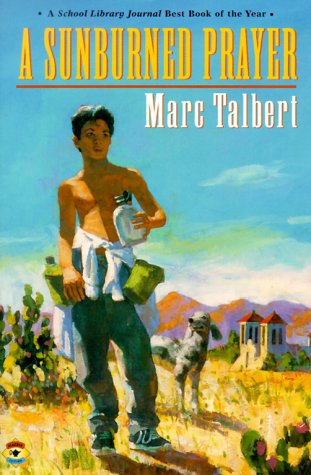
Since I'm passionate about New Mexico (ancestors from both sides colonized it when it was called New Spain), and I own over 250  books about New Mexico, I want to share some personal favorite children's books. Besides middle grade historical fiction, I'm adding a few picture books, folklore, and YA. All the book images were taken from Goodreadss.  
I recommend the Josefina books from the American Girl series. They give a good picture of the Mexican period in New Mexican history.

Does your class participate in your state's award book program? What books about your state do you think should be included?


Thursday, September 15, 2016

Native American Mythology, Some Middle-Grade Suggestions


In my last post, I presented the idea of mythology as a gateway to history. In the pursuit of mythology you don't have to look far. The J 398.2 section of your library groans under the weight of it all. Even in small libraries there is a surprising representation from around the world. Here, I'd like to focus on some perhaps lesser known Native American resources.

When researching California Indian mythology a few years ago, I came across Jane Louise Curry's delightful Back in the Beforetime.  Curry has also written several other collections, including: The Wonderful Sky Boat: And Other Native American Tales from the Southeast; Hold Up the Sky: And Other Tales From Texas and the Southern Plains; and Turtle Island: Tales of the Algonquian Nations. 


Another book that is fun and accessible for middle-grade readers is Navajo Folk Tales by Franc Johnson Newcomb. The cover here depicts one of my favorite tales of how Coyote stole fire from Fireman--note Fireman's arrows on the left and the torch Coyote used to steal fire burning on his tail. Now you know why, to this day, the tip of a coyote tail is black. The book also mentions that minor detail about how Coyote set a mountain on fire and nearly wiped out the People's homes in the process of helping them.


Another book of Navajo mythology that middle-grade should be able to tackle is The Pollen Path, by Margaret Schevill Link. The latter half of the book offers some additional information and analysis that will not be as relevant for your middle-grade readers, but teachers, librarians, and parents will enjoy the depth it offers.


Stories by Joseph Bruchac, one of the most prominent Native American children's authors of our time, should be available in any library. If not, be sure to recommend a purchase. The Girl Who Helped Thunder, and Other Native American Folktales is one suggestion among many.


Picture Books

I wanted to focus on larger collections of mythology in this post, but I can't leave it without mentioning the availability of some gorgeous picture books that are perfectly suited to any age. There are so many, I hardly know where to begin. But in tribute to Lois Duncan, the beloved children's author who recently passed away, I'd like to conclude with her picture book, The Magic of Spider Woman.


The Magic of Spider Woman

Illustrated by the gifted Navajo artist Shonto Begay, The Magic of Spider Woman is the story of a Navajo woman who loves weaving so much, she loses herself in her work--literally, she vanishes into the fabric. Spider Woman provides a way out of the weaver's self-made prison. The story shows that in the midst of our passions we must not forget one another. It's a great message for all. Thank you, Lois and Shonto!

November is Native American Heritage Month!

It's never too early to prepare for Native American Heritage month. I hope you find these suggestions helpful for stocking your home, classroom, or library. 

* As a note, some of these books may not be readily available, but in my research, I have found them worth the effort to acquire. I hope it will not stop you from pursuing them. Inter-library loan is a great resource in these cases. 

Michele Hathaway is a writer and freelance editor. She has an M. A. in Social Anthropology and has worked in libraries in California, New Mexico, and Pennsylvania. She writes stories set in culturally diverse, historical and contemporary periods.

Subscribe to get posts automatically and never miss a post. You can use the Subscribe or Follow by E-Mail buttons to the right, or add http://madaboutmghistory.blogspot.com/to Feedly or another reader.